

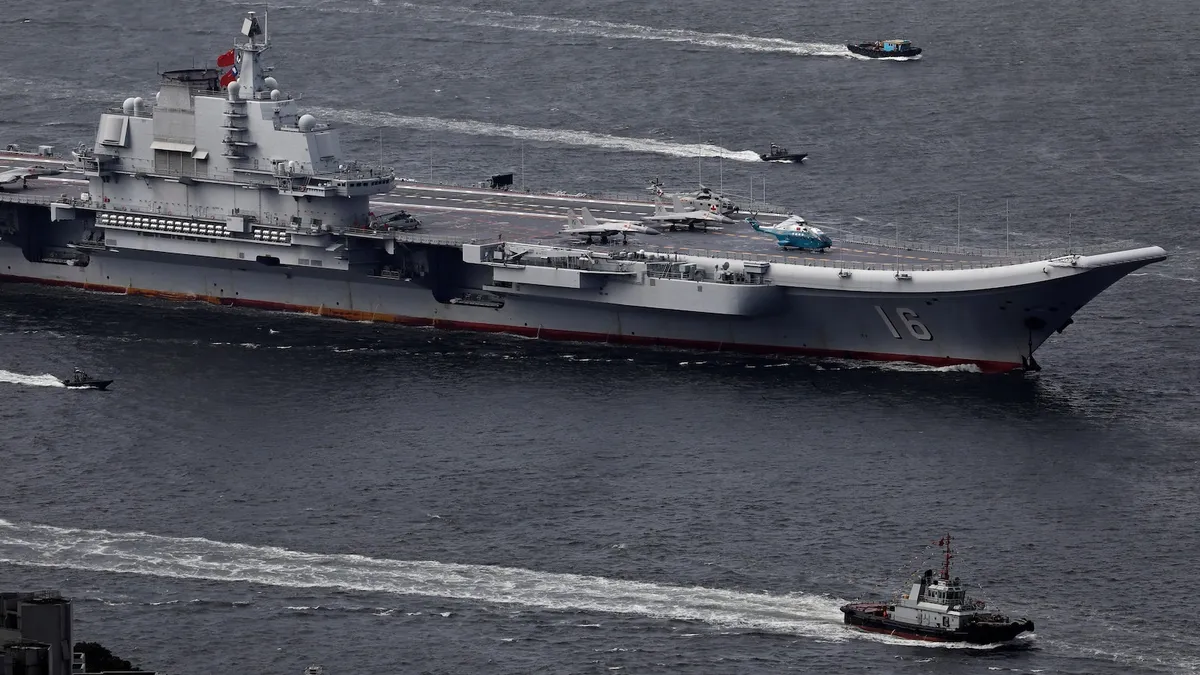
In a significant escalation of tensions, Japan officially protested to China on Sunday following an incident involving a military jet from the Chinese aircraft carrier Liaoning. This incident occurred near the southern island of Okinawa, where a Chinese J-15 fighter jet reportedly locked its radar on Japanese F-15 jets. This development marks the latest chapter in the ongoing diplomatic strains between the two nations, particularly after recent remarks by Japan’s Prime Minister regarding Taiwan.
According to Japan's Defense Ministry, the Chinese J-15 aircraft targeted Japanese fighters' radars on two separate occasions on Saturday. The radar lock was detected for approximately three minutes in the late afternoon and for about 30 minutes in the evening. Japanese F-15 fighters had been scrambled to monitor the situation but reported that there was no violation of Japanese airspace, nor were there any injuries or damages resulting from the incident.
Japan's Defense Minister, Shinjiro Koizumi, addressed reporters early Sunday, emphasizing the seriousness of the radar lock, which he described as “a dangerous act that exceeded the scope necessary for safe aircraft operations.” Minister Koizumi stated, “The occurrence of such an incident is extremely regrettable,” and confirmed that Japan had lodged a strong protest with the Chinese government, demanding strict preventive measures to ensure safety in the region.
As of now, there has been no immediate response from the Chinese government or military regarding Japan's protest. However, on Friday, a spokesperson for the Chinese Foreign Ministry, Lin Jian, remarked that the Chinese navy operates in accordance with international law, urging others not to exaggerate its activities.
This radar incident comes amid deteriorating relations between Japan and China, particularly following comments made by Japan's Prime Minister Sanae Takaichi earlier in November. The Prime Minister suggested that Japan's military could intervene if China took aggressive actions against Taiwan, a self-governing island that Beijing claims as its territory. This statement has further fueled tensions and contributed to the current state of diplomatic discord.
The aircraft carrier Liaoning was observed conducting takeoff and landing exercises in the Pacific, passing between the main island of Okinawa and nearby Miyako Island. Japanese F-15 fighter jets, which were deployed as a precautionary measure, maintained a safe distance from the Chinese aircraft to avoid any actions that could be perceived as provocative, according to reports from the Kyodo News agency.
This incident marks a notable event in the ongoing military interactions between Japan and China, with experts suggesting it could be the first instance of a radar lock between military aircraft from the two nations. A similar incident occurred in 2013 when a Chinese warship targeted a radar on a Japanese destroyer.
In related developments, the Philippine Coast Guard reported that Chinese forces fired three flares at a fisheries bureau plane patrolling the South China Sea on the same day. These flares are commonly used by Chinese forces to warn away planes from what they consider their airspace in the contested waters, further highlighting rising tensions in the Pacific region.
As diplomatic relations continue to fray, the implications of these military encounters could have far-reaching consequences for regional stability and international relations in the Asia-Pacific area.