

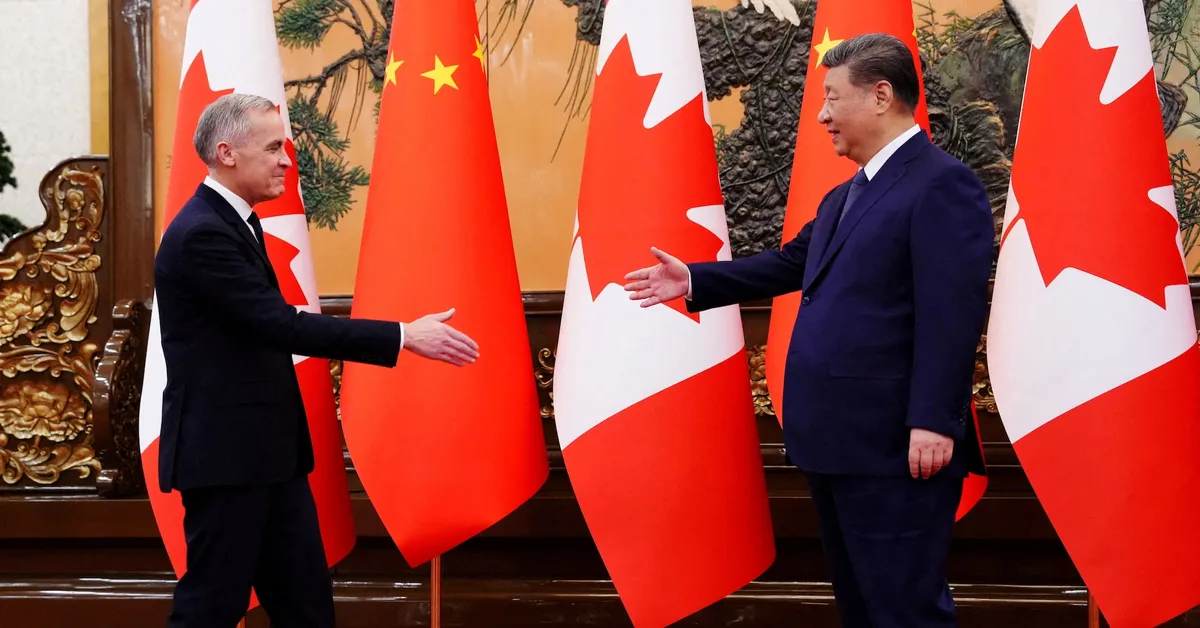
BEIJING, Jan 16 (Reuters) - Canada and China are embarking on a groundbreaking strategic partnership that aims to unlock significant opportunities by harnessing each nation's unique strengths, according to Canadian Prime Minister Mark Carney. During a recent meeting with Chinese leader Xi Jinping, Carney emphasized the importance of fostering collaboration between the two countries, marking his visit as the first by a Canadian prime minister to China since 2017. This diplomatic mission seeks to rebuild relationships with Canada’s second-largest trading partner, following months of efforts to mend previously strained ties.
In his discussions with Xi, Carney stressed the necessity of initiating this new strategic partnership during a time of global division. He urged both nations to concentrate on areas where they can achieve substantial and historic gains, specifically highlighting sectors such as agriculture, agri-food, energy, and finance. “That is where I believe we can make immediate and sustained progress,” Carney stated, reflecting a hopeful outlook for future collaboration.
Canada's initiative to strengthen its ties with China comes in response to recent U.S. tariffs imposed by former President Donald Trump on various Canadian goods. This political climate has prompted Canada to seek closer relations with the world's second-largest economy, especially as China faces similar challenges due to U.S. trade policies. Xi welcomed the opportunity for cooperation, expressing a commitment to enhancing China-Canada relations for the benefit of both nations and the global community.
Analysts suggest that this diplomatic thawing could potentially alter the political and economic landscape of the ongoing Sino-U.S. rivalry. Despite this, experts assert that Canada is unlikely to make a significant strategic shift away from the United States, given its status as a core ally and its deep integration into American security and intelligence frameworks. Sun Chenghao, a fellow at Tsinghua University’s Centre for International Security and Strategy, remarked, “It is therefore very unlikely to realign strategically away from Washington.” However, a more pragmatic approach to economic policy towards China could signal that U.S.-led decoupling is not an inevitable trend among America’s closest partners.
Despite the optimistic outlook for this partnership, several economic and trade obstacles remain unresolved. In 2024, the Canadian government, under former Prime Minister Justin Trudeau, implemented tariffs on Chinese electric vehicles, mirroring similar actions taken by the U.S. This move was justified by Trudeau based on perceived unfair advantages held by Chinese manufacturers due to state subsidies, a situation that poses risks to Canada’s own automotive industry.
In retaliation, China imposed tariffs last March on over $2.6 billion worth of Canadian agricultural and food products, including canola oil and meal. Furthermore, additional tariffs on canola seed were enforced in August, leading to a significant 10.4% decline in China's imports of Canadian goods. As negotiations regarding tariffs continue, Canada’s industry minister has indicated ongoing discussions in Beijing, highlighting the complexities that lie ahead in this evolving partnership.
Reporting by Maria Cheng; Additional reporting by Joe Cash in Beijing; Writing by Ryan Woo; Editing by Himani Sarkar and Clarence Fernandez.