

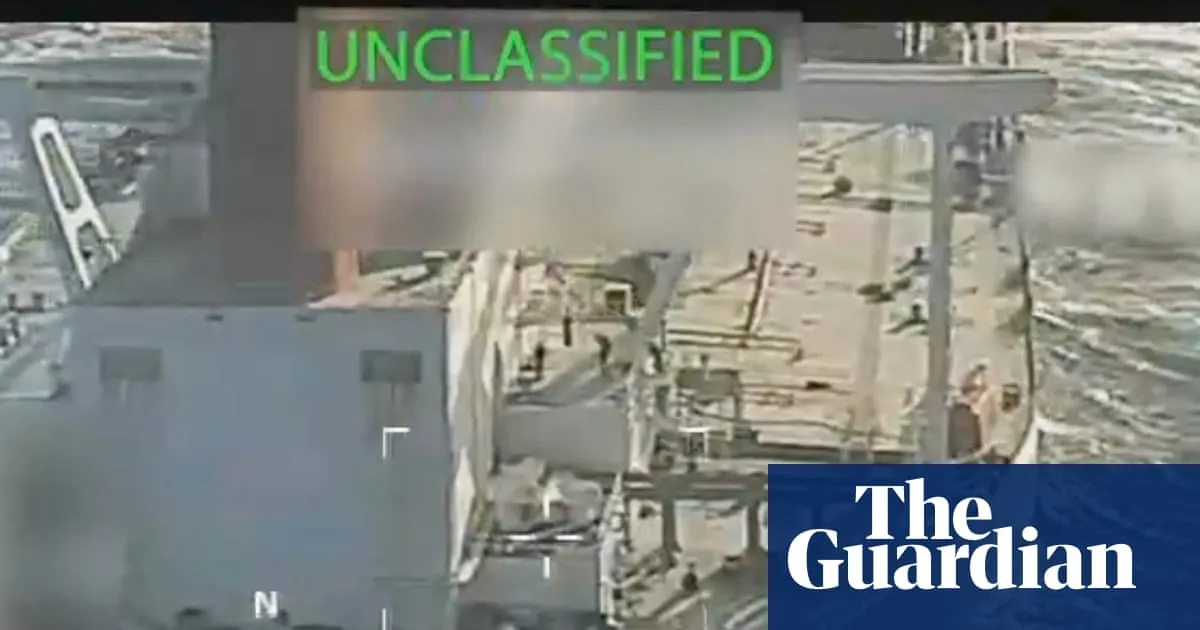
The tanker, known as Skipper according to maritime analysts from Vanguard, is classified as a very large crude carrier (VLCC). Recent reports indicate that it was transporting approximately 1.1 million barrels of oil, which were loaded at Venezuela’s primary oil port just last week. Significantly, the Skipper was discovered to be falsely flying the flag of Guyana, as confirmed by the country’s maritime authority. The flag a ship displays denotes its registration location, and under international maritime law, vessels must adhere to the regulations of the country whose flag they carry while navigating international waters.
In recent years, there has been an alarming trend of vessels operating under false flags, allowing them to bypass essential safety regulations and evade international sanctions. Tracking data reveals that the Skipper had previously been sanctioned by the United States in 2022 under a different name, Adisa. This vessel was implicated in activities linked to the so-called shadow fleet, which is known for smuggling oil on behalf of Iran to circumvent US sanctions. Over the years, Skipper has made numerous voyages to both Venezuela and Iran, as reported by Marine Traffic, a service that provides real-time ship tracking.
Public records indicate that the Skipper is owned by Triton Navigation Corp, a company that was also sanctioned by the US in 2022 for its role in transporting oil for Iran. According to Samir Madani, co-founder of TankerTrackers.com, “Skipper has transported nearly 13 million barrels of Iranian and Venezuelan oil since joining the global dark fleet of tankers in 2021.” As of now, Triton has not provided any comments regarding the seizure.
The US government has targeted over 170 vessels for sanctions, accusing them of engaging in illicit oil transport. The total number of vessels sanctioned by other nations and organizations exceeds 1,000. Experts are divided on the rationale for the seizure of Skipper, which occurred on Wednesday, and its implications for broader operations in Latin America. In a statement, the Maduro administration asserted that the seizure reflects the underlying motives of the Trump administration, stating, “It has always been about our natural resources, our oil, our energy, the resources that belong exclusively to the Venezuelan people.”
However, some analysts believe that the US, being the world’s largest oil producer, may have additional motives driving its aggressive stance toward Venezuela. While the US has previously seized sanctioned oil tankers, Wednesday’s operation was particularly notable due to its dramatic execution. Images showcasing the US Coast Guard personnel descending from helicopters onto the Skipper's deck have been widely circulated on social media by various Trump administration outlets. One of the videos, shared by the Department of Homeland Security, features the LL Cool J song Mama Said Knock You Out as its soundtrack. This strategic dissemination of content is likely intended as a propaganda win for the administration, simultaneously increasing pressure on Maduro.
Experts suggest that the seizure of Skipper will further hinder Venezuela’s already struggling oil industry by escalating the costs associated with exporting oil. Due to rising competition from sanctioned oil sources in Russia and Iran, Venezuela has been forced to offer significant discounts on its crude oil exports to its principal buyer, China. The tangible threat posed by US operations against sanctioned oil tankers—demonstrated on Wednesday—will likely compel shadow tanker owners to seek higher freight costs for transporting Venezuelan oil as a safeguard against potential seizures.