

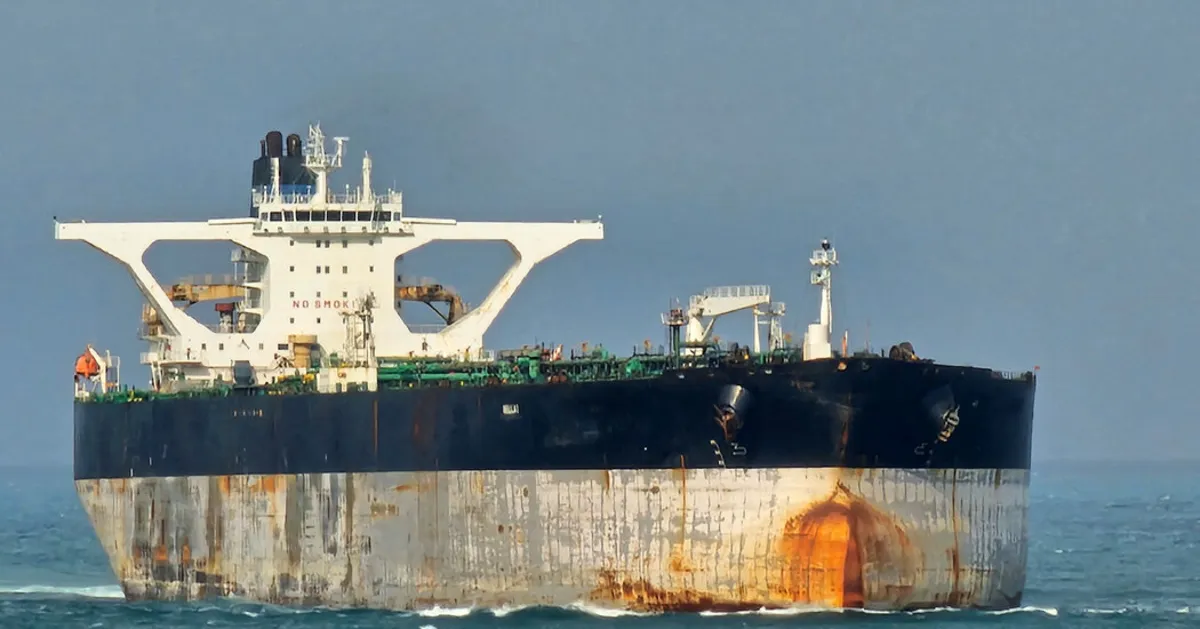
The U.S. Coast Guard has successfully apprehended a stateless, sanctioned dark fleet motor tanker, the M/T Sophia, while it was reportedly conducting illicit activities in international waters in the Caribbean. This operation follows a pursuit lasting approximately two weeks, according to a U.S. official familiar with the details. The Coast Guard encountered no resistance from the crew aboard the Russian tanker during the boarding process, as confirmed by the official who spoke on the condition of anonymity due to the sensitive nature of the military operation.
Russia's Ministry of Transport has confirmed that U.S. forces boarded the vessel in international waters, noting that contact with it had been lost prior to the boarding. State-owned broadcaster RT released images showing a helicopter approaching the Russian-flagged tanker as it was pursued by the Coast Guard, although the timing of these images remains unclear. The tanker, previously known as the Bella 1 and currently called the Marinera, had been registered as a Russian vessel. Reports indicate that Russia dispatched at least one naval vessel to escort it, although none were present in the vicinity when the Coast Guard conducted the boarding.
In a statement, Russia’s Ministry of Transport asserted that under the 1982 U.N. Convention on the Law of the Sea, “no state has the right to use force against vessels duly registered in the jurisdictions of other states.” While the United States has not ratified this convention, it generally recognizes its provisions as customary maritime law. This incident raises significant questions about international maritime rights and the enforcement of sanctions against vessels engaged in illegal activities.
In a separate but related development, the Trump administration has signaled its intention to maintain significant control over Venezuela's oil industry for the foreseeable future. Energy Secretary Chris Wright announced at a conference in Miami that the U.S. would oversee the sale of Venezuelan oil “indefinitely.” President Trump stated that Venezuela would begin sending oil to the United States, which would manage its sale for the benefit of both nations. However, the Venezuelan government has yet to comment on these statements.
According to Trump's claims, Venezuela could provide between $1.8 billion to $3 billion worth of oil to the United States, equivalent to approximately 30 million to 50 million barrels. This potential transaction could significantly impact Venezuela's economy, which has been heavily reliant on oil revenue. However, the details of what Venezuela might receive in return remain unclear, especially considering the U.S. has imposed a partial blockade on the country, limiting its energy exports.
As tensions escalate, the U.S. Senate is receiving classified briefings on the recent raid in Venezuela that led to the capture of Nicolás Maduro. Senator Chuck Schumer, the Democratic minority leader, noted that many questions remain unanswered. Amidst these developments, the Venezuelan government has intensified its crackdown on dissent, with armed militias known as colectivos actively interrogating citizens and searching their phones for signs of opposition.
Additionally, reports indicate that the Venezuelan government is facing severe repercussions if it loses its oil supply, which could lead to a collapse of its already fragile economy. The implications of these geopolitical maneuvers extend beyond Venezuela, affecting regional stability and international relations.
The apprehension of the M/T Sophia and the ongoing developments surrounding Venezuela's oil industry highlight the complexities of international maritime law and geopolitical interests. The U.S. government's actions indicate a firm stance on enforcing sanctions and maintaining control over critical energy resources, raising questions about future diplomatic relations and the potential for further military engagements.