

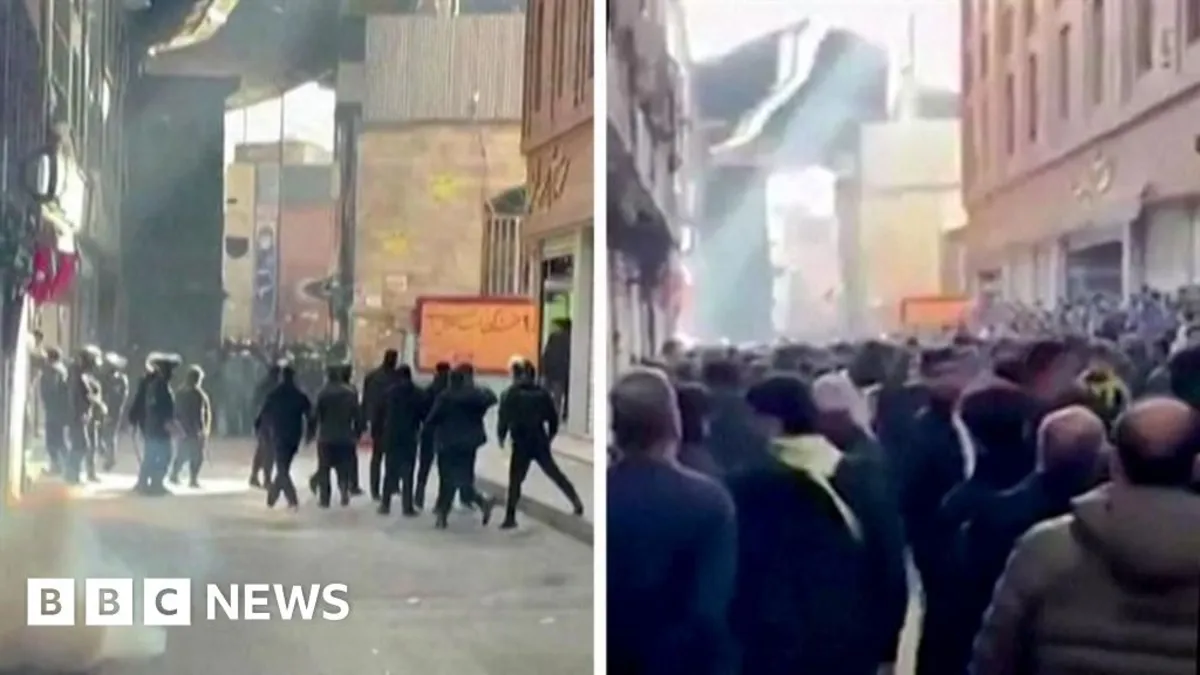
According to a recent report from the foreign-based Human Rights Activists News Agency (HRANA), at least 35 people have been killed in the last ten days of protests across Iran. This alarming figure includes two individuals linked to the security forces. While Iranian authorities have not released an official death toll, they have acknowledged the deaths of two security personnel. Meanwhile, BBC Persian has confirmed the identities of 15 deceased individuals, highlighting the tragic extent of the unrest.
HRANA further reported that more than 60 protesters have been injured and around 1,200 individuals have been arrested since the protests began. The demonstrations were initially sparked by an ongoing economic crisis and have now spread to 27 of Iran's 31 provinces. On Tuesday, disturbing videos obtained by BBC Persian showed security forces using tear gas during confrontations with protesters at Tehran's Grand Bazaar, where demonstrators vocally opposed Iran's clerical leadership.
The protests commenced on December 28, when shoppers in Tehran expressed their frustration over a significant decline in the value of the Iranian rial against the US dollar. The currency has plummeted to a record low, with inflation soaring to 40%. These economic challenges are exacerbated by international sanctions related to Iran's nuclear program, along with domestic mismanagement and corruption.
In a notable escalation, President Donald Trump threatened potential US intervention if Iranian security forces continued to harm peaceful protesters, stating, "We are locked and loaded and ready to go." The following day, Iran's Supreme Leader Ayatollah Ali Khamenei proclaimed that "rioters should be put in their place," asserting his determination not to concede to external pressures. Judiciary chief Gholamhossein Mohseni Ejei echoed these sentiments, promising to address legitimate grievances but warning against leniency towards rioters.
UN Secretary-General Antonio Guterres expressed deep sorrow regarding the casualties and injuries resulting from the violent clashes. His spokesman, Stephane Dujarric, emphasized the need for authorities to allow peaceful protests and the expression of grievances. Videos from the Grand Bazaar protests depicted crowds chanting "Death to the dictator," in reference to Khamenei, while others were seen fleeing from tear gas.
Notably, protests have also erupted in other locations, such as the Azari junction and Cheragh Barq area in Tehran, where demonstrators chanted for freedom. In the central city of Najafabad, parents gathered outside a courthouse demanding the release of minors detained during the crackdown, issuing an ultimatum for their children's freedom.
In response to the escalating violence, President Masoud Pezeshkian has instructed the interior ministry to establish a special delegation to investigate the unrest in the western province of Ilam. Disturbing footage has surfaced, allegedly showing security forces storming Imam Khomeini Hospital in Ilam, where wounded protesters were reportedly seeking refuge. Human rights organization Amnesty International condemned the actions of the Revolutionary Guards and police special forces, asserting that their conduct violates international law.
The US State Department's Persian-language account described the raid on the hospital as a "clear crime against humanity." Kurdish human rights group Hengaw reported that many of the injured protesters had been shot when security forces opened fire on a demonstration in Malekshahi county. They confirmed that at least six protesters, including a retired brigadier-general, were killed during that incident.
As the Iranian regime grapples with growing instability, concerns are mounting that the scale of repression during these protests may surpass previous uprisings. Mahmood Amiry-Moghaddam, director of Iran Human Rights, warned that the regime's history of violent suppression raises alarms about potential mass killings. The ongoing protests represent the most extensive unrest since the 2022 uprising sparked by the tragic death of Mahsa Amini, highlighting the urgent need for international attention and action.