

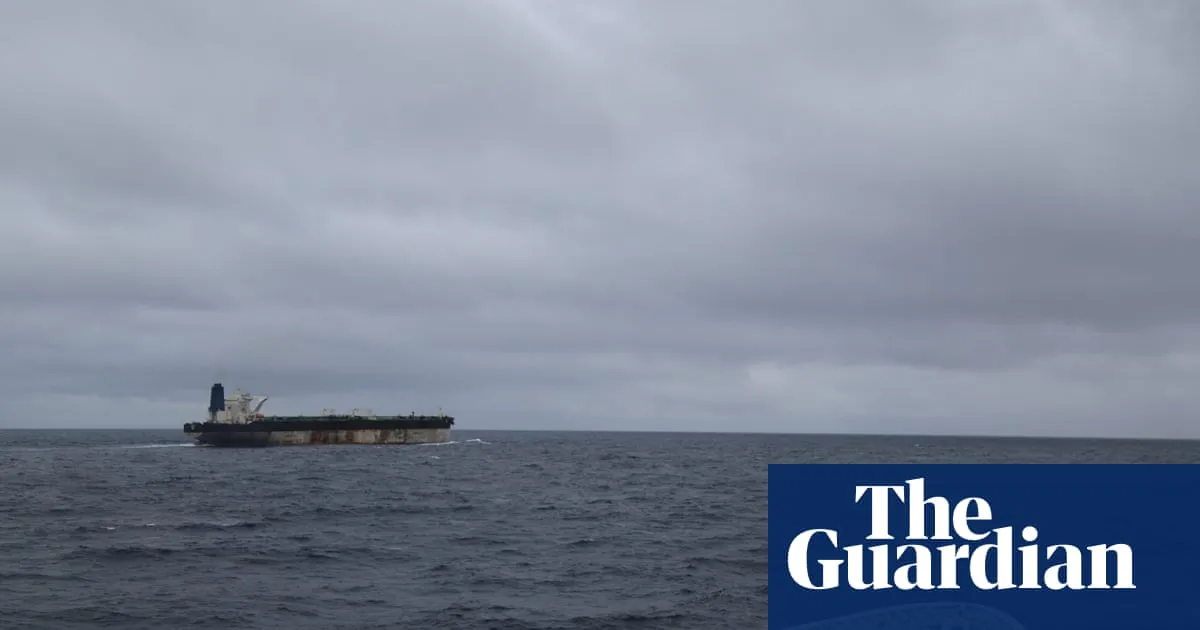
A massive, rusty crude oil tanker named the Marinera has become the focal point of international interest as it floats north through the Atlantic. This ship, which measures 300 meters in length, was closely monitored for days before being seized by US forces amid escalating military activity from Russia. Notably, the Marinera was not carrying any oil at the time of its capture, raising questions about its true value and purpose.
Various theories have emerged regarding the Marinera's significance. Some speculate that it may be concealing high-value Russian weapons within its hull, while others suggest that the tanker could serve as a symbolic trophy in the ongoing power struggle between Washington and Moscow. The Marinera is believed to be linked to the shadowy networks of “ghost fleets” utilized by Russia, Iran, and Venezuela to circumvent Western sanctions. These fleets have been known to transport cargo and inexpensive fuel across the globe, particularly to China.
For years, the US and its European allies have made concerted efforts to crack down on illicit maritime trade. This campaign intensified last month when former President Donald Trump implemented a naval blockade targeting sanctions-busting tankers in the vicinity of Venezuela, a nation renowned for possessing the world’s largest oil reserves. The Marinera is one of several oil tankers that have attempted to evade this blockade, previously avoiding capture in the Caribbean Sea last December.
Initially named Bella 1, the Marinera altered its course towards northern Russia before being boarded by US forces as it sailed through frigid Atlantic waters. The ship has been under US Treasury sanctions since June 2024 due to allegations of transporting illicit cargo for Hezbollah, an Iranian-backed militant organization. An earlier attempt by the US Coast Guard to board the ship was thwarted when the crew refused to comply.
The US has a history of boarding shadow fleet vessels, as demonstrated by a recent operation involving the tanker Skipper, which was seized off Venezuela. However, boarding the Marinera presents a different set of challenges and risks, as it is registered and flagged under Russian law. The crew of the Marinera hastily painted a Russian flag on the hull just last month, prompting Moscow to file a formal diplomatic protest against the US's high-seas pursuit.
Experts like Craig Kennedy, an associate at Harvard University’s Davis Center for Russian and Eurasian Studies, interpret Moscow's decision to register the Marinera as an attempt to gain leverage against the US oil blockade on Venezuela. “To seize a Russian-flagged ship on the high seas is to disregard Russia’s claims of exclusive jurisdiction over the vessel,” Kennedy explained, suggesting that Moscow may have underestimated the US's willingness to act decisively.
While the Marinera currently sits empty of oil, its previous routes between Iran and Venezuela have raised suspicions of involvement in illicit trade, possibly including arms trafficking. Heightening tensions, Russia has dispatched naval assets, including a submarine, to escort the tanker. This move was reported just hours before the US forces seized the ship for “violations of US sanctions.”
In the days leading up to the seizure, US surveillance planes were actively monitoring the Marinera’s movements. A British Royal Air Force spy plane also conducted reconnaissance over the ship’s route. These developments prompted speculation about an imminent special operations mission against the Marinera, particularly as US military assets, including the C-17 Globemaster III, were seen moving to the UK.
John Foreman, a former UK defense attache to Moscow, remarked on the scale of US monitoring of the tanker and the strategic deployment of military resources. “Why have the US put all these assets into the UK just for some oil tanker?” he questioned, suggesting that the situation could involve Russian arms being transported to Venezuela.
As the situation unfolds, the Marinera stands as a critical piece in the complex chess game of international relations, highlighting the ongoing tensions between the United States and Russia and the lengths both sides will go to secure their interests.