

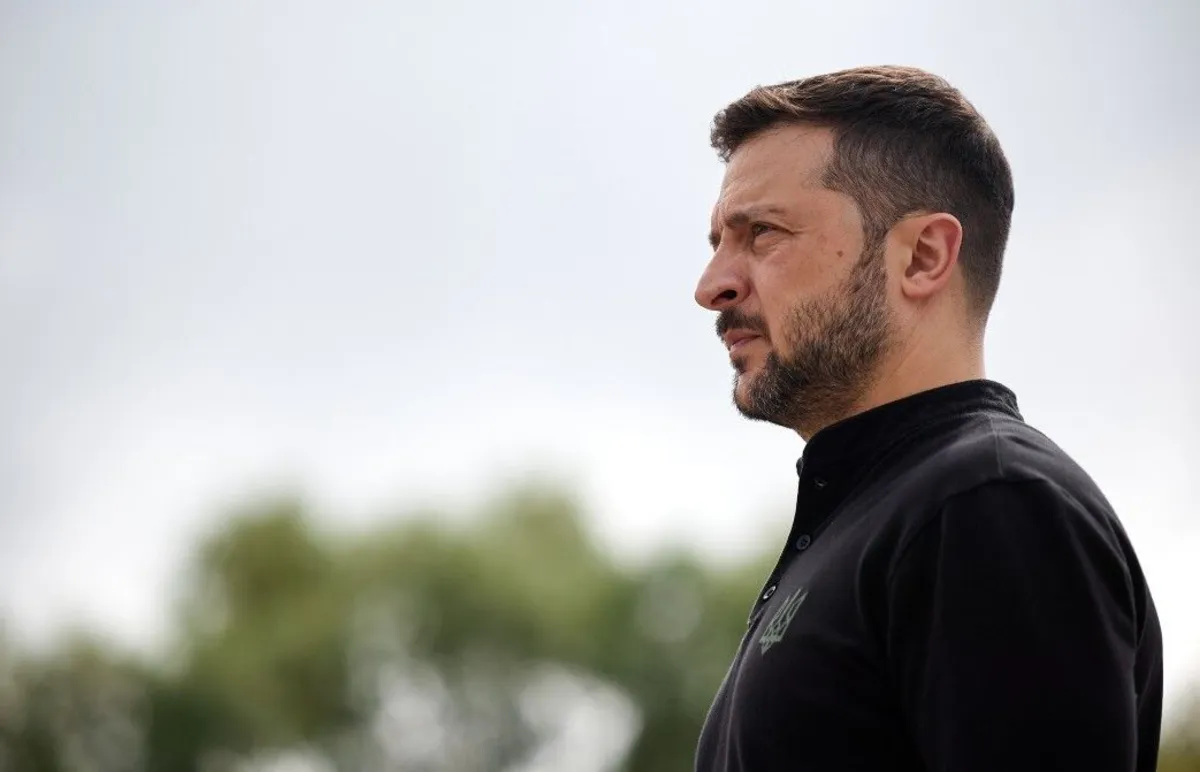
After weeks of extensive negotiations, Ukraine and the United States have crafted a revised draft of a peace plan aimed at bringing an end to Russia's full-scale war. The original 28-point plan, which critics claimed effectively coerced Ukraine into capitulation, has been streamlined into a more manageable 20-point framework. This updated plan was first presented by President Volodymyr Zelensky to journalists on December 23.
In addition to the revised peace plan, a three-party security guarantee agreement has been developed, involving Ukraine, the U.S., and European nations. Furthermore, a bilateral security guarantee agreement between Ukraine and the U.S. has also been established. Another crucial document focuses on enhancing economic cooperation, which has been described as the roadmap for Ukraine’s future prosperity. “We have made significant progress toward finalizing the documents,” Zelensky stated. The U.S. is anticipated to present the 20-point draft to Moscow by December 24.
Upon approval, the final peace agreement will require signatures from the leaders of Ukraine, the U.S., Europe, and Russia, although the specific European signatories are yet to be determined. A ceasefire is expected to commence immediately following the signing of the agreement. For the agreement to become effective, it must be ratified by the Ukrainian parliament and possibly supported by a referendum among the Ukrainian populace, which could take place within 60 days.
As negotiations continue, Ukraine and the U.S. have yet to reach an agreement on two critical points in the revised plan: control of the Russian-occupied Zaporizhzhia Nuclear Power Plant and governance of the Donbas region, which has faced conflict since 2014. Notably, the draft does not address Ukraine’s aspirations for NATO membership.
The Kyiv Independent has released the draft of the potential 20-point peace plan, which outlines the following key elements:
The signatories affirm Ukraine's status as a sovereign state.The document establishes a comprehensive non-aggression agreement between Russia and Ukraine, with a monitoring mechanism utilizing satellite-based surveillance to detect violations.Ukraine will receive robust security guarantees.The size of Ukraine’s Armed Forces will be maintained at 800,000 personnel during peacetime.The U.S., NATO, and European signatories will provide Ukraine with "Article 5–like guarantees" under specific conditions.Russia will formalize its non-aggression stance towards Ukraine and Europe through necessary legal frameworks.Ukraine's path to EU membership will be established with a proposed timeline for accession.A global development package will be initiated to boost Ukraine's economy, including investments in technology and infrastructure.Funds will be created to support the restoration of the Ukrainian economy, aiming to mobilize $800 billion for recovery efforts.Negotiations for a free trade agreement with the U.S. will be expedited.Ukraine reaffirms its commitment to being a non-nuclear state in accordance with international agreements.Control over the Zaporizhzhia Nuclear Power Plant remains unresolved, with competing proposals from both Ukraine and Russia.School curricula will be introduced to promote cultural understanding and tolerance.The military front line will be recognized as of the signing date, with specific troop withdrawal conditions outlined.Russia and Ukraine agree to resolve territorial disputes through diplomatic means without resorting to force.Russia will not obstruct Ukraine’s use of the Dnipro River and Black Sea for commercial activities, with a separate maritime agreement planned.A humanitarian committee will facilitate prisoner exchanges and address the needs of conflict victims.Ukraine must hold presidential elections soon after the agreement is signed.The agreement will be legally binding, with implementation overseen by a newly established Peace Council.The revised peace plan represents a significant step toward a potential resolution of the ongoing conflict between Ukraine and Russia. As negotiations continue, the focus remains on achieving a sustainable peace that ensures Ukraine's sovereignty and security while addressing the complex challenges posed by the war. The coming days will be crucial as both sides evaluate the proposals and strive for a lasting agreement.