

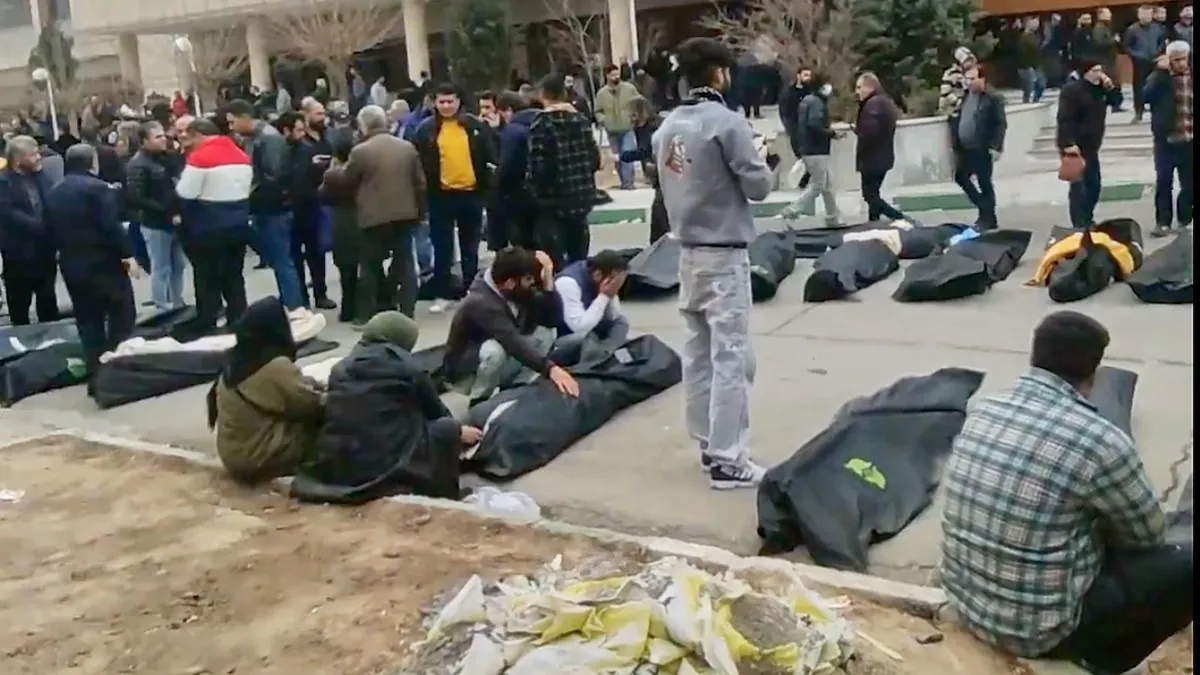
DUBAI, United Arab Emirates -- After days of disrupted communications, Iranians were able to make phone calls abroad on Tuesday. This development comes as authorities had severed communication lines during a crackdown on nationwide protests, which activists claim have resulted in at least 646 deaths. The situation has provided a precarious glimpse into life for those cut off from the outside world, with many citizens expressing deep concerns about what the future holds.
Witnesses in central Tehran reported a substantial security presence, including anti-riot police equipped with helmets, body armor, and various crowd-control weapons. Burned government buildings and vandalized ATMs painted a stark picture of the unrest. Despite the heavy police presence, some locals noted that few people were seen on the streets, indicating a climate of fear and uncertainty.
One shopkeeper, who identified himself only as Mahmoud for safety reasons, shared insights into the mood of his customers. “They talk about Trump’s reaction, questioning if he plans a military strike against the Islamic Republic,” he said. “I don’t expect Trump or any foreign country to genuinely care about the interests of Iranians.”
Taxi driver Reza, who also withheld his last name, remarked on the ongoing discussions among the youth regarding potential protests. “People — especially the young — feel hopeless yet continue to talk about the possibility of continuing the protests,” he noted. Several individuals in Tehran managed to contact The Associated Press on Tuesday morning to share their experiences, although the AP's Dubai bureau could not return the calls due to ongoing restrictions.
While phone communications resumed, text messaging remained disabled, and internet access was limited to government-approved websites. Many Iranians reported challenges in completing banking transactions due to the lack of internet services. Despite this, some shops opened their doors, though foot traffic remained extremely low.
Tehran's Grand Bazaar, known as the starting point for the demonstrations that began on December 28, was ordered to reopen by security forces. Witnesses reported that shopkeepers were pressured to comply, although Iranian state media did not acknowledge this directive. Those who spoke to reporters did so on the condition of anonymity, fearing government retaliation.
Reports also emerged that security personnel were searching for Starlink terminals, indicating a crackdown on unauthorized satellite communications. In a city where many residents have ignored the ban on satellite dishes, authorities were seen raiding apartments in search of such devices.
In a statement aired on state television, Supreme Leader Ayatollah Ali Khamenei praised the pro-government demonstrations that took place nationwide on Monday. He warned American politicians against deceit and reliance on “traitorous mercenaries,” asserting that the Iranian nation is both strong and aware of its enemies. State TV broadcasts featured chants from the crowds, including “Death to America!” and “Death to Israel!”
Iran's attorney general issued a stark warning, declaring that participants in protests would be considered “enemies of God,” a charge that carries the death penalty. Meanwhile, Iranian Foreign Minister Abbas Araghchi confirmed ongoing communications with U.S. envoy Steve Witkoff, although he characterized Washington’s threats as incompatible with diplomatic negotiations.
White House press secretary Karoline Leavitt noted a disconnect between Iran's public rhetoric and the private messages received by the U.S. administration. President Trump, who has hinted at military options if necessary, announced a significant economic measure: a 25% tariff on countries doing business with Iran, effective immediately. This move is seen as a response to the Iranian government’s violent crackdown on protests.
Trump expressed that Iran desires negotiation, stating, “I think they’re tired of being beat up by the United States.” In response, Iran's parliamentary speaker warned that the U.S. military and Israel would be considered “legitimate targets” if force is used against demonstrators. According to the U.S.-based Human Rights Activists News Agency, over 10,700 individuals have been detained during the two weeks of unrest, with 512 of the deceased being protesters and 134 identified as security personnel.