

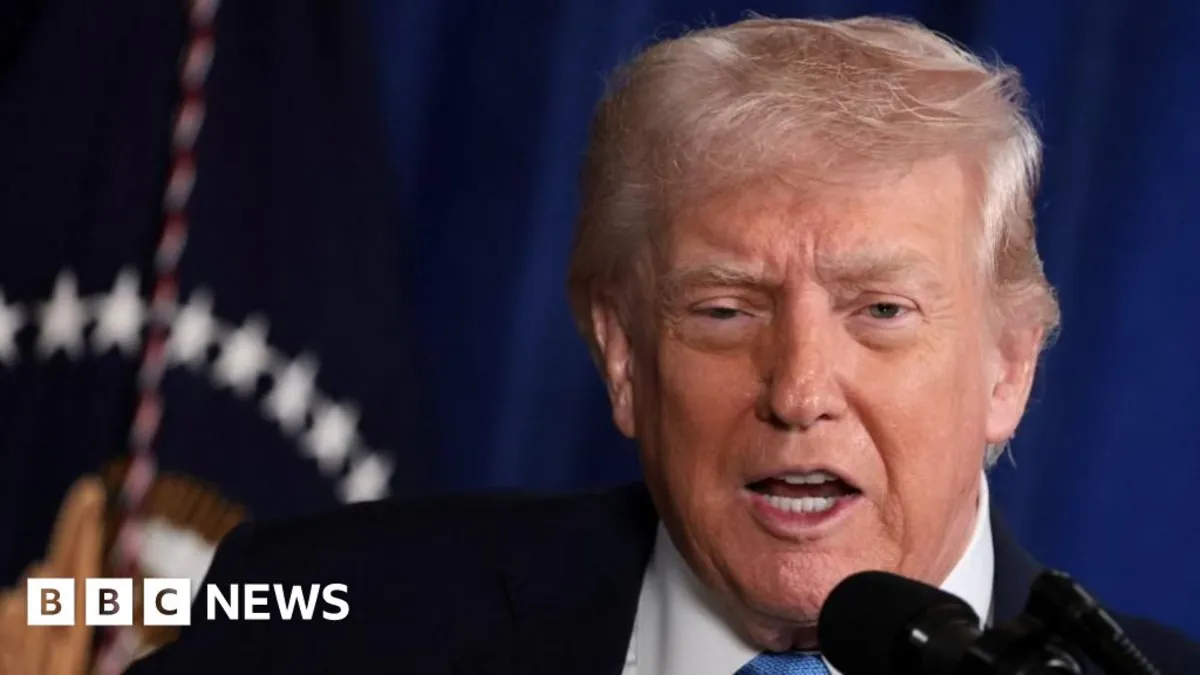
In a recent interview with The Atlantic, former President Donald Trump issued a stern warning to Venezuela's newly appointed leader, Delcy Rodríguez. He cautioned that she could face severe consequences, potentially even greater than those faced by her predecessor, Nicolás Maduro, if she fails to act in accordance with international expectations. This statement comes as Maduro prepares to face serious legal charges, including drug trafficking and weapons offenses, in a New York court.
Maduro, who has been accused of leading a narco-terrorist regime, is set to appear in court on Monday, a situation that has drawn significant international attention. Despite the serious allegations against him, Maduro has consistently denied these claims. Meanwhile, Rodríguez, who previously served as Maduro's vice president, has adopted a more conciliatory approach in her new role, expressing a desire for cooperation with the United States.
At her inaugural cabinet meeting on Sunday, Rodríguez called for collaboration with the US government, stating, "We invite the US government to collaborate with us on an agenda of cooperation oriented towards shared development within the framework of international law." Her tone suggests a potential shift in Venezuela's diplomatic stance, especially in light of recent military actions by the US.
On Saturday, air strikes in Caracas resulted in Maduro and his wife being detained and transported to the US, a move that some Democratic lawmakers have labeled as an act of war. Marco Rubio, the US Secretary of State, clarified that the US is not at war with Venezuela, emphasizing that the operation was targeted at drug trafficking organizations rather than the Venezuelan state itself.
In his interview, Trump expressed a strong belief that regime change in Venezuela is preferable to the current situation, stating, "It can't get any worse." He also indicated that the US would oversee the country's governance until a "safe and proper transition" could be achieved. Furthermore, he promised that US oil companies would invest in Venezuela to help rebuild its infrastructure.
Amid these developments, Cuba has reported the deaths of 32 of its combatants during the US-led military operation, prompting a national mourning period. The Cuban government, a long-standing ally of Maduro, condemned the US actions, which they characterize as imperialistic aggression.
Rubio defended the military operation in various interviews, reiterating that the US's fight is against drug trafficking and not against the Venezuelan people. He stated, "We're going to judge everything by what they do," signaling that future actions will depend on Venezuela's response to US demands.
Trump also directed his criticisms towards Venezuela's neighbor, Colombia, suggesting a possibility of military action against them due to their drug trade. He labeled Colombian President Gustavo Petro as a "sick man," indicating a broader scope of US military focus in the region.
Maduro, who has been in power since 2013, faces ongoing accusations of suppressing dissent and opposition in Venezuela. His leadership has been characterized by allegations of electoral illegitimacy, with many claiming he unlawfully secured victory in the national elections.
Several Democratic lawmakers have raised alarms regarding the legality of the US military operation, with House Minority Leader Hakeem Jeffries labeling it an act of war. Critics, including Senate Minority Leader Chuck Schumer, argue that such actions could lead to further instability and that regime change should not come at the cost of lawlessness.
The military actions have prompted a joint statement from the governments of Brazil, Chile, Colombia, Mexico, Uruguay, and Spain, condemning the US's approach as a dangerous precedent for peace and regional security. As the situation evolves, the implications for both Venezuela and international relations remain critical and complex.