

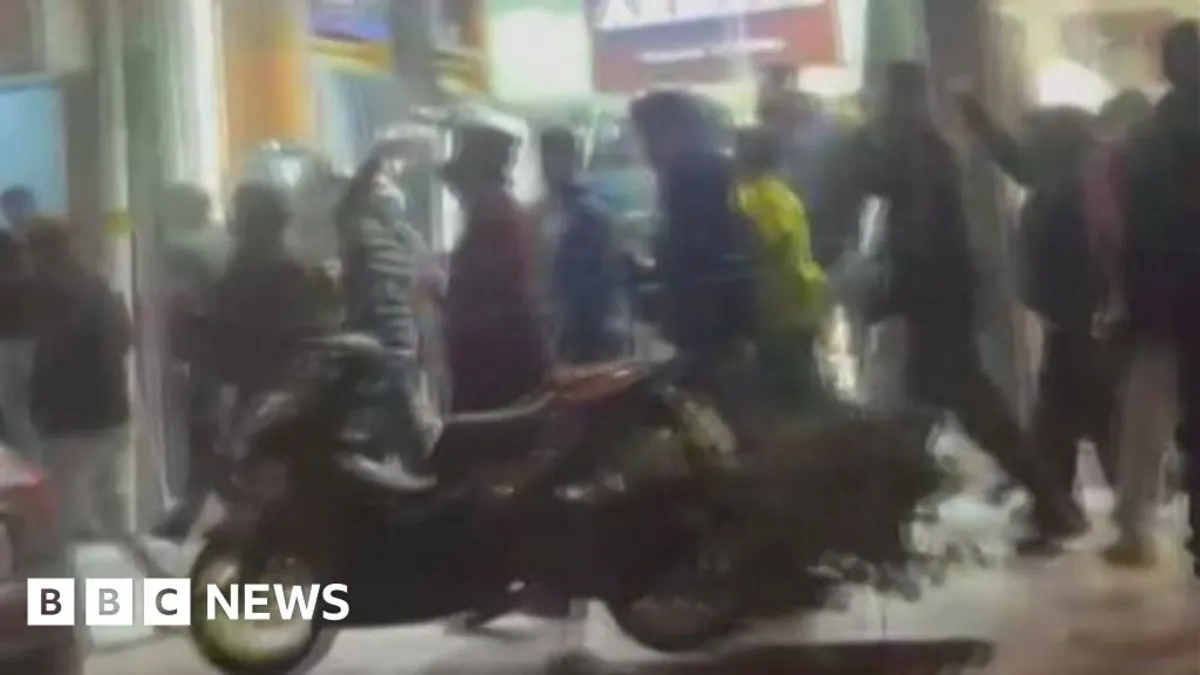
A wave of protests in Iran sparked by the country’s failing economy has entered its ninth day, drawing significant attention both domestically and internationally. President Donald Trump has renewed his threats of US intervention, amplifying the situation's urgency. Over the weekend, videos circulated online showcasing demonstrations in Tehran as well as in the provinces of Fars, Ilam, North Khorasan, and Semnan. Human rights activists report that protests have erupted in 26 out of the country’s 31 provinces since last week, resulting in the tragic deaths of at least 19 protesters and one security officer.
President Trump issued a stern warning, stating that Iranian authorities would face serious consequences if more protesters were killed. "We're watching it very closely. If they start killing people like they have in the past, I think they're going to get hit very hard by the United States," he said to reporters aboard Air Force One. This statement adds another layer of complexity to the ongoing unrest in Iran, as the international community closely monitors the situation.
On Monday morning, Mohammad Baqer Qalibaf, the speaker of Iran's parliament, acknowledged that the protesters' legitimate demands should be heard and utilized as a basis for change. However, he cautioned that any foreign agents or opponents of the Iranian establishment seeking to exploit the protests would be confronted decisively. His remarks echoed those of Iran's Supreme Leader, Ayatollah Ali Khamenei, who insisted that rioters must be controlled.
The Iranian foreign ministry's spokesman, Esmail Baqai, accused Israel of attempting to undermine national unity. This accusation follows Israeli Prime Minister Benjamin Netanyahu's expression of solidarity with the Iranian people's struggle. Baqai characterized the statements from Netanyahu and certain radical American officials as mere incitements to violence, further inflaming the already tense atmosphere.
The current protests in Iran began on December 28 when shopkeepers in Tehran expressed their frustration over a sharp decline in the value of the Iranian currency, the rial, against the US dollar. The rial has reached a record low, with inflation soaring to 40% due to ongoing sanctions related to Iran's nuclear program. University students quickly joined the protests, which have since spread to various cities across the nation.
On Monday, social media footage indicated protests in the city of Yasuj in southwestern Iran, where crowds were heard chanting "Freedom, freedom, freedom." In Sari, north of Tehran, videos showed dozens of protesters marching and chanting slogans such as "Death to the dictator," a direct reference to Khamenei, who holds ultimate power. Other videos depicted individuals fleeing amid gunfire, heightening concerns about the safety of demonstrators.
Reports from BBC Persian also noted protests occurring in the districts of Ilam, Arak, Hamedan, Amol, Lahijan, Kermanshah, Malekshahi, Semnan, and Noorabad on Sunday evening. Disturbingly, one video purportedly captured security forces storming a hospital in Ilam, where wounded protesters were allegedly seeking refuge.
This wave of protests marks the most widespread civil unrest in Iran since the uprising in 2022, which was ignited by the tragic death of Mahsa Amini, a young Kurdish woman who died in custody after being detained by morality police. That incident led to hundreds of deaths and thousands of detentions during a violent crackdown by security forces, setting a precedent for the current protests.
As the situation in Iran continues to evolve, the world watches closely, with implications that could influence not only Iranian politics but also the geopolitical landscape in the region.