

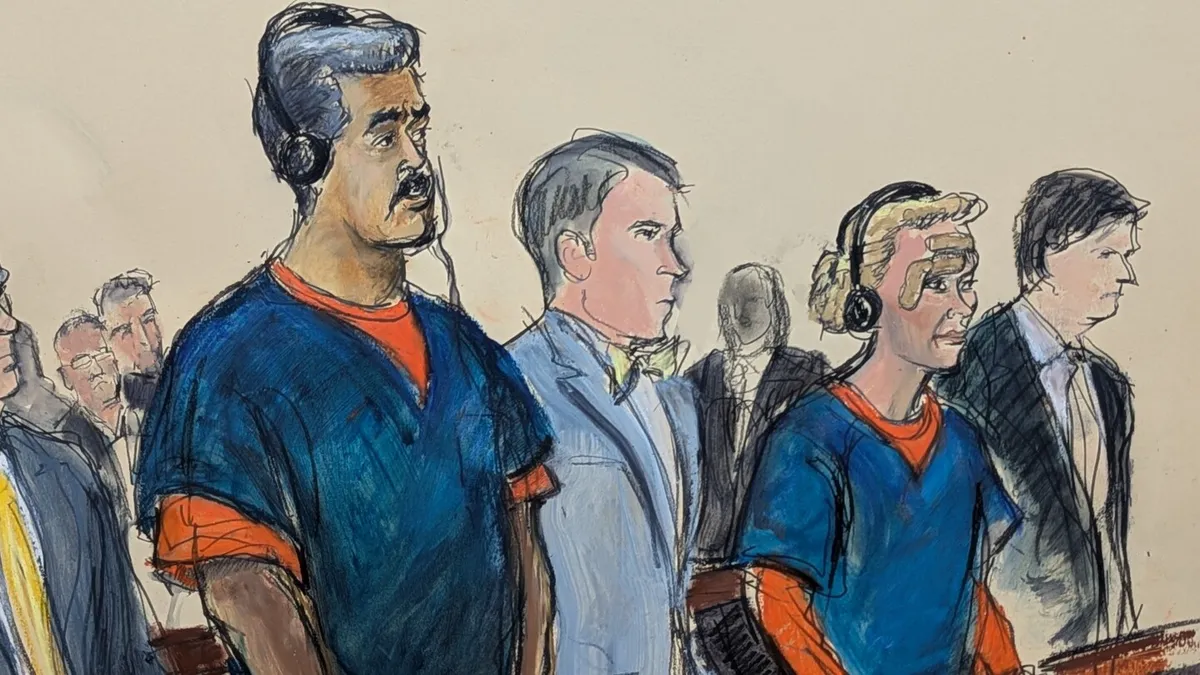
In the aftermath of two devastating world wars, nations united to create a framework of international rules and laws aimed at preventing future conflicts. This collaborative effort led to the establishment of the United Nations (U.N.) headquarters in New York, which serves as the epicenter of global diplomacy. However, recent events, particularly the arraignment of Nicolás Maduro following his removal from power in Venezuela, signal a concerning shift in this global order. The doctrine of “might makes right” appears to be regaining traction, raising alarms among world leaders and analysts alike.
During a recent meeting with the U.N. Security Council, U.N. Undersecretary-General Rosemary A. DiCarlo emphasized that the maintenance of international peace and security is contingent upon the commitment of all member states to uphold the provisions of the U.N. Charter. As tensions rise, the implications of U.S. foreign policy actions are scrutinized, particularly those undertaken by the Trump administration regarding Venezuela.
U.S. President Donald Trump has defended the operation to capture Maduro and his wife, Cilia Flores, as a legal move against individuals alleged to be involved in a narco-terrorism conspiracy. The Trump administration’s classification of Venezuelan drug cartels as unlawful combatants suggests a shift in U.S. engagement in the region, raising questions about the legitimacy of such military actions. U.S. Ambassador to the U.N., Mike Waltz, characterized the operation as a “surgical law enforcement operation,” aligning with the administration's broader National Security Strategy aimed at restoring American preeminence in the Western Hemisphere.
Trump's rhetoric has extended to neighboring Colombia, where he criticized President Gustavo Petro and imposed sanctions over alleged connections to the drug trade. As Colombia is central to the global cocaine market, the implications of U.S. policy become increasingly significant. The potential for military intervention in the region is raising concerns among analysts and global leaders, who fear that the ousting of Maduro may set a precedent for further military actions, thereby undermining the global legal order.
International leaders, including French Foreign Minister Jean-Noël Barrot, have condemned the U.S. actions, arguing that they violate the principles of the non-use of force that underpin international law. The growing trend of powerful nations disregarding these principles poses a threat to global security, as highlighted by the Russian ambassador to the U.N., who characterized the Maduro mission as a return to lawlessness.
The unfolding situation in Venezuela has implications that extend beyond its borders, particularly concerning the ongoing conflict in Ukraine, where Russia's actions have been widely criticized as a breach of international law. The European Union heavily relies on U.S. support to maintain stability in Ukraine, further complicating the international landscape.
Speculation has arisen regarding how the U.S. actions in Venezuela might influence China's strategy towards Taiwan. While China has historically employed gradual pressure tactics, the capture of Maduro introduces uncertainty regarding U.S. willingness to act decisively in similar situations. Additionally, the ongoing conflict in Gaza and tensions with Iran highlight the complexities of U.S. foreign policy in the Middle East, particularly as Trump has indicated a readiness to intervene if human rights violations occur.
The European Union, an institution founded to promote peace and stability, faces challenges in navigating its relationship with the Trump administration. While the EU has condemned Maduro's legitimacy and emphasized the importance of international law, notable leaders like Hungary's Prime Minister Viktor Orbán have questioned the efficacy of international rules in governing global politics.
As the global landscape continues to evolve, the actions of the United States and other powerful nations remain under intense scrutiny. The implications of these actions could redefine international relations and challenge the principles that have sustained global peace for decades.