

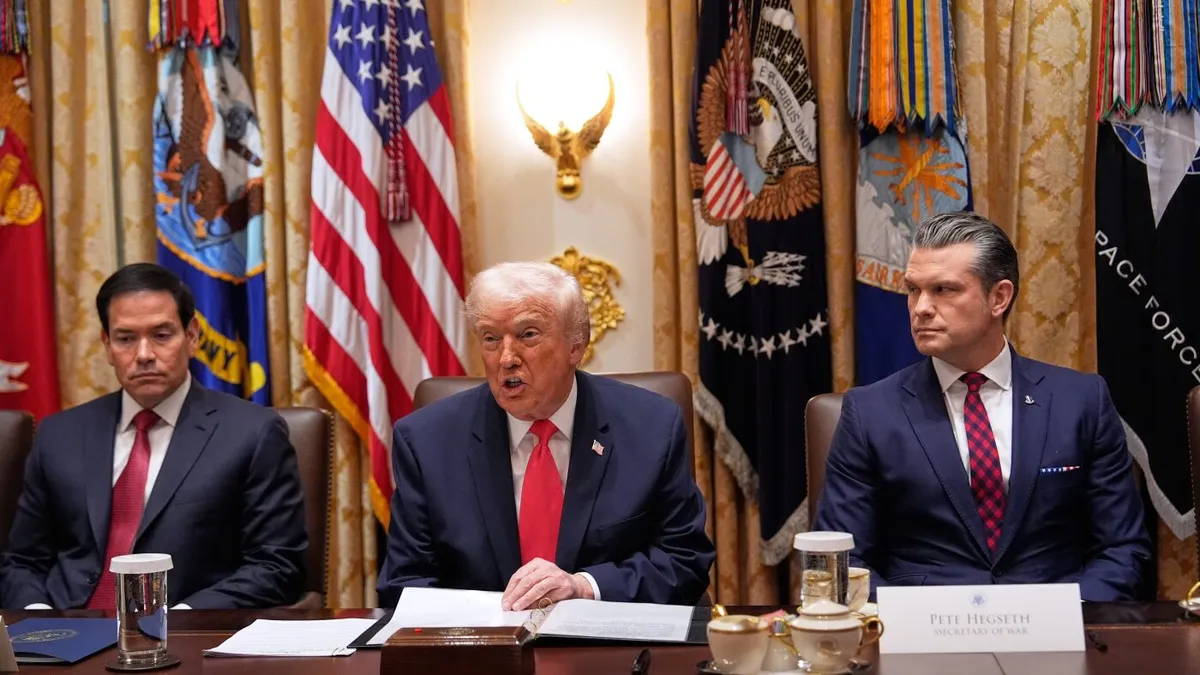
In a significant move, the Trump administration has unveiled a new national security strategy that positions European allies as weak and emphasizes the need to reassert America's dominance within the Western Hemisphere. Released on Friday, this document is set to provoke reactions from longstanding U.S. allies in Europe due to its harsh critiques of their migration and free speech policies. The strategy suggests that Europe faces a dire threat of civilizational erasure and raises concerns regarding their long-term reliability as partners for the United States.
The administration's strategy is notably critical of its democratic allies in Europe while simultaneously executing a pressure campaign against South American nations through military actions targeting suspected drug trafficking boats. In a departure from previous U.S. foreign policy approaches, the strategy questions the effectiveness of past efforts to influence Middle Eastern nations and discourages attempts to instigate governmental changes in these countries. This approach reinforces the America First philosophy, prioritizing U.S. interests above international alliances.
This new national security strategy is the first of its kind since President Trump returned to office in January, marking a stark contrast to the approach taken by President Joe Biden's administration, which focused on strengthening alliances and countering a more assertive Russia. Democratic Rep. Jason Crow from Colorado expressed grave concerns over this strategy, labeling it catastrophic for America's global standing and warning that it could lead to increased dangers for both the U.S. and its allies.
As the United States aims to facilitate an end to Russia's ongoing war in Ukraine, the new strategy highlights this goal as vital to American interests. However, it also expresses a desire to improve relations with Russia after years of viewing it as a global pariah. The strategy underscores that resolving the war is essential for reestablishing strategic stability with Russia. Furthermore, it accuses European allies of not only grappling with economic challenges but also facing what the U.S. terms an "existential crisis." The document warns that the economic stagnation prevalent in Europe could lead to a significant decline in national identities and self-confidence.
Interestingly, the strategy acknowledges the growing influence of far-right political parties in Europe, which are gaining traction due to their opposition to illegal immigration and climate policies. The U.S. administration encourages these movements, suggesting that the resurgence of patriotic sentiments in Europe is a cause for optimism. German Foreign Minister Johann Wadephul acknowledged the importance of the U.S. as a key NATO ally but emphasized that discussions surrounding freedom of expression and societal organization are not part of the alliance’s focus.
Despite the America First doctrine, Trump's administration has engaged in military actions aimed at combating drug trafficking in the Caribbean and Eastern Pacific regions. This aligns with what the strategy refers to as a "Trump Corollary" to the historic Monroe Doctrine, seeking to restore American preeminence in the Western Hemisphere. The strategy asserts that combating drug trafficking and managing migration are crucial objectives for the U.S., which is reimagining its military presence in the region.
As part of this new direction, the U.S. plans to adopt a different approach towards the Middle East, moving away from past interventions aimed at reshaping nations. The administration advocates for fostering organic reforms within these countries rather than imposing changes externally. Trump's administration has bolstered ties with Middle Eastern nations, viewing them as potential partners for economic collaboration. The strategy indicates a shift in focus as the U.S. becomes less reliant on Middle Eastern oil supplies.
In its strategy, the Trump administration also addresses the critical relationship with China, aiming to rebalance ties while countering Beijing's assertiveness, particularly regarding Taiwan. The document emphasizes the need for the U.S. to maintain military superiority over China to prevent potential conflicts over Taiwan. Furthermore, it calls for regional allies to enhance their contributions to collective defense, asserting that the American military cannot shoulder this responsibility alone.
In summary, Trump’s new national security strategy represents a comprehensive shift in U.S. foreign relations, prioritizing national interests while critically assessing traditional alliances. The implications of this strategy are likely to resonate across the globe as the U.S. redefines its role on the international stage.