

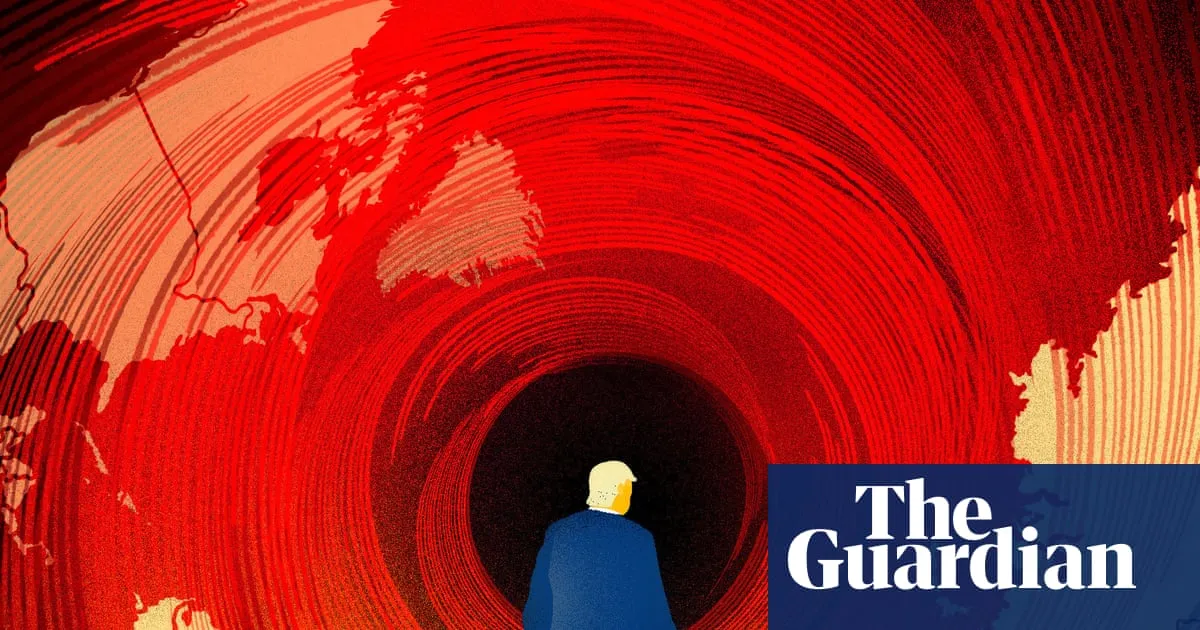
“The old world is dying,” remarked Antonio Gramsci, the influential Italian Marxist philosopher. He emphasized that during transitional periods, “every act, even the smallest, may acquire decisive weight.” By 2025, many western leaders appeared convinced that the world was indeed experiencing such a critical interregnum, as the post-World War II international relations framework seemed to collapse. This turmoil has led to a widespread crisis of legitimacy regarding the networks of rules and laws that underpin the international order, a system primarily established by the United States in 1945.
Warnings about the impending upheaval were voiced long before it materialized. US Secretary of State Marco Rubio, during his confirmation hearing in February, articulated the stark reality: “The postwar global order is not just obsolete; it is now a weapon being used against us.” He identified this moment as a critical juncture for confronting the “single greatest risk of geopolitical instability” that anyone alive today has ever faced. Rubio argued that the rules-based international order must be abandoned because it was predicated on the false notion that a foreign policy focused on core national interests could successfully transition to one that promoted a “liberal world order.”
Rubio’s sentiments found resonance in the recent US national security strategy, which highlighted the risks of European cultural erasure and emphasized backing nationalist parties that advocate for “strategic stability with Russia.” The US's commitment to no longer “prop up the entire world order like Atlas” marks a significant shift in its foreign policy approach.
Despite appearing coherent on paper, Trump’s foreign policy often manifested as a chaotic blend of non-interventionist ideology and sporadic military interventions. Critics describe this approach as a “catherine wheel of disconnected explosions,” with Donald Trump Jr. embracing unpredictability as a political virtue. This tumultuous nature of US foreign policy has left Washington's allies confused, offering false hope that the rift with America was not insurmountable.
One consistent target of Trump's disdain has been the constraints of international law, particularly the value system that prioritizes national sovereignty and prohibits the use of force to alter borders. Instead, Trump has opted for a strategy characterized by “sheer coercive power,” often described as mobster diplomacy. This approach relies on intimidation and deal-making rather than adherence to established norms.
The implications of this shift are profound. For instance, the US has the military capability to expel Russia from Ukraine but seems to favor cultivating a profitable relationship with Putin, prioritizing economic gain over international stability. This choice places Ukraine and its sovereignty at significant risk, as the nation bears the burden of supporting an economy that aligns with Trump’s interests.
In the context of global oil resources, Venezuela’s sovereignty, with its substantial reserves, also comes under scrutiny. The US administration has notably disregarded international norms, evidenced by Vice President JD Vance's brazen dismissal of concerns regarding war crimes in the Caribbean.
Simultaneously, the erosion of international law is evident in the ongoing conflict in Gaza, where Israeli actions, often supported by Western nations, expose the hypocrisy of the global community’s commitment to universal norms. Majed al-Ansari, a foreign policy adviser to Qatar’s prime minister, lamented the current state of affairs, noting a disturbing trend towards accepting violence as a norm in international relations.
This atmosphere of impunity extends to individuals advocating for adherence to international law. Nicolas Guillou, a French judge at the International Criminal Court, has faced severe repercussions for upholding humanitarian law, with US sanctions impacting his daily life and professional interactions.
The US has also undermined several UN bodies, cutting billions in funding and dismissing numerous officials who supported key UN initiatives. This withdrawal from international cooperation has left the US increasingly isolated, with John Kerry observing that the nation is transitioning from a leader to a “denier, delayer, and divider.”
The impact of this shift is evident in various multilateral institutions, which have become battlegrounds for US dominance or indifference, exemplifying a troubling trend of coercion and humiliation directed at former allies.
As Dr. Tor Krever from the University of Cambridge points out, the discourse surrounding international law has gained prominence, especially concerning crises like Gaza. However, the question remains whether international law can genuinely serve as a solution amid rising public expectations. Many scholars have expressed skepticism regarding the efficacy of international law in a polarized world.
Critics argue that the West’s focus on a rules-based international order often conceals a history of violence and racial hierarchy. Prominent voices, including Sergei Lavrov and Wang Yi, assert that the US promotes a “west-centric rules-based order,” undermining true international law.
As global leaders grapple with the implications of the shifting international landscape, Christoph Heusgen, former chair of the Munich Security Conference, asserts the need for a unified set of norms based on the UN Charter and the Universal Declaration of Human Rights. However, the outlook remains grim, with Ansari foreseeing a trajectory towards disorder rather than a structured multipolar system.
In this uncertain environment, the capacity for accountability appears waning, as nations increasingly operate without regard for established international norms. The world stands at a pivotal moment, where the actions taken today will shape the geopolitical landscape for generations to come.