

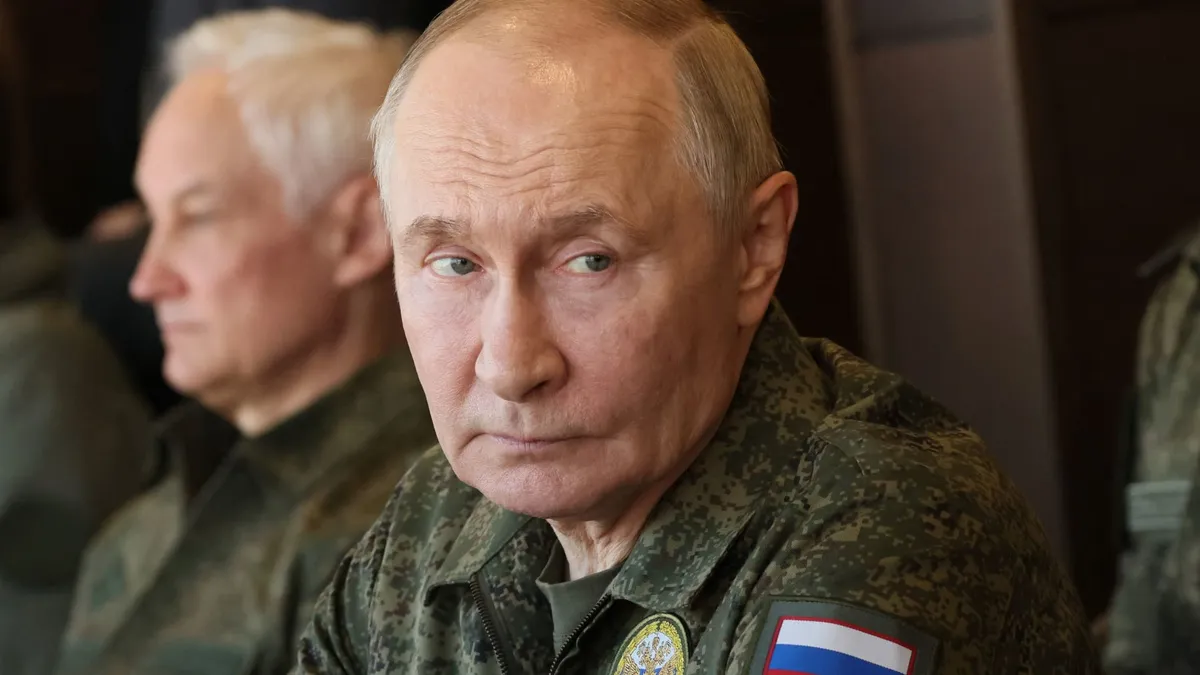
All eyes are on Russia this week as diplomatic efforts to establish a peace plan aimed at ending the ongoing war in Ukraine gain momentum. U.S. Special Envoy Steve Witkoff is set to travel to Russia on Monday for crucial discussions with Russian President Vladimir Putin regarding a U.S.-backed 19-point peace plan. This marks a significant step in the peace negotiations, with Ukraine showing tentative support for the evolving proposals, thus placing the onus on Russia to engage with the framework agreement.
The latest peace initiative represents an amended version of an earlier 28-point plan created by the U.S. and Moscow without Ukrainian involvement. This original proposal was criticized for favoring Russia, raising concerns within Ukraine and among its allies. The Kremlin is now keen to weigh in on these revised proposals following a series of diplomatic discussions involving both U.S. and Ukrainian officials over the past week, including talks held in Florida on Sunday.
Despite the intensified dialogue, it remains uncertain whether Putin will cooperate with the new peace plan. Analysts suggest that Russia currently perceives itself as having the upper hand on the battlefield. Moreover, the Kremlin reportedly has the attention of U.S. President Donald Trump, which could play a pivotal role in shaping the future peace deal. The Kremlin has officially confirmed that Witkoff and Putin will meet on Tuesday to further discuss these peace proposals.
So far, Putin and other Kremlin officials have reacted with caution to the amended peace plan, indicating a willingness to engage in dialogue while simultaneously suggesting that the war may not conclude swiftly. During a recent visit to Kyrgyzstan, Putin stated, “In general, we agree that this can be the basis for future agreements,” highlighting that the U.S. seems to be considering Russia’s stance on peace negotiations. However, he also emphasized that hostilities would persist until Ukrainian troops withdraw from strategic locations in the contested regions.
Putin's remarks hint that Moscow is unlikely to relinquish its key objective of controlling Ukraine’s eastern Donbas region. Analysts at the Institute for the Study of War noted that Russian military bloggers appear skeptical about Putin's willingness to compromise on territorial demands. The prevailing sentiment in Russian information circles suggests that the Kremlin may reject any ceasefire proposals or iterations of the U.S.-proposed peace plan, viewing them as obstacles to their strategic goals in Ukraine and globally.
The current diplomatic efforts to secure a peace deal come after a period of fluctuating U.S. policy regarding the war in Ukraine. President Trump has shown inconsistent support for Ukraine, occasionally aligning with Russian demands that Ukraine cede occupied territories as part of a peace settlement. Following discussions with Ukrainian officials in Florida, U.S. Secretary of State Marco Rubio described the path to a peace deal as “delicate,” asserting that Russia’s position must be considered in any agreement.
Rubio characterized the four-hour talks, which included Witkoff, Trump’s son-in-law Jared Kushner, and a Ukrainian delegation led by National Security and Defense Council Secretary Ustem Rumerov, as productive. However, he acknowledged that substantial work remains to be done before reaching a conclusive peace agreement. "So much work remains, but today was, again, a very productive and useful session where I think additional progress was made," Rubio told reporters after the discussions.