

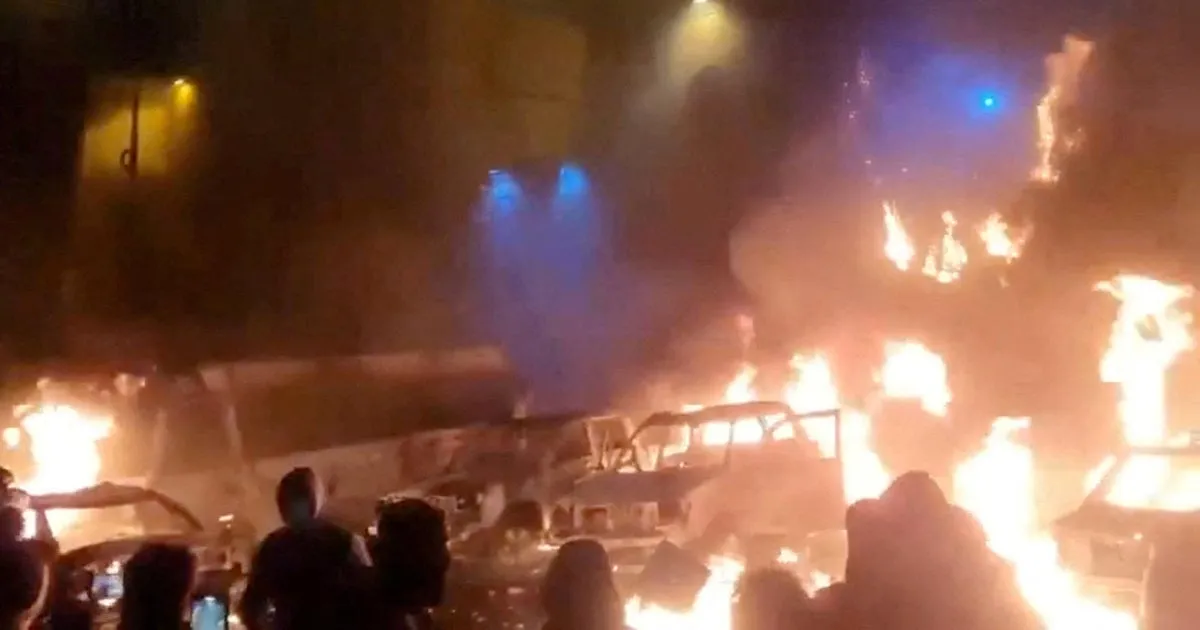
Protests in Iran intensified late Friday night, as online videos surfaced showing demonstrators clashing with security forces despite the government's threats to suppress dissent. The Iranian government had previously shut down the internet and cut off telephone lines, attempting to stifle communication amidst the unrest. Protesters have drawn inspiration from expressions of support by the Trump administration and the country's exiled crown prince, who urged them to overwhelm security forces and take control of cities.
An external rights group, relying on contacts within Iran, reported that at least 65 people have died since the protests began in late December, sparked by widespread anger over the nation's collapsing economy. This unrest has rapidly evolved into one of the most significant challenges to the Iranian government in years. In a televised address, Supreme Leader Ayatollah Ali Khamenei accused President Trump of having "bloody hands," while his supporters shouted anti-American slogans. Khamenei claimed that the protests were being fueled by external influences, specifically targeting the U.S. president and dismissing the demonstrators as "terrorists."
As protests continued, Iran's attorney general issued a stern warning, declaring that participants would be considered "enemies of God," a charge that carries the death penalty. President Trump has reinforced his stance, threatening serious repercussions if any protesters are harmed, emphasizing that any American response would be targeted and would not involve ground troops. His warnings suggest that the U.S. is closely monitoring the situation, with Trump stating, "Iran's in big trouble," and noting that protesters are making significant advances in several cities.
The Human Rights Activists News Agency reported that the unrest has led to the arrest of over 2,300 people across at least 180 cities. As protests escalated, the Iranian government implemented a nationwide internet blackout, severely limiting communication and making it challenging to gauge the true extent of the demonstrations. While state media reported few fatalities, independent sources suggest that the death toll could be much higher, with some estimates reaching 217 deaths.
Hospitals in Iran are reportedly overwhelmed with injured individuals, many suffering from gunshot wounds. Medical professionals have indicated that they lack sufficient resources to handle the influx of patients, with some facilities declaring a state of emergency. The grave situation has led many to question how seriously the Iranian leadership is taking international warnings, with some analysts suggesting that the rhetoric from Trump may have emboldened protesters.
Many observers are describing the current situation in Iran as a potential revolution, although the lack of a central leadership figure complicates the movement. The Iranian diaspora looks to the exiled royal family as a possible unifying force, but there remains uncertainty about the extent of support for their return. The exiled crown prince, Reza Pahlavi, has called for continued protests and aims to inspire Iranians to seize control of urban centers.
On the ground, reports of ongoing protests contradict state media claims of calm. While Iranian state television broadcasted scenes of pro-government demonstrations, verified videos showed significant unrest in various cities, with protesters chanting anti-government slogans. The Young Journalists' Club, linked to Iran's state media, reported violent incidents where protesters clashed with security forces, resulting in casualties among both demonstrators and security personnel.
The Iranian government's efforts to control the narrative have been challenged by international media, with limited access to foreign outlets. As the protests continue, many are left wondering about the future of Iran and the potential for meaningful change. The situation remains fluid, and the world watches closely as the Iranian people seek to make their voices heard amidst severe repression.