

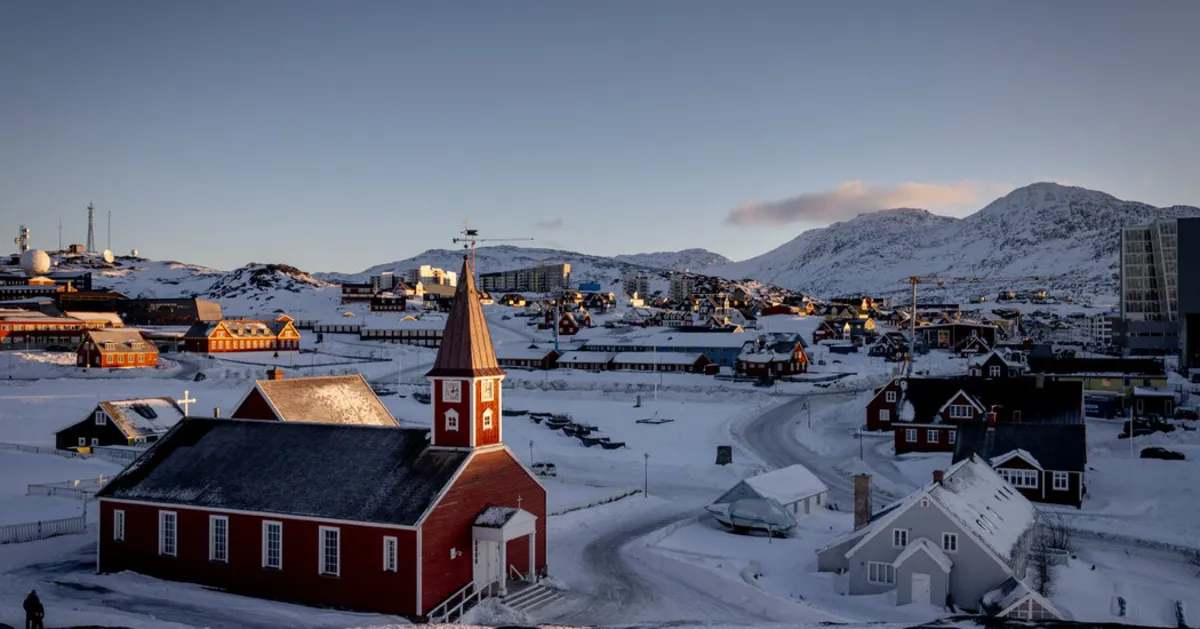
For Prime Minister Mette Frederiksen of Denmark and her fellow European leaders, the recent threats of violence from their American allies have been nothing short of alarming. On a particular Monday, Stephen Miller, one of former President Trump’s closest aides, was approached with a controversial question: Would he rule out the use of military force to seize Greenland, a semiautonomous territory of Denmark? Not only did Mr. Miller refuse to dismiss the notion, but he also went a step further by questioning Greenland’s status, dismissing its historical ties to Denmark, and belittling the idea that Europe could effectively stand up to American military might.
In a striking appearance on CNN, Mr. Miller stated, “The real question is, by what right does Denmark assert control over Greenland? Obviously, Greenland should be part of the United States.” These candid remarks shattered any semblance of calm that Prime Minister Frederiksen had maintained in her yearlong efforts to diplomatically dissuade President Trump from his ambitions regarding Greenland. The comments left a visibly shaken Ms. Frederiksen and instigated a sense of panic among her European counterparts, as revealed in interviews with various diplomatic and military officials across several nations.
The implications of Mr. Miller’s comments, coupled with President Trump’s earlier insistence that “we do need Greenland, absolutely,” have crystallized the concerns for European leaders. In response, they are actively collaborating behind the scenes to draft potential strategies. These strategies may include bolstering NATO forces to counteract growing Chinese and Russian influences, as well as contemplating the possibility of offering President Trump access to Greenland’s rich mineral resources.
The emerging consensus among European officials is clear: they must find a way to circumvent a politically damaging confrontation with President Trump through negotiation. One prevalent concern articulated in private discussions among European diplomats is that the issue of Greenland transcends mere security or economic interests. Rather, it appears to be intertwined with Mr. Trump’s ambition to “make America greater again,” as one European foreign minister put it. This desire to expand American territory for the first time in decades adds a complex layer to the geopolitical landscape.
As European leaders navigate these turbulent waters, the focus remains on fostering dialogue and seeking diplomatic solutions to avoid escalating tensions regarding Greenland. The stakes are high, and the outcome will undoubtedly shape the future of transatlantic relations.