

In a significant escalation of hostilities, Moscow has executed one of its heaviest air assaults on Kyiv in recent weeks. This intense bombardment occurred overnight, coinciding with Ukrainian President Volodymyr Zelenskyy's preparations for high-stakes discussions with U.S. President Donald Trump regarding a revised peace proposal. According to Ukrainian authorities, the Russian offensive involved nearly 500 drones and approximately 40 missiles, including the advanced Kinzhal hypersonic weapons.
The air assault triggered widespread air-raid sirens throughout the capital, leaving parts of Kyiv without electricity and heating as freezing temperatures set in. Ukrainian Interior Minister Ihor Klymenko reported that at least one civilian lost their life, while over 20 individuals sustained injuries. The attack also caused significant damage to multiple residential buildings, prompting rescue teams to search for those trapped beneath the rubble.
The ramifications of this attack reverberated across Europe’s eastern flank. In response, Poland scrambled fighter jets and heightened its air defense systems as a precautionary measure, citing increased Russian long-range aviation activity targeting Ukraine. Poland’s Operational Command announced military aviation operations aimed at protecting Polish airspace, later clarifying that no violations occurred, which led to the lifting of the alert status.
Polish Prime Minister Donald Tusk characterized the strikes by Russian President Vladimir Putin’s forces as a stark reminder of the disparity between diplomatic efforts and Moscow's aggressive actions on the ground. Tusk remarked on social media platform X that, despite President Trump’s expectations for progress in negotiations, Russia had escalated its attacks on Kyiv’s residential districts. He indicated plans to discuss the situation later with leaders from Ukraine, Germany, France, the U.K., Italy, and the European Union to explore the chances for peace.
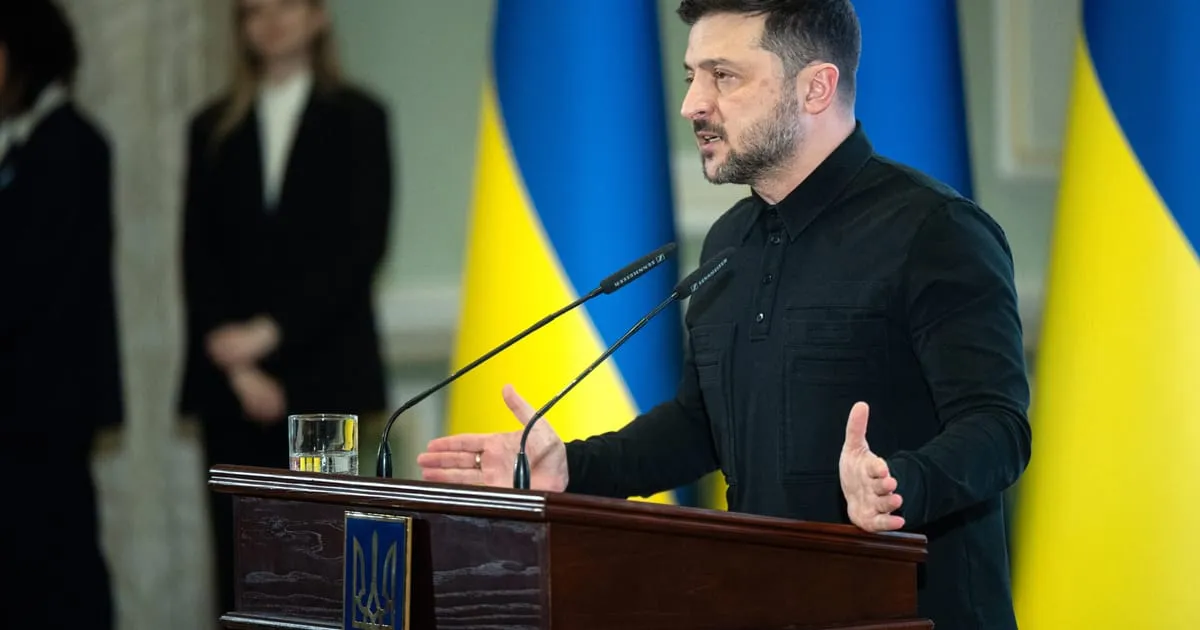
The air strikes occurred as Zelenskyy was en route to North America, with a stop in Canada before heading to Florida for discussions with Trump. He communicated to reporters that he and Canadian Prime Minister Mark Carney intend to have online discussions with European leaders to review key issues and exchange updates regarding the documents set for discussion with the U.S. president. Zelenskyy emphasized that the recent attacks highlight the necessity for robust security guarantees, which he termed “our most important consideration” in the ongoing peace discussions.
Among the critical topics set to be addressed in the forthcoming negotiations are the territorial control of the Donbas region and the management of the Zaporizhzhia nuclear power plant. Zelenskyy expressed his concerns about Russia's true intentions, stating, “Russian representatives engage in lengthy talks, but in reality, Kinzhal missiles and 'shaheds' speak for them.” He condemned the Russian leadership's apparent reluctance to end the conflict, suggesting they intend to exploit every opportunity to inflict greater suffering on Ukraine.
The upcoming meeting with Trump is anticipated to center around a newly revised 20-point Ukrainian peace plan, which includes proposals for security guarantees and territorial arrangements. Trump has positioned himself as a pivotal figure in the negotiations, suggesting that Zelenskyy “doesn’t have anything until I approve it.” This assertion adds another layer of uncertainty to the diplomatic efforts as Russia continues its campaign of large-scale aerial attacks on Ukrainian cities.
As the situation unfolds, the trajectory of peace talks between Ukraine and Russia remains precarious, with ongoing military actions complicating the landscape for diplomacy. Veronika Melkozerova contributed to this report.