

Last month, a group of defense insiders convened in Whitehall, the heart of the British government, to assess the preparedness of the United Kingdom and its allies against a looming threat of war. Their conclusion was sobering: the UK and its allies are far from ready. This meeting, organized by the Royal United Services Institute (RUSI), brought together current and former military personnel, government officials, NATO representatives, researchers, and defense industry experts. Their insights were grounded in a widely accepted intelligence assessment that suggests Russia is gearing up for potential conflict with Europe.
Experts at the conference emphasized that to avert a possible war, Europe must demonstrate a unified front capable of winning any conflict that might arise. They argue that a substantial increase in European defense funding is crucial, but they also warn of the necessity for a significant shift in mindset among European governments. It is imperative for these governments to engage their citizens in discussions about the reality of modern threats and the importance of defense readiness.
“There’s an indication that societies are willing to engage in this conversation, but governments seem hesitant to communicate openly with the public,” said Sam Greene, a professor of Russian politics at King’s College London. Greene highlights a growing acknowledgment among experts that Russia is currently conducting a hybrid war against the West, characterized by sabotage and disinformation campaigns aimed at destabilizing domestic political discourse.
The evidence of Russian operations is overwhelming, with incidents such as unauthorized incursions into NATO airspace and GPS jamming in the Baltics being highlighted. Additionally, numerous sabotage attacks on critical infrastructure have been traced back to Russian intelligence services, despite ongoing denials from Moscow. Greene noted that these aggressive tactics have altered perceptions across Europe, even if some political leaders remain reluctant to label them as hybrid warfare.
“People are becoming increasingly alarmed as these incidents become more visible,” Greene said. “We’re seeing drones near airports, and it’s likely only a matter of time before one leads to a catastrophic event.”
While Russia has yet to launch direct attacks against NATO allies, warnings from NATO Secretary General Mark Rutte suggest that this may change within the next five years. German Foreign Minister Johann Wadephul echoed this sentiment, indicating that intelligence assessments predict Moscow could consider military action against NATO by 2029. The consensus among Baltic nations is particularly dire, with predictions of potential aggression within the next three years.
Researchers at the Belfer Center for Science and International Affairs at Harvard found that the years 2027 and 2028 frequently appear in discussions about Russia's military intentions. Consequently, NATO is developing contingency plans to defend the Baltics, but experts caution that these plans are not adequately backed by action. “We have a plan, but governments are not making the necessary moves to implement it,” warned Jack Watling, a senior research fellow at RUSI.
This year, the UK government enlisted the expertise of notable figures such as former NATO chief George Robertson and General Richard Barrons to provide a strategic review of the nation’s defense posture. Their findings emphasize the urgent need for the UK to enhance its infrastructure resilience, bolster armed forces, and establish a robust civil defense framework. Speaking at the RUSI event, Barrons highlighted the importance of rapid implementation of these recommendations, stating, “We don’t need more analysis; we need action.”
He pointed out that societal and political distractions are hindering progress, warning that at the current pace, it could take the UK a decade to achieve readiness for conflict, while assessments suggest a timeline of three to five years is more realistic.
For decades, European nations, including the UK, have enjoyed an extended period of peace, leading to a significant peace dividend. As a result, governments prioritized welfare over defense, relying heavily on the United States for military support. This tranquility was shattered by two pivotal events: the election of Donald Trump, who urged NATO allies to increase their defense spending, and Russia’s full-scale invasion of Ukraine.
This shift has prompted many European NATO members to boost their defense budgets significantly. According to NATO data, 31 out of 32 member countries are expected to meet the target of allocating 2% of their GDP to defense this year, a stark increase from just six nations in 2021. Despite these commitments, many analysts remain skeptical about the feasibility of reaching a 5% GDP target by 2035, especially amid existing financial pressures.
Surveys conducted by Eurobarometer reveal that a significant majority of Europeans—78%—are concerned about the EU’s defense and security in the coming years, with one-third prioritizing defense spending. However, comments from French military leaders, urging citizens to prepare for potential losses in a conflict with Russia, indicate a growing apprehension about the realities of warfare.
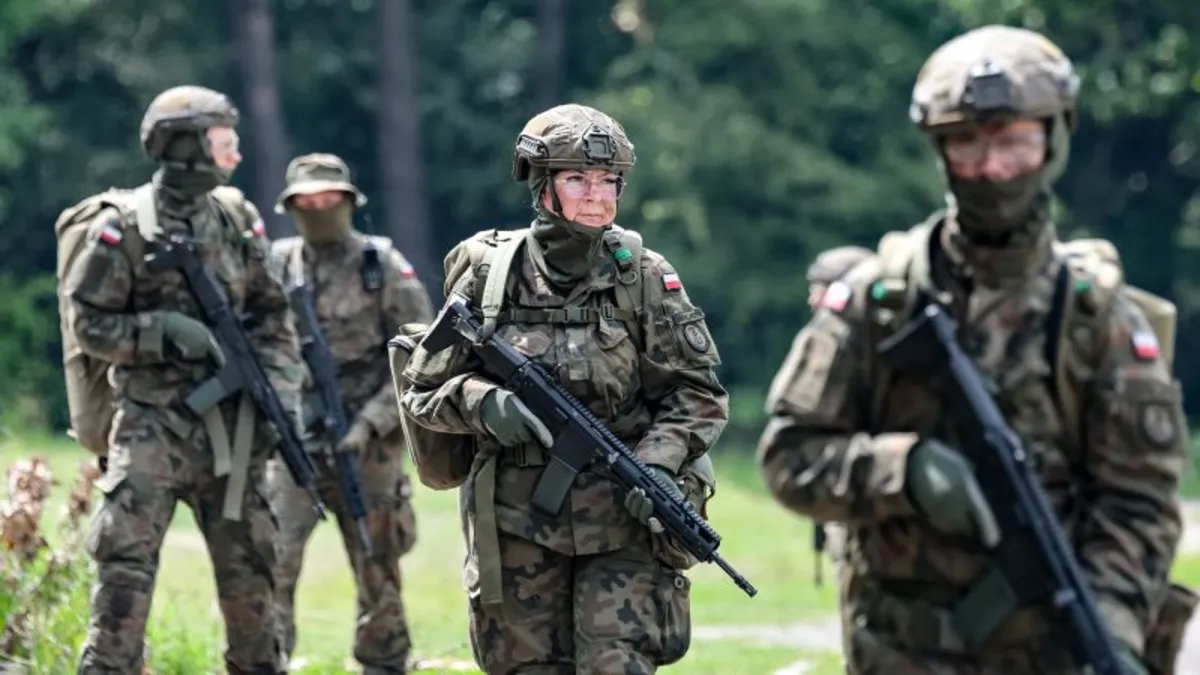
Robin Potter from Chatham House notes that public perception of the threat varies significantly across Europe. In nations bordering Russia, like Poland and the Baltic states, there is a palpable sense of urgency, leading to increased investments in public shelters and military readiness. Countries such as Sweden and Finland have even updated citizen guidance on survival strategies in the event of war.
Moreover, several nations have reintroduced conscription or established voluntary military training programs. Potter emphasizes that trust in government institutions plays a crucial role in public willingness to contribute to national defense efforts. In countries with high levels of trust, citizens are more likely to accept the sacrifices necessary for the collective good, a contrast to nations like the UK, where public trust in institutions may not be as strong.