

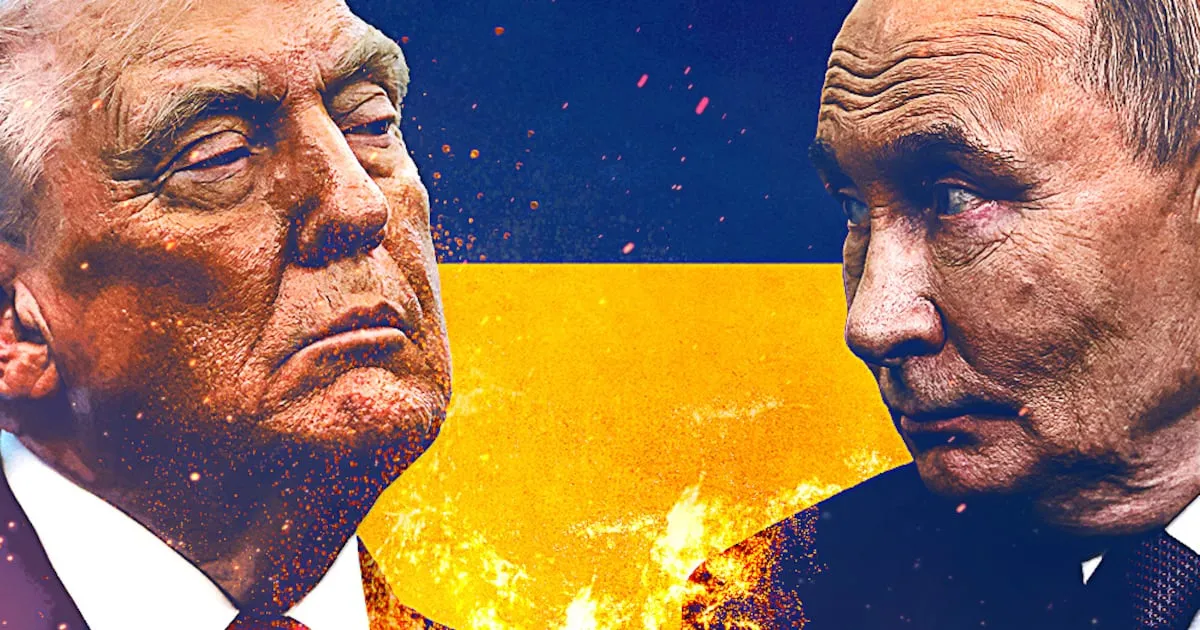
Russia appears to strongly disagree with the assessment made by U.S. Special Envoy Steve Witkoff, who claimed that the country is "fully committed" to pursuing peace with Ukraine. Over the weekend, Russian forces launched a devastating attack on Kyiv, resulting in one fatality and injuring dozens. This assault occurred less than a week after Witkoff's optimistic statement regarding Russia's so-called commitment to peace.
On December 27, the Russian Defense Ministry announced that it executed a "massive strike" on Ukraine, utilizing "long-range precision-guided weapons from land, air, and sea, including Kinzhal hypersonic aeroballistic missiles." This extensive bombardment lasted for ten hours and was timed just one day before Ukrainian President Volodymyr Zelensky, 47, was scheduled to meet with former President Donald Trump, 79, in Florida. The purpose of this meeting was to discuss Zelensky's peace proposal aimed at resolving the ongoing Russia-Ukraine war.
In light of the recent attack, President Zelensky expressed that such actions illustrate Russia's true stance on peace. He raised a critical question on Telegram: "Where is the Russian response to the proposals to end the war, which were made by the United States and the world?" Zelensky emphasized that while Russian representatives engage in lengthy discussions, their actions—exemplified by the use of Kinzhal missiles and Shahed drones—speak volumes. The escalation of violence puts additional pressure on the upcoming meeting with Trump.
Former President Trump has shown signs of fatigue regarding the prolonged conflict, placing blame on Ukraine and its European allies rather than on Russia. Zelensky is expected to urge the United States to exert more pressure on Russia to facilitate a resolution to the war. He indicated a willingness to compromise, stating, "Russia is constantly looking for reasons not to agree to a peace deal." Furthermore, he added, "If Ukraine demonstrates its position and it is constructive, while Russia does not agree, then it means the pressure is insufficient. This is also something I want to discuss with the president of the United States."
The discussions between Zelensky and Trump will center around revisions of two peace plans initially proposed by the United States and Europe. The first U.S. peace plan, introduced in November and crafted by Witkoff, was based on a previously suggested Russian peace plan. However, European leaders deemed it excessively favorable to Russia and subsequently presented their own version of a potential agreement. Zelensky’s proposed deal, developed in collaboration with the U.S., aims for a mutual withdrawal of troops from disputed territories in Donetsk, contingent upon similar actions from Russia. As of now, Russia has shown little inclination to compromise on its objectives in the ongoing peace negotiations.
During a conversation with Politico on Friday, Trump appeared reluctant to endorse Zelensky’s proposal, stating, "He doesn’t have anything until I approve it, so we’ll see what he’s got." He further commented, "I think it’s going to go good with him. I think it’s going to go good with Putin." This statement reflects Trump’s cautious approach as he navigates the complexities of the ongoing conflict and the various peace proposals on the table.