

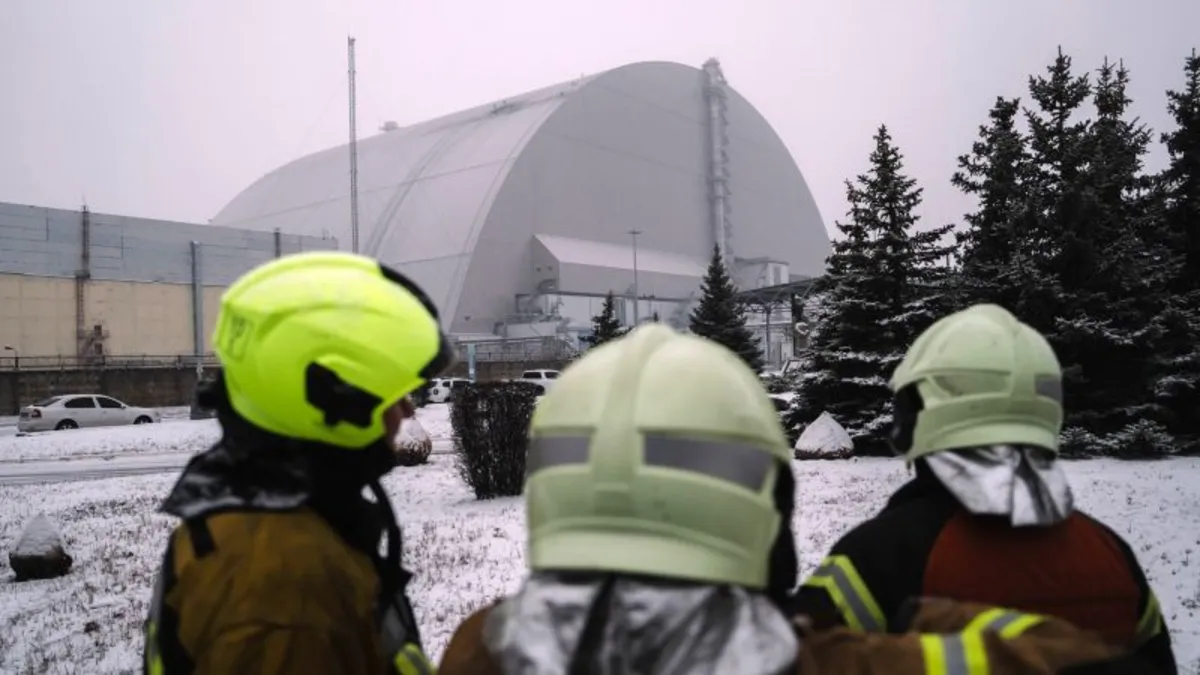
The protective shield surrounding the Chernobyl nuclear disaster site in Ukraine is no longer effective in containing radioactive waste due to a drone strike that occurred earlier this year, as reported by the International Atomic Energy Agency (IAEA). The New Safe Confinement (NSC), a structure designed to secure the site, was “severely damaged” by the drone strike in February, leading the IAEA to conclude that it has “lost its primary safety functions, including the confinement capability.”
Ukraine has accused Russia of executing the drone strike on February 14 at Chernobyl, a claim that the Kremlin has denied. The IAEA's findings indicate that the strike resulted in damage to the NSC, which sparked a fire and compromised the protective cladding surrounding the structure. The nuclear watchdog has now recommended a major renovation of this enormous steel structure, which was initially erected years ago to facilitate cleanup operations and ensure safety at the site, nearly four decades after the catastrophic nuclear accident.
IAEA Director General Rafael Mariano Grossi emphasized the urgency of the situation, stating, “Limited temporary repairs have been carried out on the roof, but timely and comprehensive restoration remains essential to prevent further degradation and ensure long-term nuclear safety.” Fortunately, Grossi confirmed that there has been no permanent damage to the NSC's load-bearing structures or monitoring systems, providing a glimmer of hope amid the crisis.
The IAEA, which maintains a permanent presence at the Chernobyl site, has committed to “continue to do everything it can to support efforts to fully restore nuclear safety and security,” Grossi added. This commitment is particularly vital given the ongoing threats to the facility.
This incident is not the first time that Chernobyl has garnered international attention during Russia’s nearly four-year war in Ukraine. In the early days of Moscow’s full-scale invasion in February 2022, Russian forces seized control of the nuclear plant and its surrounding area, holding staff hostage before eventually returning control to Ukrainian personnel just over a month later.
The NSC is a massive, arch-shaped steel structure built to cover the ruined No. 4 reactor at Chernobyl and contain its hazardous radioactive material. As the world’s largest movable land structure, this colossal hangar represents a monumental achievement in engineering. Constructed between 2010 and 2019, it was designed to last for 100 years and has played a crucial role in securing the site since its completion.
Funding for the project amounted to €2.1 billion and came from contributions made by over 45 donor countries and organizations through the Chernobyl Shelter Fund. The European Bank for Reconstruction and Development hailed the venture in 2019 as “the largest international collaboration ever in the field of nuclear safety.”
On April 26, 1986, an explosion ripped through the No. 4 reactor at Chernobyl, then part of the Soviet Union. This catastrophic event released vast amounts of radioactivity into the environment, affecting large regions of Ukraine, Belarus, Russia, and beyond. The ongoing situation at Chernobyl continues to be a critical concern, both for regional safety and for the global community's understanding of nuclear safety measures.