

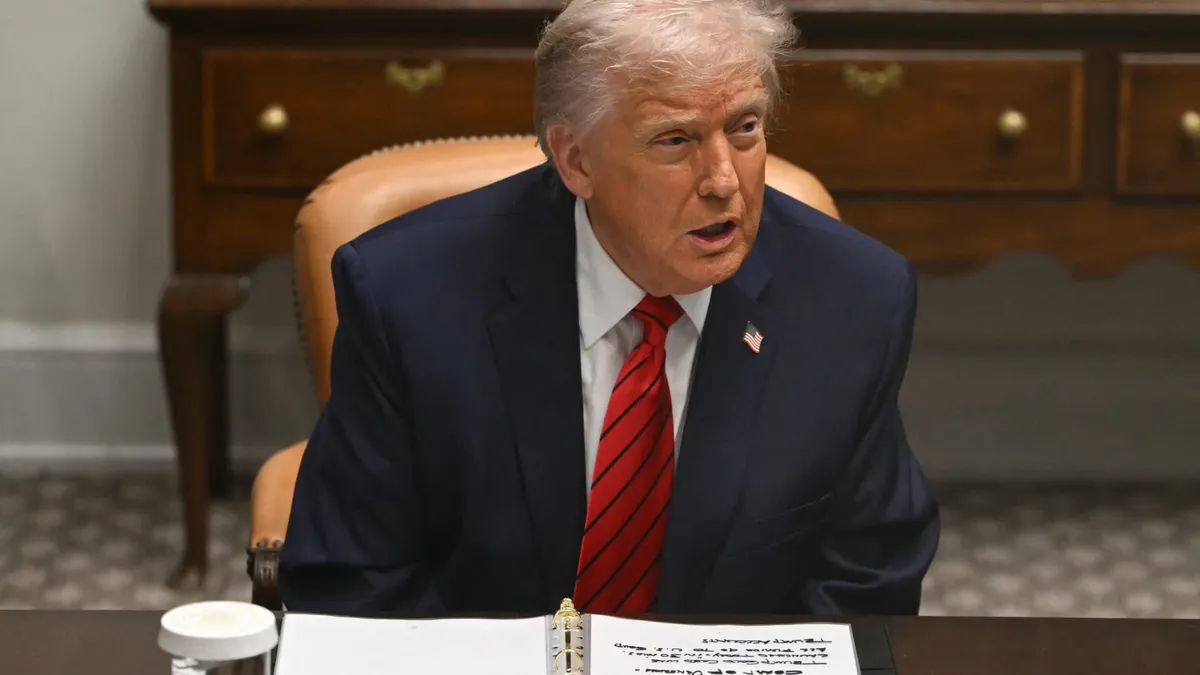
In a significant move, U.S. forces seized a large oil tanker off the coast of Venezuela on Wednesday, as confirmed by President Donald Trump. During a meeting in the Roosevelt Room at the White House, Trump declared, “We’ve just seized a tanker on the coast of Venezuela — a large tanker, very large, the largest one ever seized actually.” This operation marks a critical escalation in U.S. actions against Venezuelan oil exports.
When pressed for details regarding the tanker’s ownership and intended destination, President Trump refrained from disclosing any specific information. He emphasized that the seizure was carried out for “a very good reason,” hinting at broader implications for U.S. energy markets and international relations.
The seizure has had an immediate effect on crude oil prices. U.S. crude oil prices rose by 70 cents, or 1.2%, reaching $58.95 per barrel at 3:12 p.m. ET. Meanwhile, the global benchmark Brent crude also saw an increase of 71 cents, or 1.15%, climbing to $62.65 a barrel. These fluctuations underscore the volatility in the oil market, particularly in response to geopolitical tensions.
In recent weeks, President Trump has intensified his pressure on Venezuelan President Nicolas Maduro. In an interview with Politico published on Tuesday, Trump suggested that Maduro’s days are numbered. He further stated, “I don’t want to rule in or out. I don’t talk about it,” when asked if a ground invasion of Venezuela was a possibility. This comment highlights the administration's willingness to consider all options in dealing with the Venezuelan regime.
The White House is reportedly undertaking a substantial military buildup in the Caribbean. This includes launching controversial and deadly strikes against vessels alleged to be involved in drug trafficking to the U.S. These military actions indicate a broader strategy to combat not only oil trafficking but also drug-related issues stemming from Venezuela.
Venezuela is a founding member of OPEC and possesses the largest proven oil reserves globally. Currently, the nation is exporting approximately 749,000 barrels per day, with a significant portion—at least half—of this oil being sent to China, according to data from energy consulting firm Kpler. Notably, Venezuela exports around 132,000 barrels per day to the U.S., indicating its crucial role in the North American energy landscape.
Matt Smith, an oil analyst at Kpler, has indicated that shippers are likely to exercise increased caution in loading Venezuelan crude moving forward. The recent seizure and ongoing military actions could lead to a significant shift in how oil markets interact with Venezuelan exports, impacting global supply chains and pricing.