

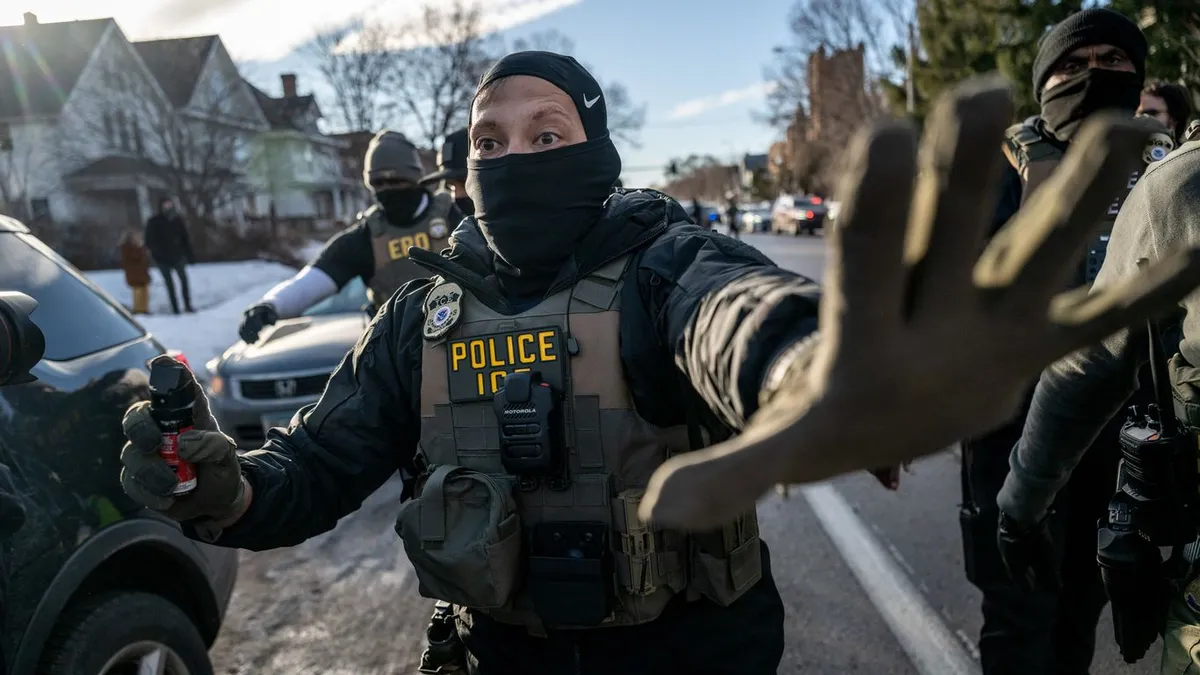
This case involves six individual plaintiffs who have come forward to challenge the actions of federal agents in Minnesota. In a significant development, Minneapolis, St. Paul, and state officials have also initiated a separate lawsuit aimed at ending the recent surge in ICE (Immigration and Customs Enforcement) operations. This legal battle underscores the growing tensions surrounding federal enforcement actions in the region.
Driving the news forward, U.S. District Judge Katherine Menendez has issued a ruling that restricts ICE agents from arresting or using pepper spray against individuals merely for observing or criticizing the federal government’s actions. This decision marks a pivotal moment for residents who have taken it upon themselves to monitor ICE activities in their communities.
Furthermore, Judge Menendez ruled that simply following ICE vehicles does not provide justification for a traffic stop. This ruling is particularly significant as it protects an increasingly common tactic used by Minnesotans to track raids occurring in the Twin Cities, fostering a sense of community oversight and accountability.
The ruling by Judge Menendez is part of a broader trend, as a federal judge similarly restricted the actions of federal agents in Chicago last fall. This came after allegations surfaced from journalists and protesters claiming that they were targeted with extreme brutality outside an ICE facility.
To provide further context, the American Civil Liberties Union (ACLU) filed the lawsuit on December 17 on behalf of six U.S. citizens who reported being legally observing ICE activity. These individuals claimed that they faced arrest, pepper-spray attacks, or threats from federal agents. Notably, the plaintiffs include Susan Tincher, whose arrest outside her home by ICE agents received significant media coverage, and Abdikadir Abdi Noor, who described being tackled and arrested while attempting to keep the peace in a tense situation.
The attorneys representing the Department of Homeland Security contended that ICE agents were responding to threats and violence that exceeded the bounds of protected speech. However, Judge Menendez pointed out that the federal government failed to provide any first-hand accounts or substantial evidence to back up these claims, highlighting a critical flaw in their defense.
Zooming out to examine the broader implications, the ACLU has also filed a separate lawsuit alleging that federal agents are unlawfully stopping, questioning, searching, and detaining residents without warrants or probable cause. This additional legal action seeks to impose restrictions on the practices of ICE agents and reinforces the ongoing dialogue about civil liberties and government accountability.
As this case continues to unfold, it serves as a significant reminder of the ongoing struggles regarding immigration enforcement and community rights. The outcomes of these lawsuits may have lasting effects on how federal agents operate and how communities engage with them in the future.