

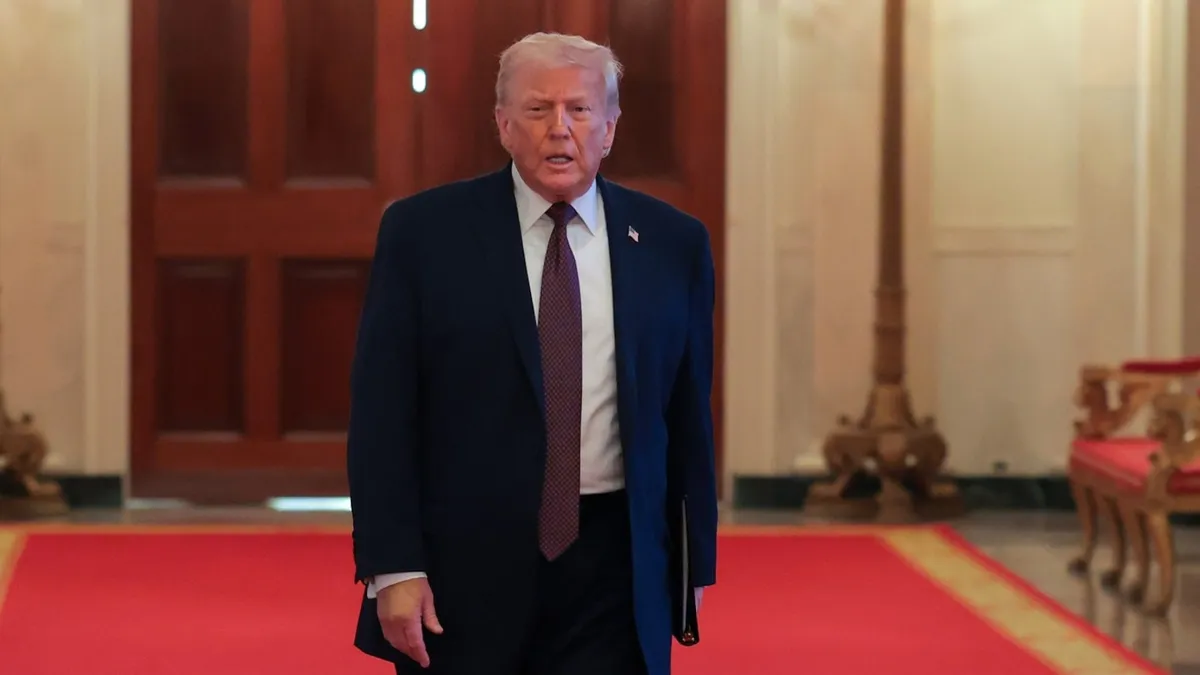
On the final day to enroll in Affordable Care Act (ACA) health insurance plans in most states, former President Donald Trump unveiled his healthcare proposal, raising questions among health policy experts. As criticism of the ACA, established under President Barack Obama, continues, Trump has faced ongoing pressure to present a viable alternative. His newly introduced plan, dubbed the Great Healthcare Plan, aims to redirect government insurance subsidies to consumers via health savings accounts and leverage his favored nation drug pricing initiative.
In a video announcement, Trump asserted, "My plan would reduce your insurance premiums by stopping government payoffs to big insurance companies and sending that money directly to the people." However, both the video and a one-page fact sheet released on the White House website lacked detailed information regarding the actual financial implications for Americans and the plan's funding requirements. This vagueness left many experts seeking clarity on the proposed changes.
Dr. Sachin Jain, a former official in the Department of Health and Human Services during the Obama administration, remarked that it's significant for Trump to prioritize healthcare in his second term. Now serving as the president and CEO of SCAN Group and SCAN Health Plan, Jain emphasized that the intricacies of healthcare policy could make it challenging to assess the proposed changes without more specifics.
Among its provisions, the plan suggests a cost-sharing arrangement that the Congressional Budget Office estimates could reduce most Obamacare premiums by 10%. Additionally, the proposal seeks to hold insurance companies accountable through a "Plain English" standard, requiring healthcare providers accepting Medicare and Medicaid to publicly display their pricing and fees. Trump urged Congress to expedite the passage of this framework into law.
Despite the ambitious rhetoric, several health policy experts, including KFF Senior Vice President Cynthia Cox, expressed skepticism about the plan's efficacy. Cox noted that many of the proposed provisions are similar to existing features of the ACA, such as price transparency and accountability for insurance companies. This raises concerns about the actual impact of Trump's proposals, with some provisions potentially having "virtually no effect."
As Trump touted his plan as revolutionary, Jain pointed out that the concept of consumerism in healthcare is not new. Navigating the complex healthcare landscape poses challenges for patients, who may be anxious about unexpected bills and uncertain about what services they are purchasing. Cox added that giving money directly to consumers without requiring them to purchase ACA-compliant coverage could destabilize the market, particularly for individuals with pre-existing conditions.
Experts believe it is premature to assess how quickly Trump's proposal could influence healthcare accessibility, especially with Congress on recess until Tuesday. While White House officials expressed the president's desire for Congress to codify the plan, they did not clarify the level of congressional input involved in its development. Recently, the House passed a Democratic-led bill extending enhanced premium tax credits for three years, but its fate in the Senate remains uncertain.
GOP Senate Majority Leader John Thune indicated that there is little appetite for extending these credits in his chamber, although bipartisan discussions are ongoing. Since the announcement of Trump's healthcare plan, House Speaker Mike Johnson has committed to collaborating with the White House to reduce healthcare costs for Americans. Senator Bill Cassidy, chairman of the Senate Health Committee, mentioned that his committee will take action on Trump's affordability agenda.
Democratic Senator Patty Murray criticized the proposal, asserting that it took Trump over a decade to produce a one-page healthcare plan that would do "absolutely NOTHING" to prevent premium hikes. As the enrollment period for ACA health insurance plans came to a close, data revealed that approximately 1.4 million fewer individuals had signed up this year, with rising premiums following the expiration of ACA tax credits at the end of 2025.
Cox highlighted the dire circumstances many individuals face regarding their healthcare coverage. "People are really, in some cases, facing life or death decisions because they can't afford to pay another $10,000 to keep their insurance coverage," she warned, emphasizing the potential consequences of inadequate health insurance access.