

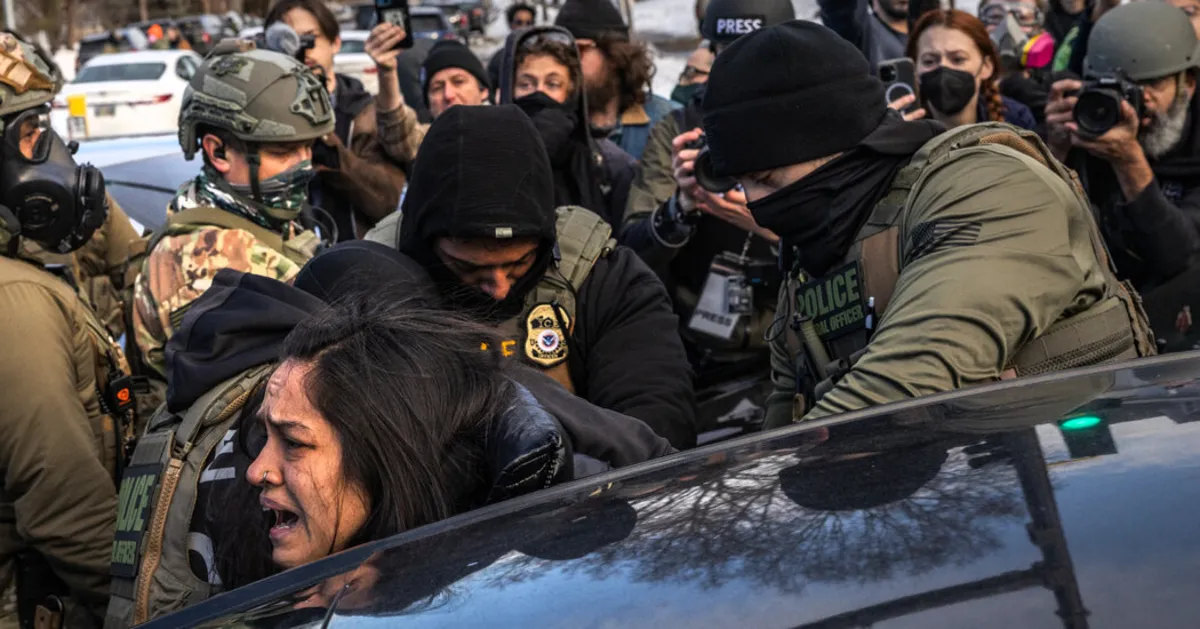
A significant ruling was made by a federal judge in Minnesota on Friday, imposing strict restrictions on the actions of immigration agents in relation to protesters. This decision comes after a period of escalating tensions between demonstrators and federal officers, reflecting the ongoing struggle for immigrant rights and the protection of free speech.
Judge Kate M. Menendez ordered immigration agents to refrain from retaliating against individuals who are “engaging in peaceful and unobstructive protest activity.” This ruling is a crucial step in safeguarding the rights of protesters, particularly in a time when tensions have been high. The judge emphasized that agents are prohibited from using pepper spray or other “crowd dispersal tools” in response to protected speech, ensuring that the right to protest is upheld without fear of violent reprisals.
In addition to the ban on retaliatory actions, Judge Menendez stated that immigration agents cannot stop or detain protesters who are in vehicles unless those individuals are “forcibly obstructing or interfering with” the agents' duties. This aspect of the ruling aims to protect demonstrators from unnecessary harassment and unlawful detention, reinforcing the importance of peaceful protest in a democratic society.
This landmark ruling follows a lawsuit filed by activists claiming that immigration agents had violated their rights during protests. The case gained additional urgency after the tragic incident on January 7, when an immigration agent shot and killed Renee Good in Minneapolis. This event has heightened awareness and concern regarding the treatment of protesters and the conduct of law enforcement, prompting the legal action that led to Judge Menendez's decision.
The preliminary injunction granted by the court not only serves as a protective measure for current protesters but also sets a precedent for future interactions between law enforcement and demonstrators. By clearly defining the boundaries of acceptable conduct for immigration agents, the ruling reinforces the principle that peaceful protest is a fundamental right that must be respected.
As the situation in Minnesota continues to evolve, this ruling will undoubtedly play a pivotal role in shaping the landscape of protest rights and the accountability of immigration agents. It underscores the necessity for ongoing dialogue between law enforcement and communities advocating for justice and equality.