

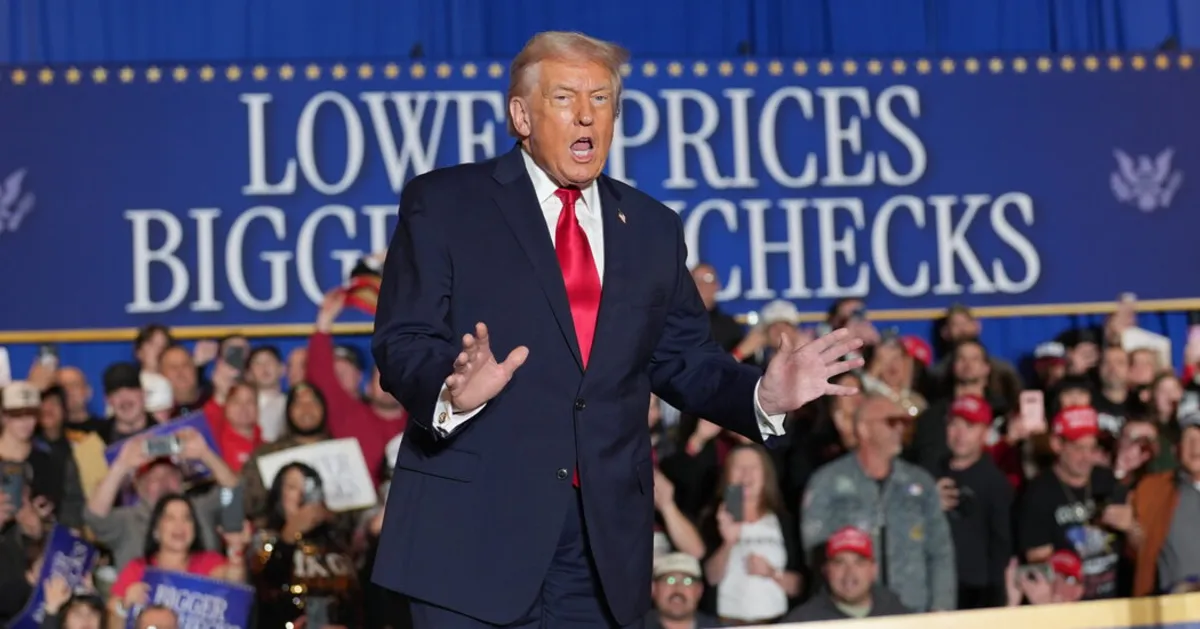
President Trump delivered a speech in Mount Pocono, Pennsylvania, marking the beginning of a series of addresses aimed at tackling pressing American concerns about affordability. This initiative comes after the president previously dismissed affordability issues as “the greatest con job” orchestrated by Democrats. The speech, held at a local casino adorned with large banners proclaiming “Lower Prices, Bigger Paychecks,” aimed to connect with struggling Americans.
Just a day before his Mount Pocono speech, President Trump announced a staggering $12 billion in bailout funds to support American farmers who have been significantly impacted by his administration's trade policies. These policies have created a financial strain on the agricultural sector, prompting the need for emergency funding. The timing of this announcement indicates Trump's urgency to address the economic challenges facing rural America.
Currently, President Trump finds himself in a precarious economic and political bind. His implementation of tariffs, which are the highest since the 1930s, has led to increased prices for consumers, placing the Trump administration in a defensive position regarding public sentiment about the cost of living. As a result, his approval ratings have taken a hit due to widespread economic worries, undermining the confidence that once propelled his return to the White House.
In a related development, China, recognized as the world’s second-largest economy and a key competitor to the United States, released new economic figures indicating that it continues to maintain a record trade surplus with the rest of the globe. Notably, while its overall trade surplus with the United States is narrowing, these figures suggest that Beijing is quickly adapting to a challenging international landscape, finding ways to succeed even as the United States becomes a more difficult environment for business.
As President Trump continues to navigate these complex economic issues, it remains to be seen how his administration will address the mounting public concerns regarding affordability and trade policies in the coming months.