

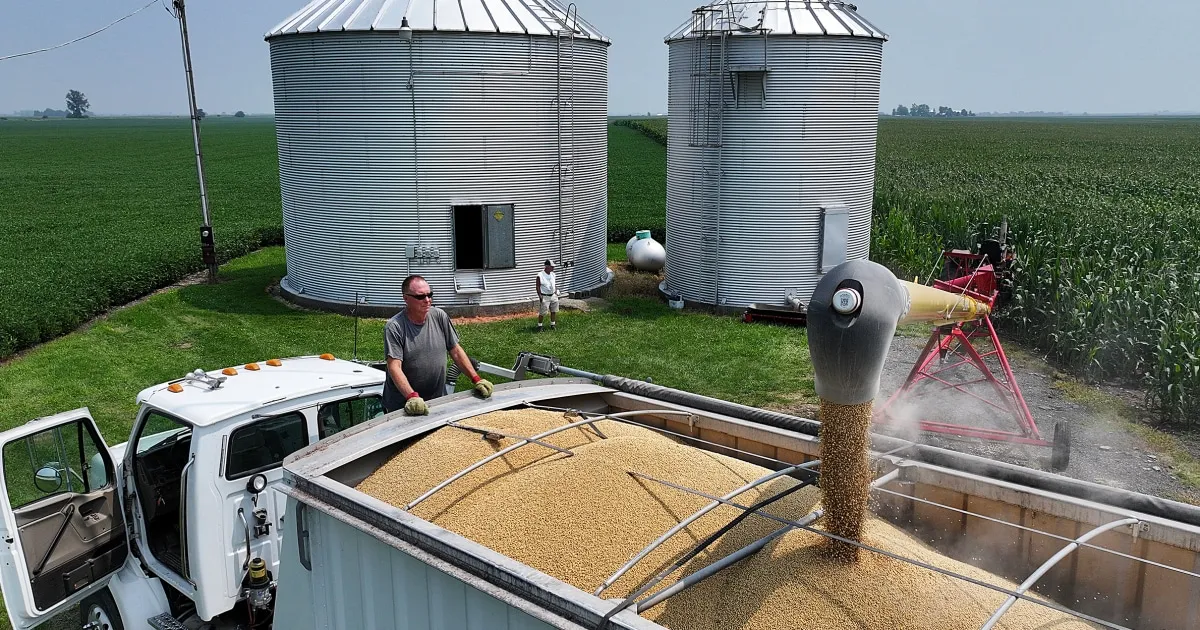
On Monday, President Donald Trump unveiled a significant $12 billion aid package aimed at supporting American farmers. This financial relief is expected to come from the substantial tariff revenue collected by the United States this year, which totals in the hundreds of billions of dollars. During his announcement, Trump emphasized that this aid would provide much-needed certainty to farmers as they prepare to market this year’s harvest and plan for next year’s crop.
The announcement of this relief package coincides with signs of easing in the ongoing trade war between China and the United States. In recent weeks, China has begun purchasing large quantities of soybeans from American farmers, marking a shift in the previously strained relations. Trump made this announcement at an afternoon event at the White House, which included Treasury Secretary Scott Bessent and Agriculture Secretary Brooke Rollins, ahead of a roundtable discussion featuring farmers from across the nation.
Secretary Rollins stated that farmers could expect to receive payments by February 28, with details on individual amounts being communicated by the end of the month. Trump highlighted that this aid could potentially lower food prices for American families, addressing growing concerns over the cost of living as inflation continues to affect household budgets.
As inflation persists and tariffs contribute to rising costs, Trump and his fellow Republicans are prioritizing solutions to alleviate financial pressures on Americans. The aid package will include up to $11 billion in one-time payments through a new program managed by the Agriculture Department. Additionally, Trump pledged to ease regulations affecting machinery companies, arguing that many environmental restrictions complicate operations without providing significant benefits. “It’s ridiculous,” Trump stated, expressing his intention to push machinery companies to lower their prices in light of these changes.
Bloomberg News first reported the details of this relief package on Sunday. Notably, in late November, China made its largest purchase of U.S. soybeans in two years, as reported by Reuters. Although Beijing has yet to fulfill its commitment to buy 12 million tons of soybeans as part of a recent agreement, Bessent remarked that China's purchases are progressing well. He expressed confidence that China is on track to honor its commitments as part of the trade deal.
During his Monday address, Trump expressed optimism that Chinese President Xi Jinping would exceed the promised purchase levels. This increase in agricultural imports from China follows a temporary pivot to Argentina for soybean supplies, highlighting the complexities of international trade dynamics. In October, the Treasury Department announced a $20 billion currency swap agreement with Argentina, which is led by far-right President Javier Milei, a noted ally of Trump.
While some farmers welcome the aid package, others have expressed frustration, perceiving the foreign aid as an unnecessary bailout for competitors. Many American farmers have already felt the strain from lost sales to China, leading to concerns that Washington's actions may inadvertently support foreign suppliers at their expense.
As the situation evolves, the impact of this aid package on American farmers and the broader agricultural market remains to be seen, but it certainly underscores the ongoing challenges faced in the wake of international trade disputes.