

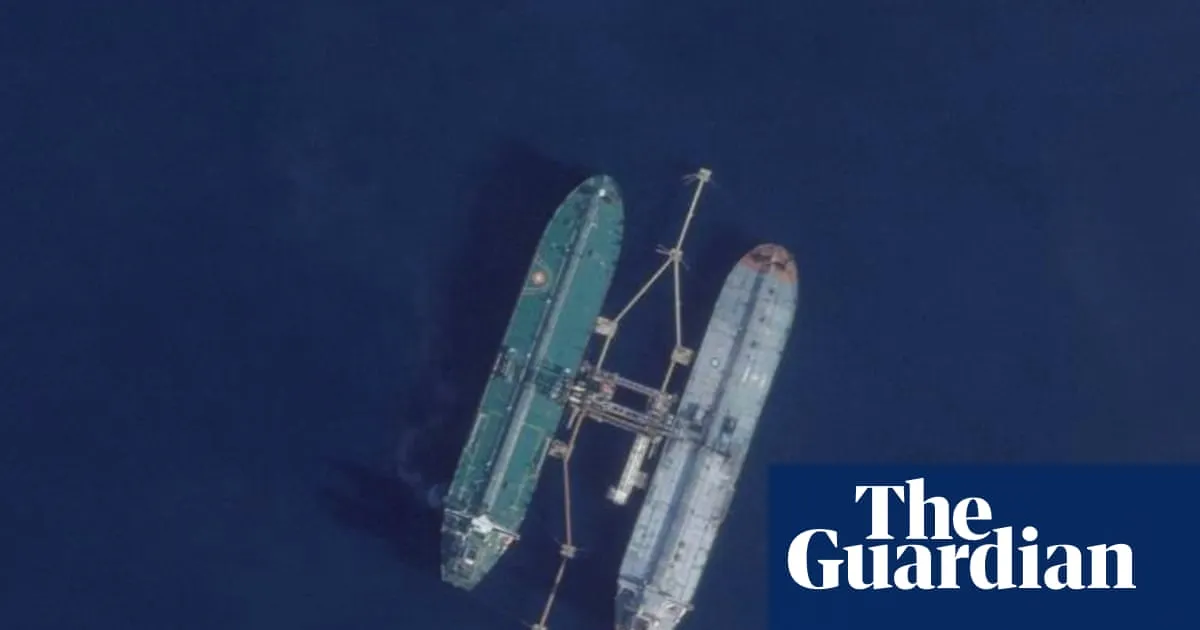
On Wednesday, a significant political uproar emerged in Washington as senior Democratic lawmakers and at least one Republican criticized the recent seizure of a Venezuelan oil tanker off the coast of Venezuela. Concerns are mounting regarding the escalating military posture of the Trump administration in the region, with some lawmakers warning that actions could lead the U.S. into a state of conflict with Venezuela. One senator even suggested that President Trump is “sleepwalking us into a war with Venezuela.”
President Trump has accused Venezuela of being complicit in drug trafficking, which has led to an unprecedented increase in the U.S. military presence in the Caribbean. This military buildup is reported to be at levels not seen in decades. Additionally, the administration has been involved in a campaign of bombings targeting alleged drug boats, resulting in the deaths of more than 80 individuals so far. Trump confirmed the tanker seizure shortly after the event, stating to reporters: “We’ve just seized a tanker on the coast of Venezuela – large tanker, very large, largest one ever seized, actually.”
Senator Chris Van Hollen of Maryland, who is a member of the Senate Foreign Relations Committee, expressed his belief that the tanker seizure demonstrates the administration's dishonesty regarding its military operations in the region. He stated, “This shows that their whole cover story – that this is about interdicting drugs – is a big lie. This is just one more piece of evidence that this is really about regime change – by force.”
Republican Senator Rand Paul of Kentucky echoed similar sentiments, telling NewsNation that “seizing someone’s oil tanker is an initiation of war.” He questioned the role of the American government, asking, “Is it the job of the American government to go looking for monsters around the world, looking for adversaries and beginning wars?”
Democratic Senator Chris Coons also voiced his concerns, stating, “I have no idea why the president is seizing an oil tanker and I’m fairly gravely concerned that he’s sleepwalking us into a war with Venezuela.” Senator Mark Warner highlighted perceived inconsistencies in the administration’s priorities, asking rhetorically on social media, “So they can seize an oil tanker, but not a drug boat?”
When CNN asked Senate Minority Leader Chuck Schumer about his stance on Trump’s regime change objectives in Venezuela, he refrained from giving a direct answer. He noted the erratic nature of Trump’s messaging, saying, “The bottom line is President Trump throws out so many different things in so many different ways, you don’t even know what the heck he’s talking about.” Schumer added that while the ideal situation would be for Venezuelan President Maduro to leave voluntarily, the ambiguity surrounding U.S. policy makes it difficult to endorse specific actions.
Attorney General Pam Bondi stated that the FBI, Homeland Security Investigations, and the Coast Guard executed a seizure warrant for the oil tanker, which has been accused of transporting sanctioned oil from Venezuela and Iran. She claimed this operation was part of a broader effort to disrupt networks supporting foreign terrorist organizations. Meanwhile, the Venezuelan government condemned the seizure, labeling it “a blatant theft and an act of international piracy.” They argued that the incident highlights U.S. aggression aimed at their natural resources, particularly oil.
Not all reactions were negative. Republican Senator Ted Cruz of Texas, when asked about the seizure, deflected criticism and asserted that Trump’s actions were essential for saving American lives by combating drug trafficking. In a historical context, the U.S. Central Command similarly condemned Iran's seizure of a Marshall Islands-flagged tanker in the Strait of Hormuz in November as a “blatant violation of international law.”
Democratic Senator Adam Schiff from California characterized the tanker seizure as a “very dangerous escalation” and a potential precursor to conflict. Last week, Schiff, Rand Paul, and Senators Tim Kaine and Schumer filed a war powers resolution aimed at restricting the administration's ability to engage militarily with Venezuela without congressional approval.