

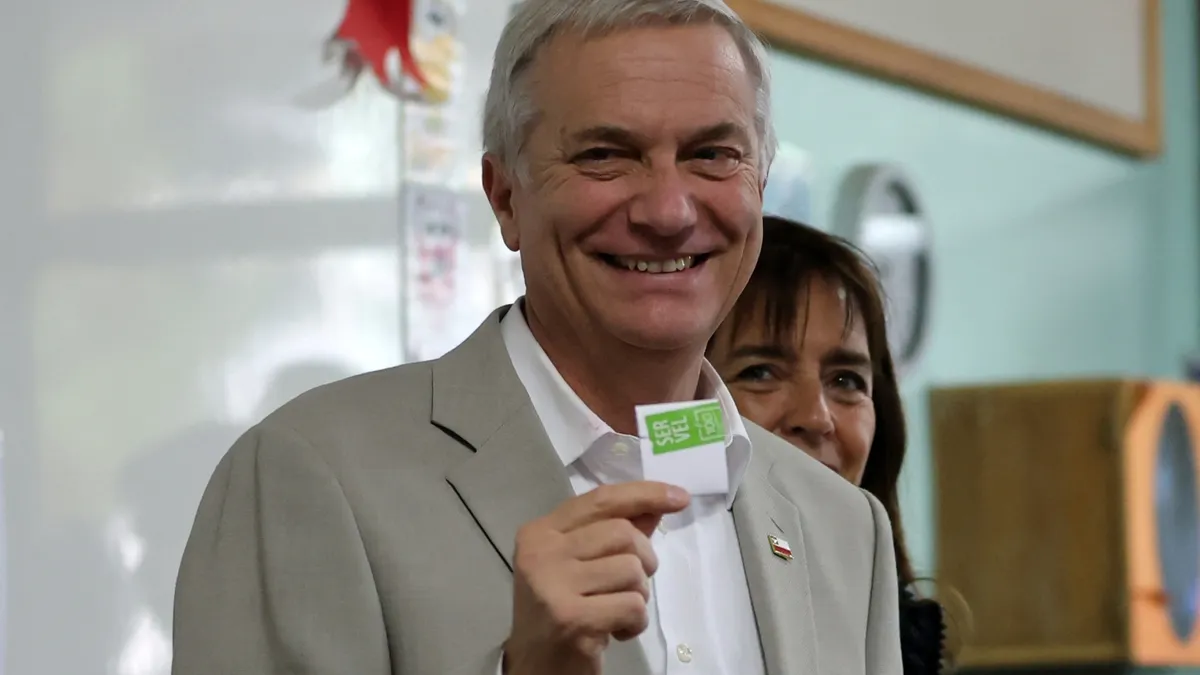
In a significant political shift, Chile has moved decisively to the right with the election of José Antonio Kast, a hardline conservative, as the country's new president. This outcome follows a presidential runoff that was heavily influenced by public concerns surrounding crime, migration, and economic uncertainty.
With over 95% of the ballots counted, Kast, the leader of the Republican Party, garnered approximately 58% of the vote. His opponent, Jeannette Jara from the Communist Party, received just over 41% and promptly conceded defeat, stating on social media, "Democracy spoke loud and clear." Outgoing President Gabriel Boric also reached out to Kast, congratulating him on his victory.
As the election results were confirmed, celebrations erupted in the streets of Santiago. Honking car horns and enthusiastic crowds waving Chilean flags filled one of the city's wealthiest districts, eagerly anticipating the president-elect's first remarks.
Throughout his campaign, Kast focused primarily on issues of public security and immigration. He warned that Chile is currently facing a crisis and vowed to establish what he has termed an emergency government. His message resonated with voters amid a recent rise in violent crime and growing concerns about undocumented migration.
José Antonio Kast is known for his controversial views, including his admiration for former dictator Augusto Pinochet. He will become the first president since Chile's return to democracy in 1990 to openly endorse the military regime. Notably, Kast's father, Michael Kast, was a member of the Nazi Party who fought in the German army during World War II before immigrating to Chile in 1950.
Set to take office on March 11, 2026, Kast has pledged to require undocumented migrants to leave the country by that date, warning of deportation or prosecution for those who choose to remain. His victory marks a significant departure from years of left-of-center governance and is expected to reshape Chile's political landscape.
Kast's election is indicative of a broader trend across Latin America, where security and migration issues have become pivotal in electoral campaigns. The implications of his presidency may resonate beyond Chile, influencing political dynamics in neighboring countries.
Following the election, U.S. Secretary of State Marco Rubio extended his congratulations to Kast, expressing anticipation for collaboration to enhance regional security. This signals a potential shift in international relations as Kast prepares to lead Chile into a new political era.