

The recent deployment of thousands of federal agents to Minnesota for the purpose of rounding up undocumented immigrants has resulted in a series of shocking incidents that have captivated public attention. Among these incidents was the distressing image of an American citizen being dragged from his home in frigid subzero temperatures, wearing nothing but his underwear. Additionally, the detention of a 5-year-old boy clutching a Spider-Man backpack and adorned with a hat featuring floppy ears has drawn sharp criticism from local school officials and community members alike.
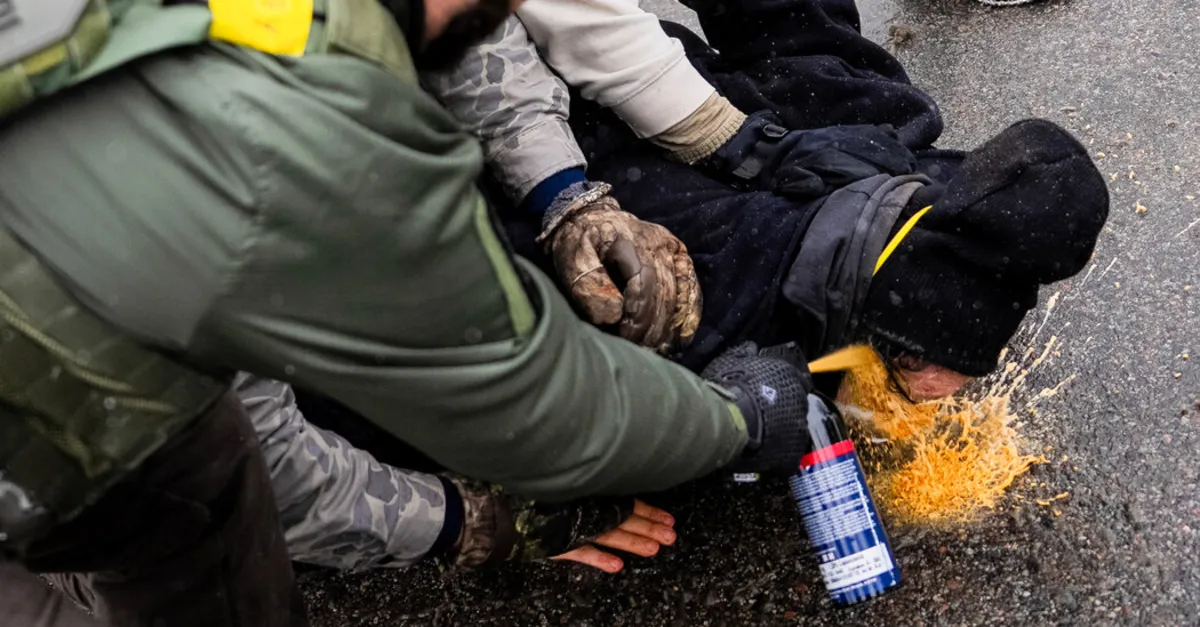
One particularly harrowing moment was captured on Wednesday when a Border Patrol agent was seen spraying pepper spray into the face of a man who was being restrained by fellow officers. This incident not only highlighted the intensity of the ongoing immigration operation but also sparked widespread condemnation across social media platforms. The powerful imagery resonated with many, drawing millions of views online and landing on the front page of The Minnesota Star Tribune.
The backlash against these operations has been significant, with local officials expressing their outrage. Minneapolis Mayor Jacob Frey stated, “No one looking at this image can seriously claim this is about public safety. It should alarm every American because if it can happen here, it can happen anywhere.” His comments reflect a growing concern about the treatment of individuals during these federal immigration raids, raising questions about the ethics and legality of such actions.
Moreover, Minnesota Governor Tim Walz echoed the sentiments of discontent by reposting the controversial Star Tribune article on his social media, captioned with the poignant remark: “Trump’s America.” This remark signifies a broader critique of the current administration’s immigration policies, which many believe have fostered an environment of fear and aggression.
As the immigration operation continues, the implications of these actions resonate far beyond the streets of Minneapolis. The images and stories emerging from this situation serve as a stark reminder of the ongoing debates surrounding immigration enforcement in the United States. The public outcry and political responses indicate that there is a significant portion of the population calling for a reassessment of how undocumented immigrants are treated and the methods employed by federal agents. The ongoing dialogue will undoubtedly shape the future of immigration policy and community relations across the nation.