

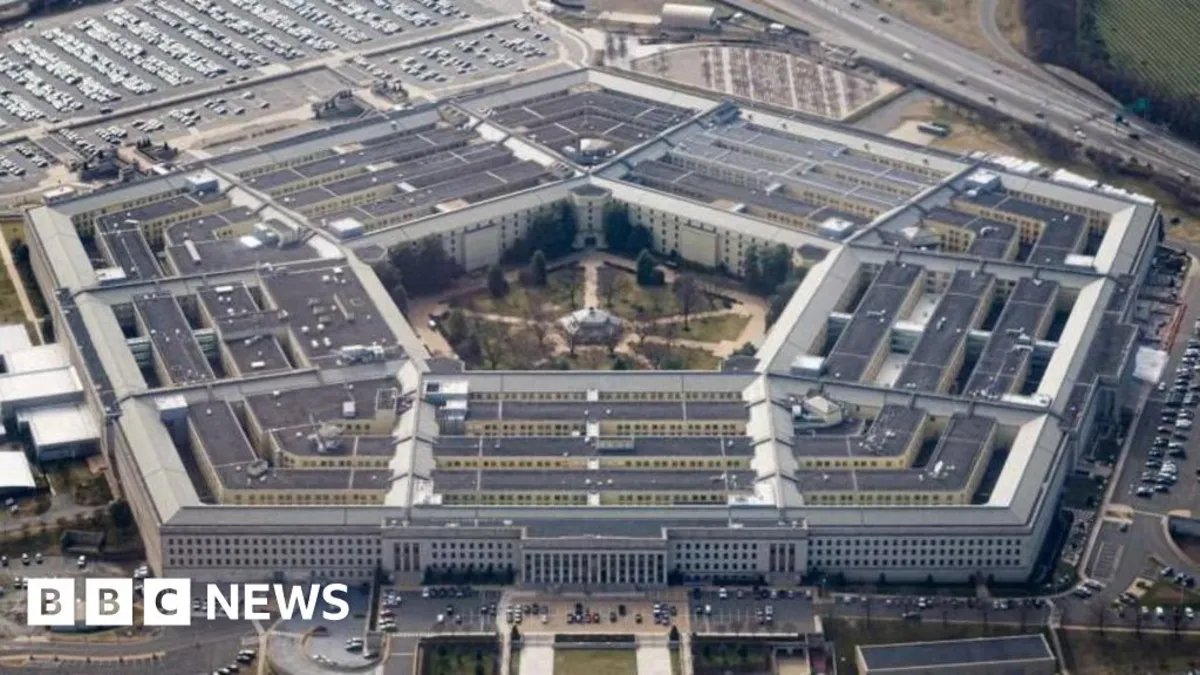
The recently released National Defense Strategy by the Pentagon indicates that China is no longer the primary security concern for the United States. This significant document, published every four years, highlights that the security of the US homeland and the Western Hemisphere is now the chief focus of the Department of Defense. The report emphasizes that Washington has historically overlooked the concrete interests of American citizens.
In a strategic pivot, the Pentagon has stated it will provide more limited support to its allies. This change follows the publication of the US National Security Strategy last year, which raised alarms about a potential civilizational collapse in Europe while downplaying Russia as a direct threat to the US. Interestingly, the Russian government noted at the time that the US National Security Strategy aligned closely with its own perspectives.
Contrasting sharply with the 2022 National Defense Strategy, which identified the multifaceted threat from China as the highest priority, the new document shifts the narrative. The 2018 version labeled revisionist powers like China and Russia as the central challenges to US security. The latest 34-page document, released recently, reaffirms many policy positions established during the Trump administration's initial year in office.
During that time, former President Donald Trump took decisive actions, including targeting Venezuelan President Nicolás Maduro, engaging in strikes against alleged drug boats in the Eastern Pacific and Caribbean, and applying diplomatic pressure on allies to consider acquiring Greenland. The current strategy underscores the Pentagon's commitment to ensuring US military and commercial access to critical regions, including the Panama Canal, the Gulf of America, and Greenland.
The document outlines a fundamental shift in approach, moving away from "utopian idealism" towards "hard-nosed realism." It emphasizes that relations with China will be handled through strength rather than confrontation, with the goal of neither dominating nor humiliating the country. Notably, Taiwan, the self-governing island claimed by China, is absent from this version of the strategy. However, the Pentagon insists it aims to prevent any nation, including China, from achieving dominance over the US or its allies.
In a related development, late last year, the US announced a substantial arms sale to Taiwan, valued at $11 billion (£8.2 billion). This move prompted China to conduct military drills around the island in response, demonstrating the heightened tensions in the region.
The National Defense Strategy also calls for greater burden-sharing from US allies, suggesting that many partners have been comfortable relying on Washington to subsidize their defense efforts. Despite this, the Pentagon clarifies that this does not signal a shift towards isolationism. Instead, the strategy advocates for a focused and genuinely strategic approach to the threats facing the nation, emphasizing that American interests should not be conflated with global issues.
In terms of regional threats, Russia is characterized as a persistent but manageable threat to NATO's eastern members, especially in light of its full-scale invasion of Ukraine nearly four years ago. The strategy outlines a more limited role for US deterrence concerning North Korea, asserting that South Korea is equipped to take primary responsibility for regional security.
In a recent address at the World Economic Forum, Canadian Prime Minister Mark Carney highlighted the necessity for middle powers—such as South Korea, Canada, and Australia—to collaborate effectively. He warned that if these nations are not at the negotiating table, they risk being marginalized. Concurrently, French President Emmanuel Macron cautioned against a world shifting towards an absence of rules, underscoring the need for cohesive action among nations.