

At 7 a.m., the earth beneath Venezuela began to tremble, heralding a momentous event in the nation’s history. A colossal eruption from an oil well sent a plume of oil soaring 200 feet into the air, drenching the terrified villagers of La Rosa. This incident marked the discovery of the world’s most productive oil well, setting Venezuela on a transformative journey towards becoming a petroleum supergiant — a transformation that would have profound implications, both positive and negative.
Although Venezuela had been recognized for its oil reserves since the 15th century, when Spanish explorers noted the indigenous use of oil for fires and as asphalt for canoe repairs, its true oil wealth remained largely disputed until the early 20th century. The turning point came during World War I, when rising fuel demands prompted foreign petroleum companies to explore the region more seriously. Surveyors from the Venezuelan Oil Concessions (VOC), a local affiliate of Royal Dutch Shell, spent the 1910s exploring the Maracaibo Basin with limited success.
However, on July 31, 1922, a pivotal decision was made — VOC chose to drill deeper into the Los Barrosos-2 oil well, which they had previously abandoned four years prior. According to Orlando Méndez, a historian with the American Association of Petroleum Geologists, this decision would prove to be of significant consequence. After months of drilling, the VOC struck oil sands at a depth of 1,450 feet. On December 14, the ground shook as the gusher erupted, creating an ecological disaster that would ultimately lead Venezuela down a path of immense wealth, economic crashes, and political strife.
The recent military operation that led to the extraordinary capture of President Nicolás Maduro by U.S. forces has reignited discussions about the future of Venezuela’s oil sector. President Donald Trump stated that a core objective of this military intervention was to place Venezuela’s oil resources under U.S. control, allowing American oil companies to rebuild and revitalize the country's oil infrastructure. “The oil companies are going to go in and rebuild their system,” Trump declared, framing the situation as the greatest theft in American history.
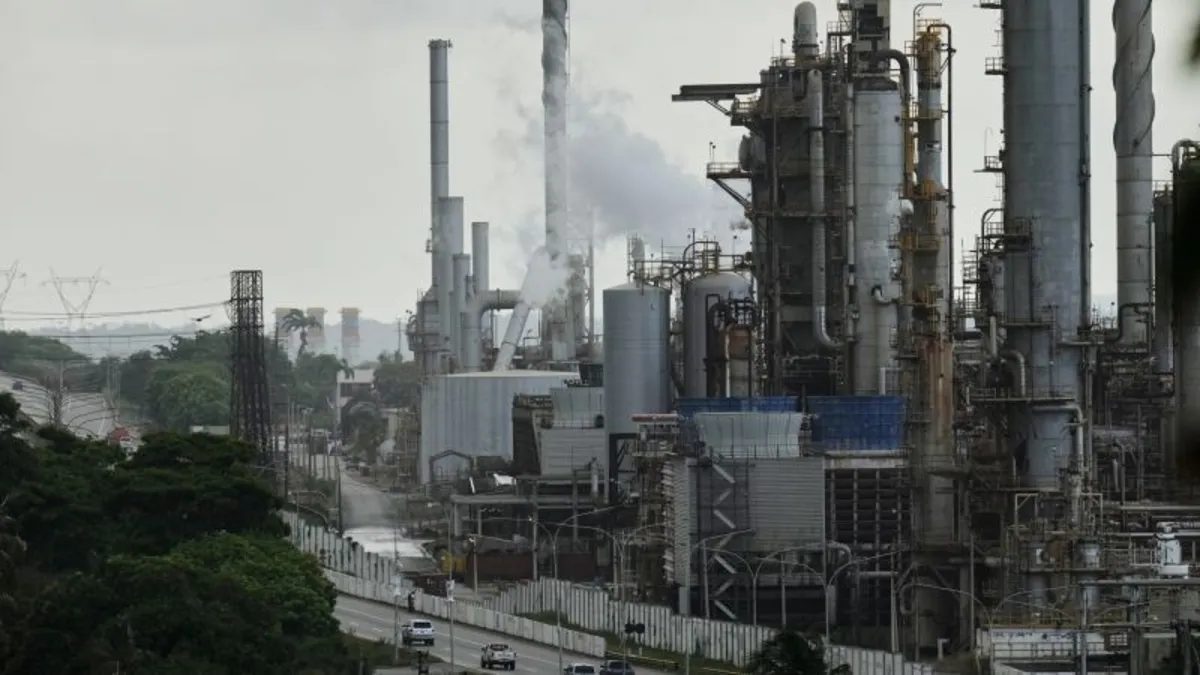
However, the complexities of revitalizing Venezuela’s oil infrastructure are daunting. Helima Croft, head of global commodity strategy at RBC Capital Markets, noted that returning to previous production levels would be an expensive endeavor, potentially costing $10 billion a year. The state-run oil company, Petróleos de Venezuela, SA (PDVSA), has acknowledged that its pipelines have not been updated in over 50 years, and estimates suggest that restoring infrastructure to peak production levels could require $58 billion.
The Trump administration's discussions with U.S. oil companies about returning to Venezuela have revealed a cautious attitude among energy executives, particularly regarding the country's stability. “It is impossible to just bring U.S. companies into Venezuela without an agreement with the government,” explained Homayoun Falakshai, lead crude research analyst at Kpler. If successful, U.S. companies could significantly boost their output, primarily shipping crude back to the U.S. Gulf Coast, which has a strong demand for sour crude oil.
By the late 1920s, Venezuela had fully transitioned from an agricultural society to an oil-dependent economy, becoming the world’s second-largest oil producer after the United States. This transformation was facilitated by foreign companies, including Standard Oil and Shell, which flourished under the dictatorship of General Juan Vicente Gómez. However, the wealth generated from oil did not benefit the Venezuelan populace, leading to a growing resentment toward foreign control over the nation’s resources.
Following Gómez’s death in 1935, Venezuela enacted the 1943 Hydrocarbons Law, mandating that foreign oil companies relinquish half of their profits to the state. Despite this, the country held a favorable position due to its vast oil reserves, estimated at 303 billion barrels, about a fifth of the world’s total. The cheap, heavy sour crude was particularly valuable for U.S. industries, providing a lucrative partnership.
Venezuela’s oil wealth took a significant turn in the 1990s with the rise of Hugo Chávez, who assumed the presidency in 1999 and initiated a series of socialist reforms, including the nationalization of foreign oil companies. The state-controlled PDVSA became a tool for the government, leading to a decline in skilled labor and infrastructure deterioration. After Chávez's death in 2013, his successor, Nicolás Maduro, faced an economic calamity exacerbated by falling oil prices, hyperinflation, and international sanctions.
Currently, Venezuela produces just over 1 million barrels of oil per day, representing only about 0.8% of global production. This figure is significantly less than the 3.5 million barrels produced before Chávez took office, illustrating the dramatic decline of the once-thriving oil industry.
The future of Venezuela’s oil industry remains uncertain. As U.S. forces and oil companies consider their next steps, the challenges of rebuilding a crumbling infrastructure and navigating a complex political landscape loom large. Whether the U.S. can reclaim its status as a major player in Venezuelan oil production is yet to be seen, but the historical ties between the two nations underscore the strategic importance of Venezuela’s oil reserves.