

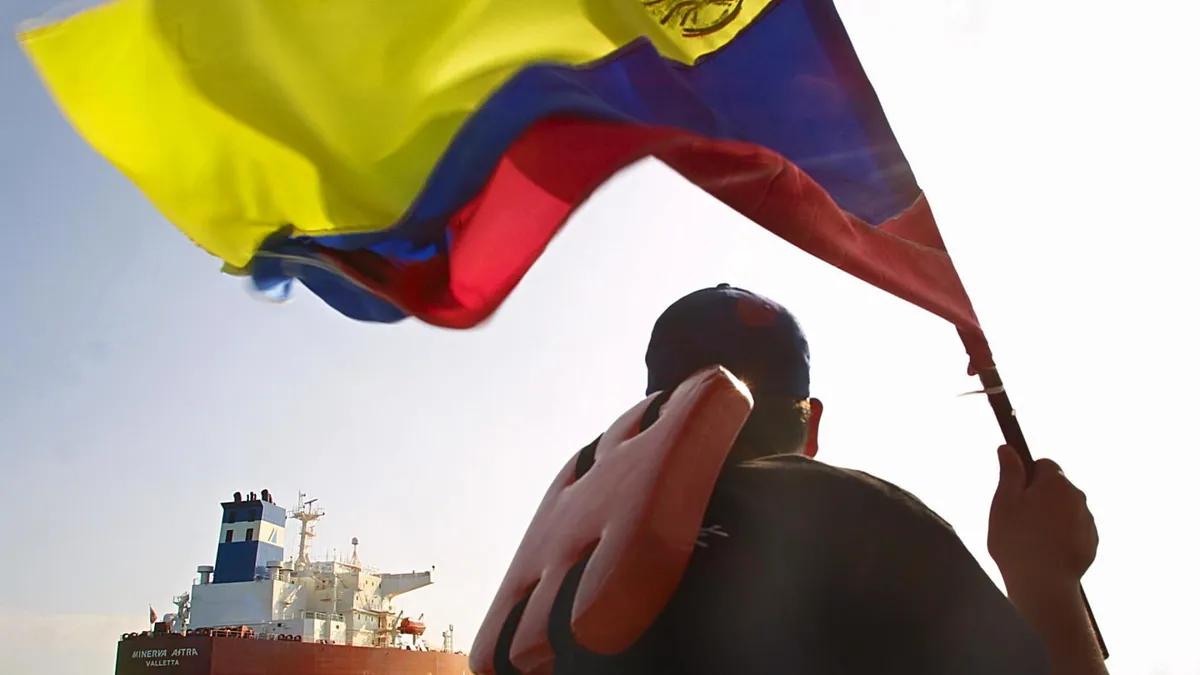
The recent arrest of Nicolás Maduro has reignited discussions surrounding one of the world's most politically charged oil industries, prompting investors to reevaluate the control of Venezuela's crude resources and the potential for revitalization after decades of decline. Currently, the situation appears relatively clear: Petróleos de Venezuela (PDVSA), the state-owned oil company, retains control over the majority of oil production and reserves in the country, according to Andy Lipow, president of Lipow Oil Associates.
In Venezuela, the American energy giant Chevron operates through both its own production and a joint venture with PDVSA. Meanwhile, Russian and Chinese firms also maintain a presence in the country through various partnerships. However, PDVSA still holds the majority control over the oil resources. Should a more pro-U.S. and pro-investment government emerge in Venezuela, Chevron is well-positioned to expand its influence in the oil sector, as noted by Saul Kavonic of MST Financial.
Venezuela nationalized its oil industry in the 1970s, leading to the establishment of PDVSA. At its peak in 1997, the nation's oil output reached approximately 3.5 million barrels per day; however, this figure has since plummeted to an estimated 950,000 barrels per day, with only around 550,000 barrels per day being exported, according to data from Lipow Oil Associates. Kavonic further emphasizes that if a new government is established, Chevron could significantly increase its role in the Venezuelan oil market.
Experts warn that any regime change in Venezuela could disrupt the commercial chain vital for maintaining oil exports. As the current political landscape remains uncertain, it is possible that exports could cease altogether, as buyers are left unsure about payment protocols. Lipow cautions that recent U.S. sanctions targeting a shadow fleet of tankers have already hampered exports, forcing Venezuela to reduce production levels. This shadow fleet consists of vessels that operate outside conventional shipping regulations to transport oil from sanctioned countries like Venezuela, Russia, and Iran.
Despite these challenges, Lipow anticipates that Chevron will continue exporting around 150,000 barrels per day, which should limit any immediate supply disruptions. However, the prevailing uncertainty could impose a short-term risk premium of approximately $3 per barrel. This potential increase comes amid a market that many analysts, including Bob McNally of Rapidan Energy Group, describe as adequately supplied, suggesting that the immediate effects may be negligible.
Venezuela's long-term significance in the oil market is attributed to the type of crude it produces. The country's heavy, sour crude is technically challenging to extract but highly sought after by complex refineries, particularly in the United States. McNally pointed out that American refineries have a strong preference for the dense oil from Venezuela and Canada.
The pressing question remains: can the oil industry recover from decades of neglect? Should a new government, potentially led by opposition figure Maria Corina Machado, be swiftly established, sanctions might ease, leading to a temporary increase in oil exports as stored oil is utilized for revenue generation. However, Lipow warns that such a surge could exert downward pressure on prices.
Despite these possibilities, the road to a sustained recovery is fraught with challenges. The Venezuelan oil sector is in dire need of rehabilitation, and even with a change in government, a significant uptick in production is unlikely for years due to the substantial investments required to restore existing infrastructure. Helima Croft of RBC echoed these sentiments, highlighting that oil executives estimate it will take at least $10 billion annually to revitalize the sector, with a stable security environment being an absolute necessity. In a chaotic power transition scenario, reminiscent of events in Libya or Iraq, all bets are off.
As the situation in Venezuela continues to unfold, the global oil market watches closely, assessing the potential ramifications of political changes on the country's vital oil industry.