

President Donald Trump has unveiled a controversial plan to seize control of Venezuela's oil industry and engage American companies in revitalizing it after a potential raid to capture President Nicolás Maduro. However, experts suggest that this initiative is unlikely to yield immediate effects on oil prices.
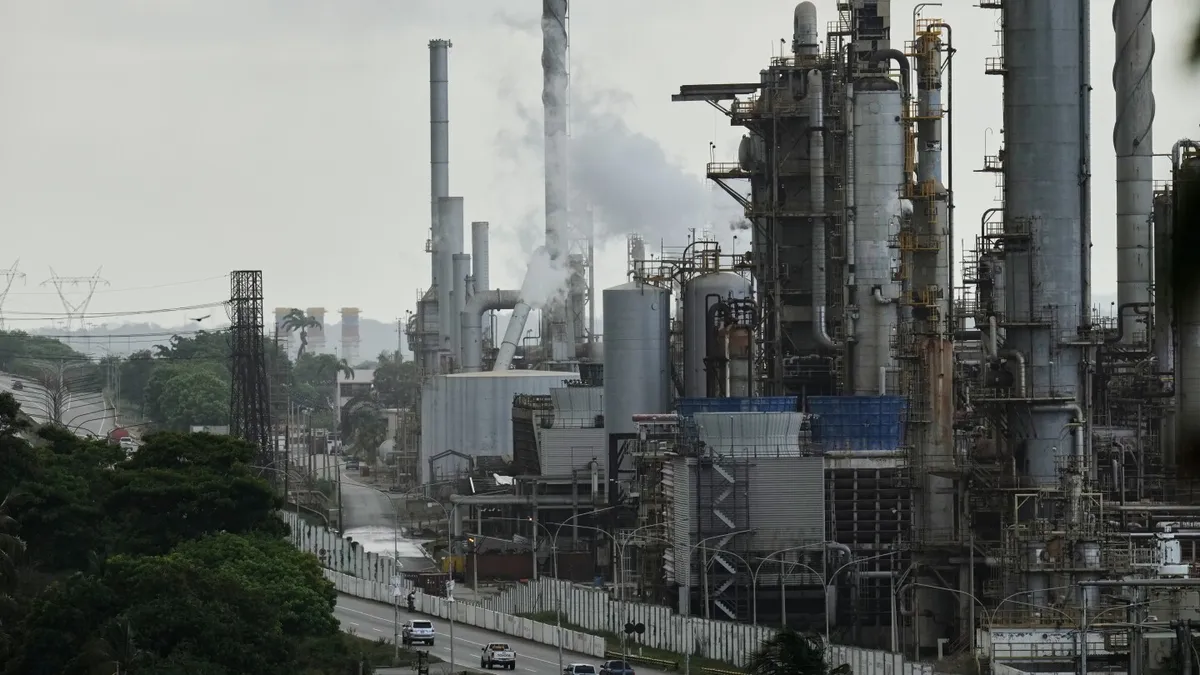
Venezuela's oil industry has been in a state of disrepair due to years of neglect and harsh international sanctions. Even with Trump's proposed intervention, it could take years of substantial investments before any significant increase in production occurs. Current output stands at approximately 1.1 million barrels of oil a day, but some analysts are hopeful that Venezuela could double or triple this figure, potentially returning to historical production levels relatively quickly.
“While many are reporting that Venezuela’s oil infrastructure was unharmed by U.S. military actions, it has been decaying for many years and will require time and resources to rebuild,” said Patrick De Haan, lead petroleum analyst at gasoline price tracker GasBuddy.
American oil companies are likely to wait for a stable political regime in Venezuela before making substantial investments. The political landscape remains murky, with Trump asserting U.S. control while the current Venezuelan vice president is pushing to restore Maduro to power. “If it appears that the U.S. is successful in managing the country for the next 24 hours, there may be optimism that U.S. energy companies could quickly revitalize the Venezuelan oil industry,” noted Phil Flynn, a senior market analyst at the Price Futures Group.
If Venezuela can emerge as a significant oil production powerhouse, Flynn argues, “that could solidify lower prices in the longer term and increase pressure on Russia.”
Although oil trading does not occur over the weekend, experts do not anticipate a significant shift in prices when the market reopens. Venezuela, as a member of OPEC, already has its production levels counted in the organization's forecasts. Moreover, the current global oil market is experiencing a surplus.
Venezuela is home to the world's largest proven crude oil reserves, estimated at around 303 billion barrels according to the U.S. Energy Information Administration. This vast reserve accounts for roughly 17% of the total global oil reserves, making it a focal point for international oil companies. However, analysts highlight that despite these immense resources, Venezuela has been producing less than 1% of the world's crude oil due to corruption, mismanagement, and U.S. economic sanctions.
“The issue is not merely the condition of the infrastructure; it’s about how to encourage foreign companies to invest without a clear understanding of the political stability and contract reliability,” explained Francisco Monaldi, director of the Latin American energy program at Rice University. Monaldi estimates that boosting Venezuela's production from 1 million barrels per day to 4 million barrels could take a decade and require an investment of about $100 billion.
Venezuela produces heavy crude oil, which is essential for diesel fuel, asphalt, and other heavy equipment fuels. The global market is currently facing a short supply of diesel due to sanctions on Venezuelan and Russian oil. American refineries, especially those on the Gulf Coast, are optimized to process this type of heavy crude, making Venezuelan oil particularly attractive.
Increasing Venezuelan production could also ease pressure on Russia, enabling Europe and other regions to obtain the diesel and heavy oil they need without relying on Russian imports. “The collapse of Venezuela’s oil industry has benefited Russia by reducing competition in the global oil market,” Flynn remarked.
However, legal complications arise from Trump's plan to seize control of Venezuela’s oil resources. Matthew Waxman, a law professor at Columbia University and former national security official, highlighted the issue of ownership: “An occupying military power cannot profit from another state’s resources, but the Trump administration may argue that the Venezuelan government never legitimately owned these resources.”
Despite the legal challenges, it is clear that the situation in Venezuela remains fluid, and the future of its oil industry will depend on a multitude of factors, including political stability and foreign investment willingness.