

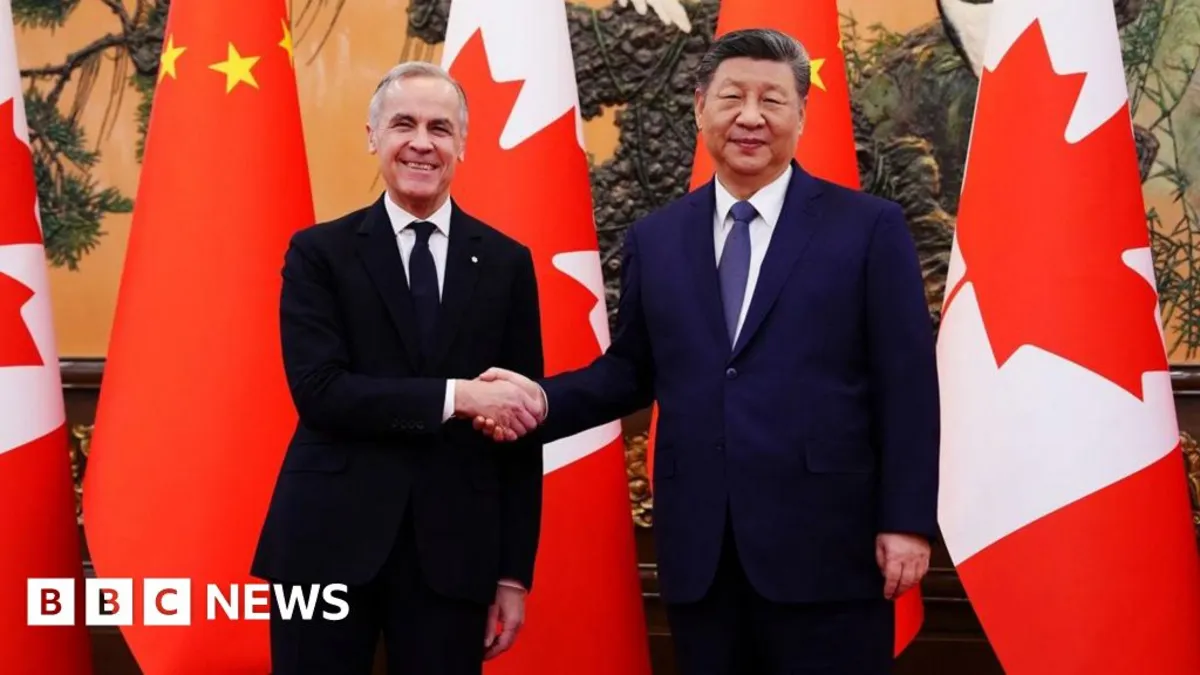
In a historic meeting in Beijing, Chinese leader Xi Jinping and Canadian Prime Minister Mark Carney unveiled a plan to significantly reduce tariffs, marking a crucial step towards mending the long-strained relationship between their nations. This diplomatic breakthrough signals a new chapter in Canada-China relations, with China poised to decrease tariffs on Canadian canola oil from 85% to just 15% by March 1. In return, Canada will impose a most-favoured-nation rate of 6.1% on Chinese electric vehicles, as confirmed by Carney during a press briefing.
This agreement represents a significant turnaround after years of escalating tensions and reciprocal trade barriers between Canada and China. Xi Jinping celebrated the renewed partnership, while Carney stands out as the first Canadian leader to visit China in nearly a decade. In a move reflecting Canada's shifting trade dynamics, Carney has been actively working to diversify Canadian trade away from the United States, particularly following the unpredictability created by former President Trump's fluctuating tariffs.
The recent trade agreement is poised to facilitate increased Chinese investments in Canada, strategically located next to the U.S. market. Carney hinted at the broader implications of the agreement, suggesting it could serve as a model for other nations grappling with the repercussions of U.S. tariffs. He noted that Canada's relationship with China has become more predictable, emphasizing that discussions with Beijing have been both realistic and respectful.
While acknowledging the positive developments in trade, Carney was clear that Canada does not align with China on every issue. He reiterated Canada's firm stance on critical matters such as human rights, concerns regarding election interference, and the necessity for established guardrails in diplomatic interactions. "We take the world as it is—not as we wish it to be," he remarked when questioned about China's human rights record.
Observers suggest that Carney's visit could set a precedent for other nations navigating similar challenges posed by U.S. tariffs. In response to Xi's push for more stable global partnerships, several world leaders, including the South Korean president and the Irish prime minister, have also made recent trips to Beijing. Upcoming visits from the UK prime minister and German Chancellor are anticipated, illustrating a growing trend of nations seeking pragmatic ties with China.
Carney highlighted the dramatic changes in the global landscape and emphasized that Canada's approach to international relations will significantly influence its future for decades. Earlier in his three-day visit, he expressed optimism that the Canada-China partnership could lay the groundwork for a new world order, acknowledging the erosion of the multilateral system in recent years.
As the two delegations convened at the Great Hall of the People, Xi asserted that the healthy and stable development of China-Canada relations is beneficial for global peace, stability, and prosperity. Tariffs have long been a contentious issue between the two countries. In 2024, Canada imposed 100% tariffs on Chinese electric vehicles, mirroring similar restrictions from the U.S. In retaliation, China implemented tariffs on over $2 billion worth of Canadian agricultural products, which led to a 10% decline in Chinese imports of Canadian goods in 2025.
Under the new agreement, Canada will limit the import of Chinese electric vehicles to 49,000 units at the reduced tariff rate of 6.1%. This cap is a direct response to concerns from Canadian automakers about the potential influx of affordable Chinese EVs. Additionally, Canadian producers of canola, lobsters, crabs, and peas will benefit from reduced tariffs, marking a pivotal shift in trade dynamics between the two nations.
As Canada’s second-largest trading partner, China's economic ties are increasingly vital for Carney's administration. Upon his arrival in Beijing, Carney engaged with senior executives from major Chinese corporations, including an electric vehicle battery manufacturer and an energy leader. On the following day, Canada and China signed several agreements aimed at enhancing energy and trade cooperation.
Colin Robertson, a former Canadian diplomat and vice-president at the Canadian Global Affairs Institute, remarked that this visit represents a reset in a relationship that, while modest in ambition, is far more realistic about achievable outcomes going forward.