

In a recent announcement, US President Donald Trump declared that any country engaging in trade with Iran will face a significant 25% tariff on their dealings with the United States. This decision coincides with a crackdown on anti-government protests in Iran, where thousands are reported to have died. The introduction of tariffs is a tactic Trump has previously employed to apply pressure on various nations. Here’s a comprehensive overview of the situation.
On Monday, Trump took to Truth Social to convey his message: “Effective immediately, any country doing business with the Islamic Republic of Iran will pay a tariff of 25% on any and all business being done with the United States of America. This order is final and conclusive.” Currently, there are no additional details provided by the president regarding the implementation of these tariffs.
Among the over 100 nations that maintain trade relations with Iran, China stands out as the largest export partner. Reports indicate that from October 2024 to October 2025, China imported over $14 billion (£10.4 billion) worth of goods from Iran, according to data from Trade Data Monitor. Following China, Iraq is another significant trading partner, receiving around $10.5 billion in goods. Other key customers include the United Arab Emirates and Turkey, with Iranian exports to Turkey increasing from $4.7 billion in 2024 to $7.3 billion last year.
Most of Iran's top exports are fuel-related, as the country is recognized as one of the world's leading oil producers. Additionally, it exports agricultural products like pistachios and tomatoes. Meanwhile, Iran's imports are primarily staples, accounting for about a third of its total imports, including corn, rice, sunflower seeds, oils, and soybeans. Notably, gold is Iran's largest import, with imports reaching $6.7 billion over the past year, a substantial increase from $4.8 billion the previous year.
While Trump's announcement states that the 25% tariff is effective immediately, the lack of specific details from the White House raises questions about its practical implementation. It remains unclear whether this tariff will apply to all countries trading with Iran or only to its largest partners. Furthermore, there is ambiguity regarding whether this new tariff will be an addition to existing tariffs imposed by the Trump administration.
The legal framework under which this new tariff would be enacted is also uncertain. Previous tariffs were implemented under the International Emergency Economic Powers Act, which is currently facing a legal challenge, with a ruling from the US Supreme Court expected soon. Trump has indicated that failure to uphold these tariffs could negatively impact the US.
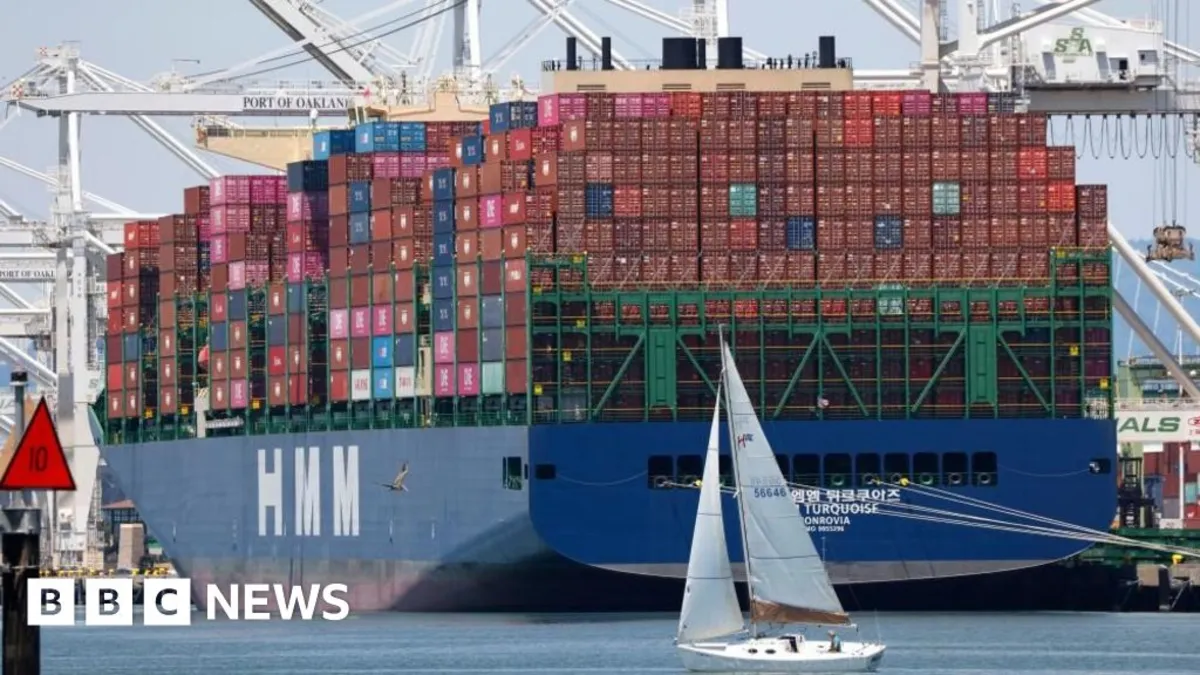
The announcement poses a risk of reigniting trade tensions between the US and China. If the 25% tariff is imposed, it would apply to Chinese goods entering the US, which are already subject to an average tariff rate of 30.8%. This raises concerns about whether the new tariff would be an additional charge or if exemptions would be considered.
China has previously retaliated against US tariffs by implementing its own tax measures and restricting exports of rare earths, essential for US technology industries. Given China's dominant position in this market, the introduction of a new tariff could provoke a strong response. Analysts express skepticism about the likelihood of these tariffs being enforced, given the disparity between Trump's announcements and their real-world implications.
Despite possessing vast oil reserves that should contribute to national wealth, Iran's economy has been severely affected by years of mismanagement, declining oil sales, and stringent international sanctions. Many of Iran's 92 million citizens are struggling to afford basic necessities, with the rising cost of living fueling recent protests. A BBC analysis reveals that household spending has decreased since its peak in 2008, while government restrictions on women's employment have led to a drop in the employment rate from 42.4% to approximately 37% over the past two decades.
High inflation, which reached 48.4% in October, has exacerbated the economic situation, driven by government policies that have diminished the value of the rial against the US dollar, making imports even more costly. Iran's infrastructure suffers from significant under-investment, leading to unreliable electricity and water supply systems, which further undermines domestic production efforts. The potential reduction of fuel subsidies and restrictions on foreign trade due to new tariffs could push inflation even higher, edging the economy closer to collapse.
In conclusion, the proposed tariffs on countries conducting business with Iran could have far-reaching implications, affecting international trade relationships and Iran's fragile economy. As the situation unfolds, monitoring the reactions of affected nations and the actual implementation of these tariffs will be crucial.