

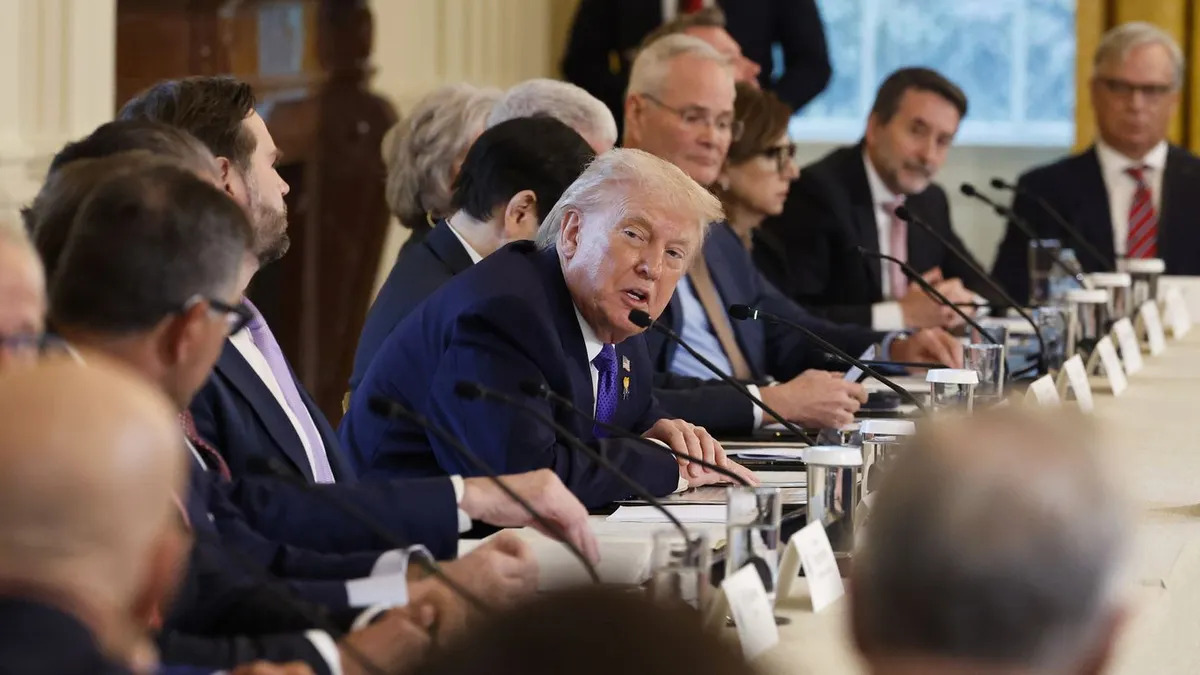
Despite some independent companies expressing interest in investing in Venezuela, major oil firms like Exxon and others are taking a more cautious stance than former President Donald Trump. At a recent event, Trump indicated his eagerness to initiate deals promptly, envisioning a scenario where a combination of U.S. and international companies would invest around $100 billion in Venezuela's oil sector.
Trump emphasized that U.S. companies would receive security guarantees, although he did not elaborate on any potential military involvement. He pointed out the experience that oil companies have in operating in complex environments, stating that they would be negotiating directly with U.S. authorities, rather than engaging with the Venezuelan government directly.
However, industry leaders have voiced significant concerns about the current investment climate in Venezuela. Exxon CEO Darren Woods highlighted that the country is presently "uninvestable" without substantial reforms to its commercial frameworks and legal systems. He stressed the necessity for durable investment protections and amendments to Venezuela's hydrocarbon laws for any meaningful investment to occur.
ConocoPhillips CEO Ryan Lance echoed these sentiments, pointing to the need for discussions with banks, particularly the Export-Import Bank of the U.S., to restructure debt and secure financing essential for restoring Venezuela's energy infrastructure. He noted that his company, which exited Venezuela's nationalized sector nearly two decades ago due to a conflict with the government, is prepared to assist but emphasized the importance of broader energy system reforms.
Coca-Cola, the only U.S. company still operating in Venezuela, also underscored the importance of safety and compliance with all applicable laws and sanctions in its statement after the meeting.
Venezuela is home to some of the largest oil reserves in the world. However, its production has significantly declined due to decades of mismanagement, underinvestment, and recent U.S. sanctions. Despite these challenges, several companies, including independent producers, have shown a willingness to invest. Jeffery Hildebrand, chairman of Hilcorp Energy, expressed his firm's readiness to contribute to rebuilding Venezuela's oil infrastructure.
Prior to the meeting with executives, top U.S. officials, including Energy Secretary Chris Wright and Interior Secretary Doug Burgum, provided a broad overview of their strategy. They downplayed the notion of direct U.S. financial assistance but did not dismiss the possibility entirely. Burgum noted that capital would primarily come from energy companies and capital markets, stating that a secure environment would attract investment in this lucrative resource.
Wright also mentioned that the Export-Import Bank of the U.S. could offer credit support for substantial projects, indicating potential avenues for financial backing in the future.
Despite skepticism about oil companies' willingness to invest in Venezuela, officials reported receiving interest from various firms, including independents. Chevron Vice Chairman Mark Nelson expressed optimism about near-term investments, although analysts suggest that restoring production to the 3.5 million barrels per day level seen in the late 1990s may require investments exceeding $100 billion over several years. Currently, Venezuela produces approximately 800,000 barrels per day, highlighting the significant gap that needs to be addressed.
As discussions continue, industry leaders and government officials remain focused on finding pathways to revitalize Venezuela's oil sector while navigating the complex landscape of investment and regulatory challenges.