

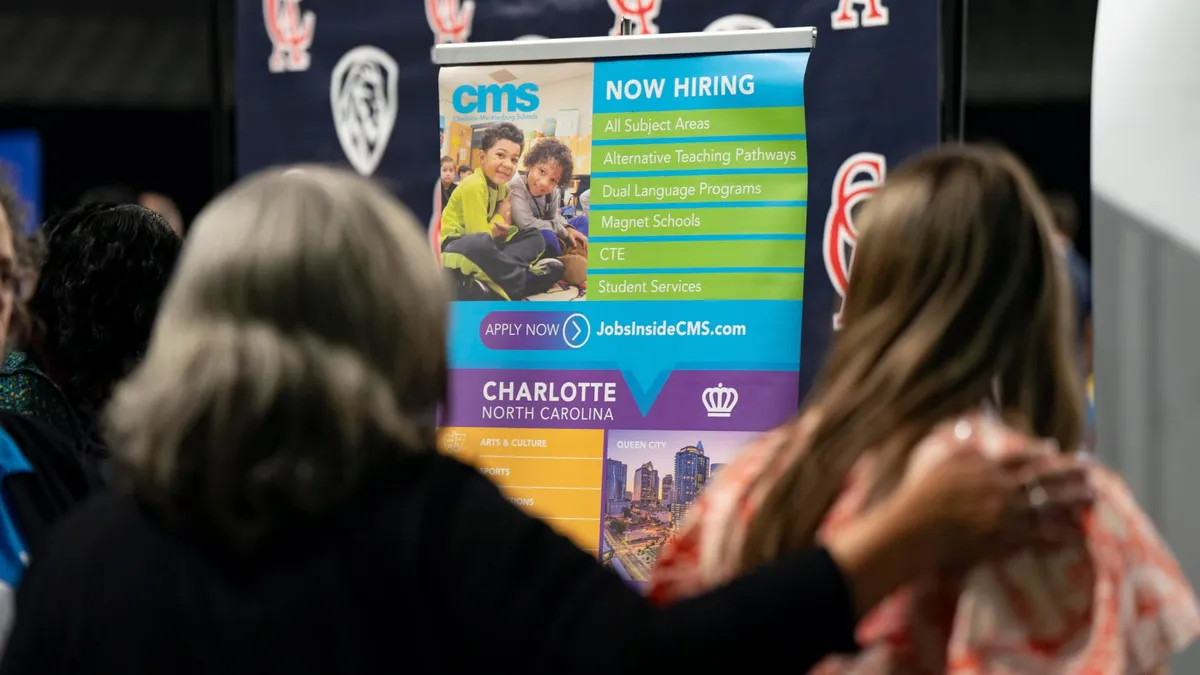
The U.S. labor market concluded 2025 on a soft note, as revealed in the latest report from the Bureau of Labor Statistics (BLS). The data for December indicated that job creation fell short of expectations, with nonfarm payrolls increasing by a seasonally adjusted 50,000 jobs. This figure was lower than the previously revised 56,000 jobs added in November and significantly below the Dow Jones estimate of 73,000.
Despite the lackluster job creation, the unemployment rate dipped to 4.4%, which was better than the forecasted 4.5%. A broader measure of unemployment, including discouraged workers and those employed part-time for economic reasons, also improved, falling to 8.4%, down by 0.3 percentage points from November. The household survey, which provides insight into employment figures, showed an increase of 232,000 jobs, although the labor force participation rate decreased slightly to 62.4%.
This latest jobs report presents a mixed view of the labor market. While companies are exhibiting a low level of hiring, households are reporting employment gains. Following the release of the report, stock market futures saw an uptick, while Treasury yields remained stable. Additionally, revisions to previous months revealed a downward adjustment of 8,000 jobs for November, and October's job loss was revised to 173,000, up from the earlier estimate of 105,000.
For the entire year of 2025, payroll gains averaged 49,000 jobs per month, a stark decline compared to the 168,000 average in 2024, according to the BLS. Art Hogan, chief market strategist at B. Riley Wealth, described the jobs report as a mixed bag, highlighting both positive and negative aspects. He noted that the overall takeaway suggests more good news than bad, especially considering this was the first timely jobs report released in three months, following delays due to the government shutdown.
Sector-wise, jobs in restaurants and bars led the gains in December, with an increase of 27,000 positions. Health care added 21,000 jobs, and social assistance saw a rise of 17,000. Conversely, the retail sector experienced a decline of 25,000 jobs, and government employment increased by just 2,000 jobs for the month.
In terms of compensation, average hourly earnings rose by 0.3% for December, aligning with forecasts. However, the annual increase of 3.8% was 0.2 percentage points higher than expected. The average workweek saw a slight decline, dropping to 34.2 hours.
Federal Reserve officials closely monitor the jobs report for insights into future interest rate decisions. The annual payroll gain of 584,000 for 2025 marks the worst performance outside of a recession since 2003, according to Heather Long, chief economist at Navy Federal Credit Union. She characterized 2025 as a hiring recession, where economic growth is robust, yet hiring remains stagnant. This situation is favorable for Wall Street but raises concerns for Main Street.
Despite calls for further interest rate cuts, the economy appears to be on solid footing as the year concludes. The Atlanta Fed's measures suggest that gross domestic product (GDP) is expected to grow at an annualized rate of 5.4% in the fourth quarter, following a 4.3% growth rate in the third quarter. Moreover, consumer spending, which constitutes two-thirds of the U.S. economy, surged during the holiday season, with Adobe reporting a 6.8% increase in online spending from the previous year, reaching a record $257.8 billion.
Markets anticipate that the Federal Reserve will maintain its current interest rates following a series of cuts that commenced in September. The next rate reduction is not expected until June, although this could shift based on future payroll reports. The December jobs report concludes a challenging year for the BLS, which faced leadership changes and data collection obstacles due to the government shutdown. Analysts expect that the January report will offer a clearer view of the labor market.