

In a striking move, Donald Trump has committed to utilizing Venezuela's oil reserves following the ousting of President Nicolás Maduro. The US President announced plans for American oil companies to invest billions in the South American nation, which boasts the largest proven crude oil reserves globally. Trump's vision includes revitalizing Venezuela's severely depleted oil infrastructure, with the aim of generating substantial revenue for the country.
Despite the promising outlook, experts caution that Trump's strategy faces significant hurdles. They estimate that it could cost billions of dollars and take up to a decade to achieve a significant increase in oil production. The pressing question remains: Can the US truly exert control over Venezuela's oil reserves, and will Trump's ambitious plan succeed?
Venezuela is estimated to hold around 303 billion barrels of oil, making it home to the world's largest proven reserves. However, the country’s actual oil production has drastically declined in recent years. Output has plummeted since the early 2000s, primarily due to the tightening grip of former President Hugo Chavez and the Maduro administration over the state-owned oil company, PDVSA. This has led to a significant exodus of experienced professionals from the industry.
While some Western oil firms, such as Chevron, remain operational in Venezuela, their activities have diminished considerably due to expanded US sanctions aimed at limiting oil exports and curbing Maduro's economic resources. These sanctions, first imposed during President Barack Obama's tenure in 2015, have further isolated Venezuela from necessary investments and essential parts for oil production.
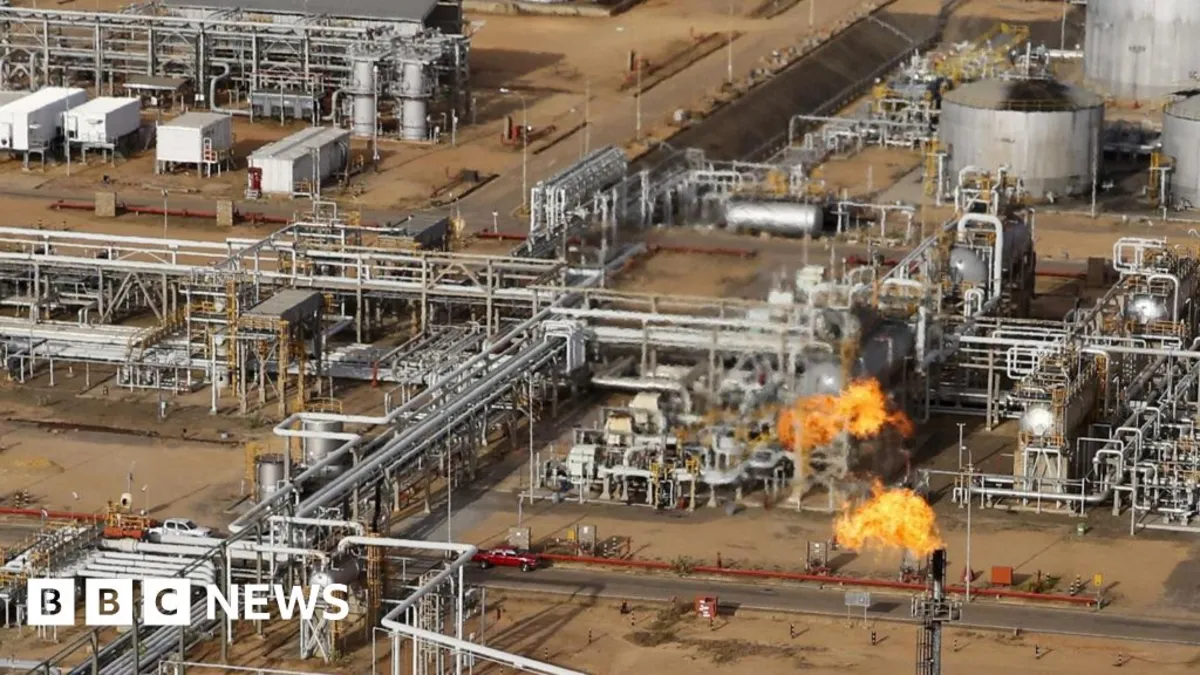
According to Callum Macpherson, head of commodities at Investec, the most significant challenge facing the country is its oil infrastructure. As of November, Venezuela's oil output was estimated at just 860,000 barrels per day, a stark decline that represents only a third of its production a decade ago, accounting for less than 1% of global oil consumption.
The oil reserves in Venezuela consist mainly of heavy, sour oil, which is more challenging to refine but valuable for producing diesel and asphalt. In contrast, the US generally produces light, sweet oil, which is preferable for gasoline production. As tensions rise, the US has also seized two oil tankers off the Venezuelan coast and imposed a blockade on sanctioned vessels entering and leaving the country.
According to Homayoun Falakshahi, a senior commodity analyst at Kpler, the primary obstacles for oil companies interested in tapping into Venezuelan reserves are legal and political. He notes that any agreement with the Venezuelan government is contingent upon the establishment of a successor to Maduro. This creates uncertainty for companies that would need to invest billions while relying on the stability of a future government.
Even in the event of political stability, the process of ramping up investment and infrastructure will take considerable time. Analysts warn that it could require tens of billions of dollars and potentially a decade to restore Venezuela’s oil production to previous levels. Neil Shearing, group chief economist at Capital Economics, argues that Trump's plans are unlikely to significantly affect global oil supply or prices in the near term. He emphasizes that the challenges are vast and that companies will refrain from investing until a stable government is established.
Shearing also points out that even if Venezuela were to return to its previous production levels of around three million barrels per day, it would still not rank among the world's top ten oil producers. Furthermore, with high production levels from OPEC+ countries, the global market is not currently facing an oil shortage.