

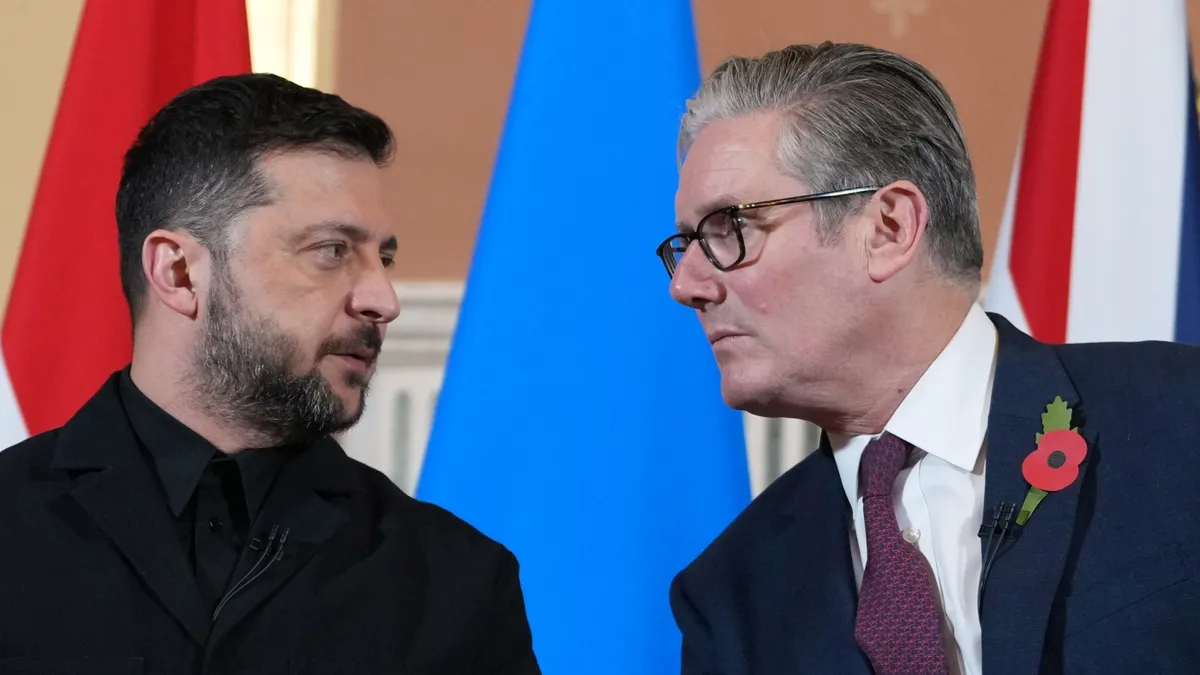
When Ukrainian President Volodymyr Zelenskyy arrives at 10 Downing Street on Monday, he will be welcomed not only by British Prime Minister Keir Starmer but also by French President Emmanuel Macron and German Chancellor Friedrich Merz. This gathering symbolizes a continuing show of support from Ukraine's united European allies, a coalition that Starmer has referred to as the "coalition of the willing." However, even as Europe rallies around Zelenskyy, he faces the daunting task of securing firmer commitments from the Trump administration, which complicates Ukraine's ongoing struggle against Russia amid a nearly four-year conflict.
The recent introduction of a 28-point peace plan by the Trump administration has raised eyebrows among European officials, as it appears to favor Russia's stance. The proposal includes limited security guarantees and demands for Ukraine to relinquish territory to Russia—conditions that Zelenskyy has consistently opposed. Furthermore, the plan suggests reducing the size of Ukraine's military and obstructing its NATO membership aspirations. In response, Ukraine has proposed modifications to the agreement, but tangible progress remains elusive.
On Saturday, Zelenskyy reported having a substantive and constructive dialogue with U.S. special envoys Steve Witkoff and Jared Kushner in Miami, yet the discussions concluded without significant breakthroughs. Meanwhile, Russia has escalated its military actions, launching a new wave of drone and missile strikes on Ukraine, which underscores Moscow's assertiveness on the battlefield even as diplomatic negotiations falter.
In a striking statement made at a conference in Doha, Qatar, Donald Trump Jr. suggested that his father might abandon Ukraine if a quick agreement with Russia is not reached. This sentiment has fueled fears among Ukrainian and European leaders that the U.S. may not remain committed to supporting Ukraine’s territorial integrity and security. With Europe emphasizing the importance of a cohesive front against Russian aggression, Zelenskyy's message has resonated across the continent, particularly during his recent visits to Paris and Ireland.
European leaders are arriving in London with a unified message: they stand firmly behind Ukraine's efforts to secure a peace plan that protects its territorial integrity. European Commission President Ursula von der Leyen has stated that any peace agreement must uphold Ukraine's ability to defend itself. Macron has condemned Russia's recent attacks as escalatory and emphasized the necessity of continued collaboration with the U.S. to secure the guarantees Ukraine needs for lasting peace.
However, concerns linger about the reliability of U.S. support. Reports suggest Macron privately warned Zelenskyy of a potential betrayal by the U.S. regarding territorial concessions, citing uncertainties surrounding security guarantees. This sentiment is further exacerbated by the Trump administration’s newly announced national security strategy, which indicates a shift away from long-standing security commitments to Europe.
As negotiations for a peace deal continue, Russia remains steadfast in its demands, including the recognition of occupied territories and imposing long-term limitations on Ukraine's security partnerships. This unyielding stance has been mirrored by a series of drone and missile attacks on Ukraine's infrastructure, resulting in injuries and power outages across various regions. Such actions serve as a stark reminder of Russia's willingness to escalate its military operations even as diplomatic discussions stall.
The uncertainty surrounding U.S. intentions is a pressing concern for Ukraine. With mixed signals emanating from the Trump administration, there is apprehension that Washington may push Ukraine towards a deal with Russia at the cost of its long-term stability. Trump Jr.'s comments at the Doha festival reflect this anxiety, as he insinuated that his father may disengage from supporting Ukraine if a resolution is not swiftly achieved.
As the situation evolves, Zelenskyy remains a pivotal figure on the international stage, garnering support while facing scrutiny over internal issues, including a corruption scandal involving his aides. Nevertheless, his leadership during this crisis has solidified his status, particularly among Western allies. The coming days will be crucial as European leaders meet to discuss renewed support for Ukraine, with hopes of crafting a peace plan that aligns with Ukraine’s sovereignty and long-term security.