

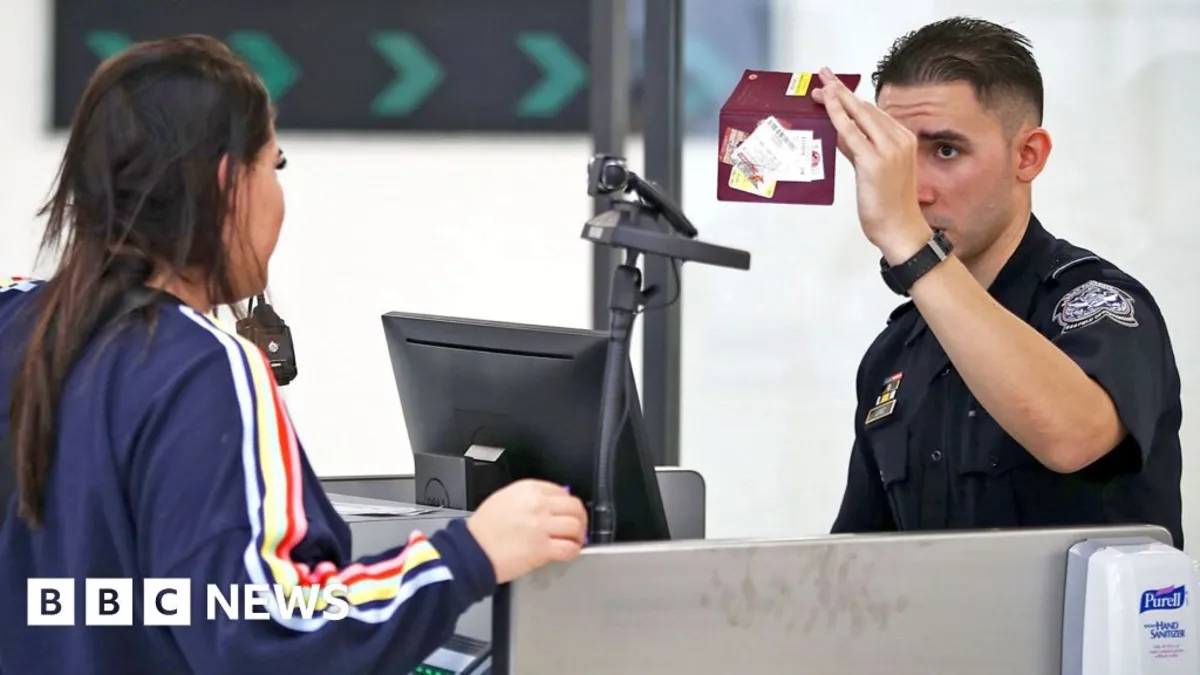
Tourists from numerous countries, including the UK, may soon be required to provide a detailed five-year social media history as a condition for entering the United States. This new proposal, unveiled by American officials, would primarily impact travelers from countries eligible for a 90-day visit to the US without a visa, contingent upon completing an Electronic System for Travel Authorization (ESTA) form.
Since President Donald Trump returned to the White House in January, there has been a concerted effort to tighten US borders, with national security cited as the primary justification. Analysts warn that this new requirement could deter potential visitors and infringe upon their digital rights. As the US prepares for a significant influx of foreign tourists, particularly with the upcoming men’s football World Cup alongside Canada and Mexico, as well as the 2028 Olympics in Los Angeles, the implications of this proposal are substantial.
The proposal, filed by Customs and Border Protection (CBP) and the Department of Homeland Security (DHS), appeared in the Federal Register, the official journal of the US government. According to reports, ESTA applicants will be required to disclose their social media activity from the past five years, though specific details on the information needed remain unclear. Currently, the ESTA process requires minimal information and a one-time fee of $40 (£30), and is available to citizens of about 40 countries, including the UK, Ireland, France, Australia, and Japan.
In addition to social media details, the proposal suggests that ESTA applicants must provide their phone numbers and email addresses used over the past five and ten years, respectively, along with more information about their family members. This initiative stems from an executive order issued by Trump in January, titled Protecting the United States From Foreign Terrorists and Other National Security and Public Safety Threats.
The Trump administration previously announced that it would examine social media accounts during the vetting process for foreign nationals applying for student visas or H1B visas for skilled workers. The State Department has mandated online presence reviews for applicants and their dependents, requiring privacy settings on social media profiles to be made public for screening purposes. The US Embassy and Consulate in Mexico has also stated that certain visa applicants must list all social media usernames or handles used in the last five years, warning that failure to do so could result in denial of both current and future visas.
A senior State Department official emphasized the expectation of American citizens for the government to enhance national safety, stating that the Trump Administration is committed to this endeavor. Officials have been instructed to scrutinize individuals who advocate for or support foreign terrorists or pose threats to national security. As part of ongoing border enforcement strategies, there are discussions to potentially expand a travel ban affecting 19 countries across Africa, the Middle East, and the Caribbean.
The new proposal is open for public comment for 60 days, and Sophia Cope from the Electronic Frontier Foundation criticized the initiative, stating it could exacerbate civil liberties violations. Immigration law practice Fragomen has indicated that the requirement may lead to longer wait times for ESTA approvals, further complicating travel plans for many.
Experts have pointed out that changes in travel policies during the Trump administration appear to have adversely affected the American tourism industry. The World Travel & Tourism Council reported that the US is the only one out of 184 economies analyzed expected to experience a decline in international visitor spending by 2025. Additionally, various policies have led to boycotts, particularly among Canadians, resulting in a marked decrease in their travel to the US. October marked the tenth consecutive month of decline in Canadian visitors, who traditionally contribute significantly to the US economy, spending over $20 billion (£15.1 billion) annually, according to the US Travel Association.