

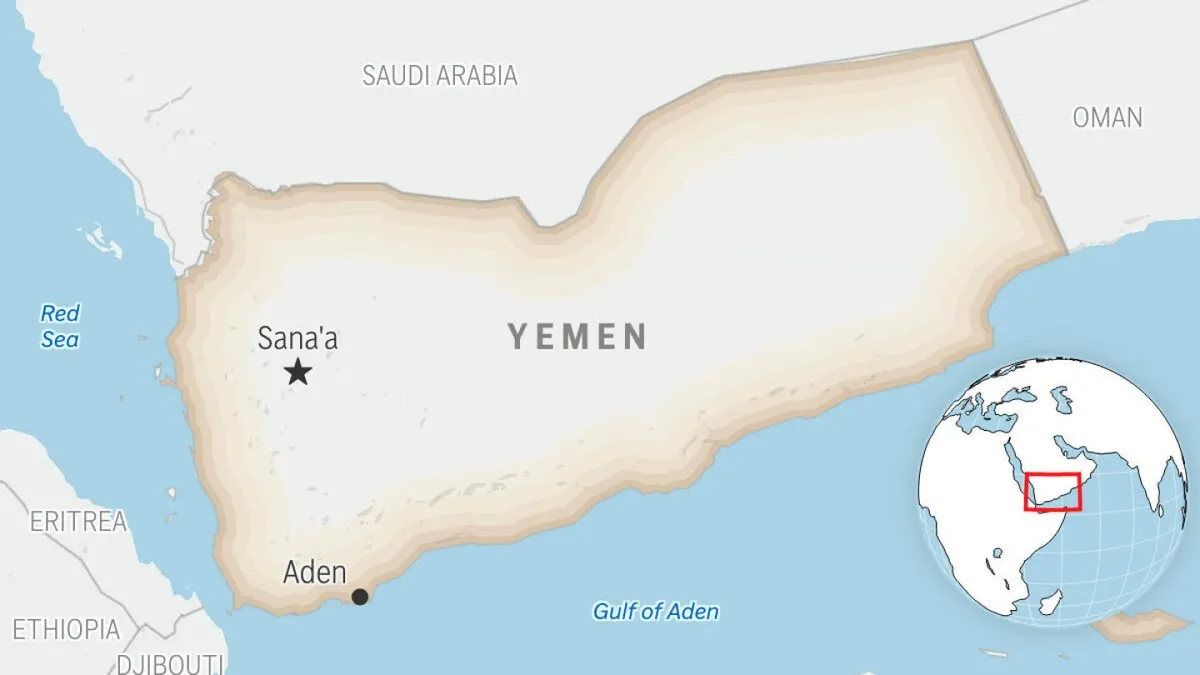
DUBAI, United Arab Emirates (AP) — In a significant escalation of conflict, Saudi Arabia bombed the port city of Mukalla in Yemen on Tuesday. The military action was justified by the kingdom as a response to a shipment of weapons intended for the Southern Transitional Council, a separatist group that has received backing from the United Arab Emirates. While the UAE has yet to comment on the airstrike, this incident highlights the growing rift between Riyadh and the separatists.
The bombing further complicates the already tense situation in Yemen, where Saudi Arabia and the UAE have historically supported opposing factions in a protracted war against the Iranian-backed Houthi rebels. A military statement released by the state-run Saudi Press Agency confirmed that the airstrikes were executed following the arrival of ships from Fujairah, a port city located on the UAE's eastern coast. This military operation was described as necessary to counter the threats posed by the weapons.
The military statement indicated that the operation aimed at targeting weapons and combat vehicles that had been unloaded from two ships at the Mukalla port. “Given the danger and escalation posed by these weapons, which threaten security and stability, the Coalition Air Forces conducted a limited military operation this morning,” the statement read. However, it remains unclear whether there were any casualties resulting from the airstrike, as the Saudi military asserted that the attack was timed to minimize collateral damage.
Analysts suggest that the airstrike likely targeted a vessel identified as the Greenland, a roll-on, roll-off ship flagged from St. Kitts. Tracking data indicates that this vessel was in Fujairah on December 22 and arrived at Mukalla on Sunday. Mohammed al-Basha, a Yemen expert and founder of the Basha Report, noted that social media videos appeared to show new armored vehicles entering Mukalla shortly after the ship's arrival.
Mukalla is located in Yemen's Hadramout governorate, an area that the Southern Transitional Council has recently seized control of. The city is situated approximately 480 kilometers (300 miles) northeast of Aden, the de facto capital for anti-Houthi forces in Yemen since the rebels took control of the capital, Sanaa, in 2014. The recent strike comes on the heels of previous Saudi airstrikes targeting the Council, which analysts described as a warning for the separatists to halt their territorial advances in Hadramout and Mahra.
The actions of the Southern Transitional Council are increasingly putting pressure on the relationship between Saudi Arabia and the UAE. While both nations maintain close diplomatic ties as members of the OPEC oil cartel, they have also been competing for influence and international business in the region. Demonstrations supporting the separatist movement have been ongoing, with calls for South Yemen to secede again, harking back to its status as an independent nation from 1967 to 1990.
As the situation develops, the dynamics between Saudi Arabia, the UAE, and the Southern Transitional Council will be critical to watch, as each entity navigates the complexities of Yemen's ongoing conflict.