

DOHA, Qatar — On Tuesday, Saudi Arabia launched airstrikes on Yemen's port city of Mukalla, specifically targeting a shipment of weapons from the United Arab Emirates intended for separatist forces. This significant military action threatens to escalate tensions in a region strategically located along a key international trade route, potentially introducing new risks to the Persian Gulf.
The UAE responded to this development by announcing its decision to withdraw its forces from Yemen. This comes amidst escalating tensions as the secessionist Southern Transitional Council (STC), which is backed by the UAE, has made significant territorial gains this month, seizing control over most of the provinces of Hadramout and Mahra, including vital oil facilities.
Yemen has been embroiled in a devastating civil war for over a decade, characterized by a complex array of sectarian grievances and the involvement of various regional powers. The Iran-aligned Houthis currently control the most populous areas of Yemen, including the capital, Sanaa. In contrast, a coalition of regional powers, including Saudi Arabia and the UAE, has supported the internationally recognized government in the southern regions. This protracted conflict has resulted in a severe humanitarian crisis and has decimated the economy of Yemen.
Despite a gradual decline in violence since 2022, where both sides reached a precarious stalemate, the recent actions by the UAE-backed STC have disrupted the fragile political dynamics among the coalition opposing the Houthis. The origins of this ongoing crisis can be traced back to 2014, when the Houthis advanced from their northern stronghold of Saada, captured the capital, Sanaa, and forced the internationally recognized government into exile. In 2015, Saudi Arabia and the UAE intervened militarily, aiming to restore the exiled government.
The current conflict sees the STC, which wields significant financial and military support from the UAE, pitted against the forces loyal to the internationally recognized government and its allied tribes. Although both factions are nominally aligned against the Houthi rebels, internal power struggles have intensified, particularly with the STC's emergence as the dominant force in southern Yemen.
Established in April 2017, the STC serves as an umbrella organization for various groups advocating for the restoration of South Yemen as an independent state, reminiscent of its status from 1967 to 1990. Recent developments have solidified the STC's hold over southern Yemen, granting it leverage in any future negotiations aimed at resolving the Yemeni conflict. The STC has consistently demanded that any resolution include the right to self-determination for southern Yemen.
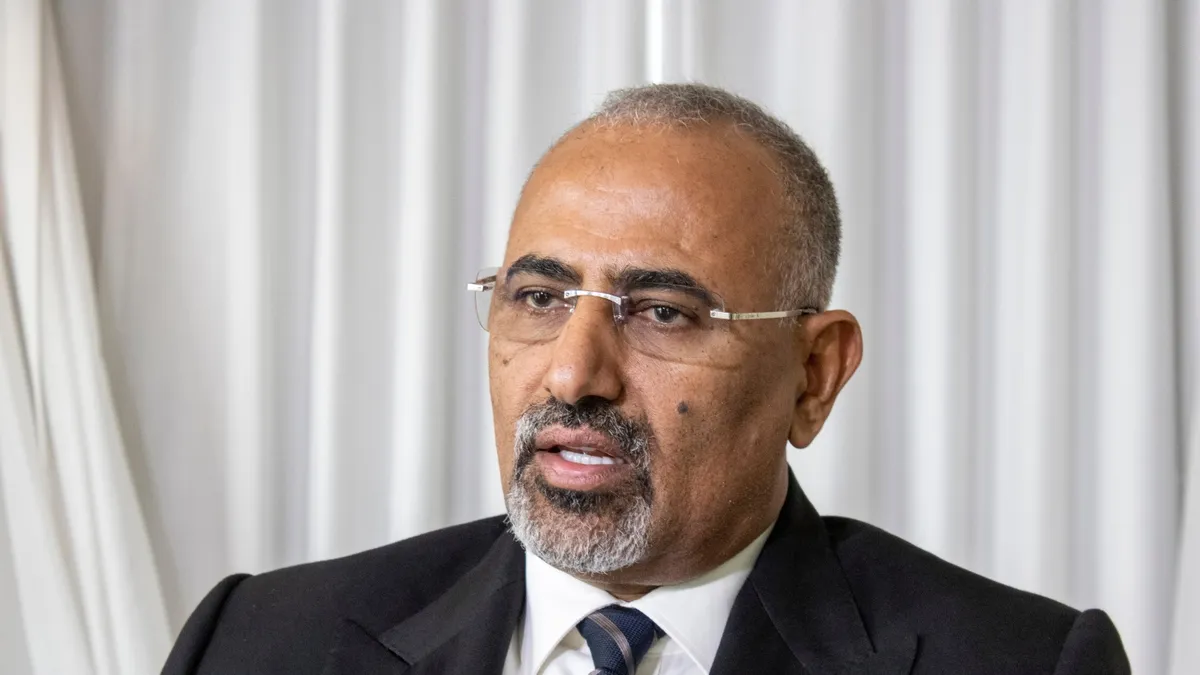
Under the leadership of Aidarous al-Zubaidi, who also serves as the vice president of the Presidential Leadership Council, the STC maintains loyalty across much of southern Yemen. The organization, along with other UAE-supported factions, now controls a significant portion of the southern regions, including essential port cities and islands.
This month, STC forces advanced into Hadramout, taking control of key facilities such as PetroMasila, Yemen's largest oil company, after brief skirmishes with government forces and their tribal allies. This move followed the Saudi-backed Hadramout Tribal Alliance's earlier seizure of the PetroMasila oil facility, aimed at pressuring the government for a more substantial share of oil revenues and improved services for Hadramout's residents.
Seizing the moment, STC forces also moved into the province of Mahra, bordering Oman, and captured a critical border crossing. In Aden, the UAE-backed forces took control of the presidential palace, the seat of the ruling Presidential Council. Additionally, Saudi troops withdrew from bases in Aden earlier this month, a decision attributed to a strategic repositioning by Riyadh.
On Friday, Saudi Arabia escalated its military response with airstrikes in Hadramout, which analysts interpreted as a warning to the separatists to halt their advances in the governorates of Hadramout and Mahra. This situation disrupts the relative calm that had prevailed in Yemen's war, which had reached a stalemate following a deal between the Houthis and Saudi Arabia aimed at ceasing hostilities.
The latest developments underscore the strained relationship between Riyadh and Abu Dhabi, which have historically supported rival factions in Yemen's civil war against the Iranian-backed Houthis. While both nations are aligned on various regional issues, they increasingly find themselves in competition over economic interests and political influence across the Middle East.
As the United Arab Emirates stated earlier this month, the governance and territorial integrity of Yemen must be determined by the Yemeni parties themselves, highlighting the complex dynamics at play in this protracted conflict.