

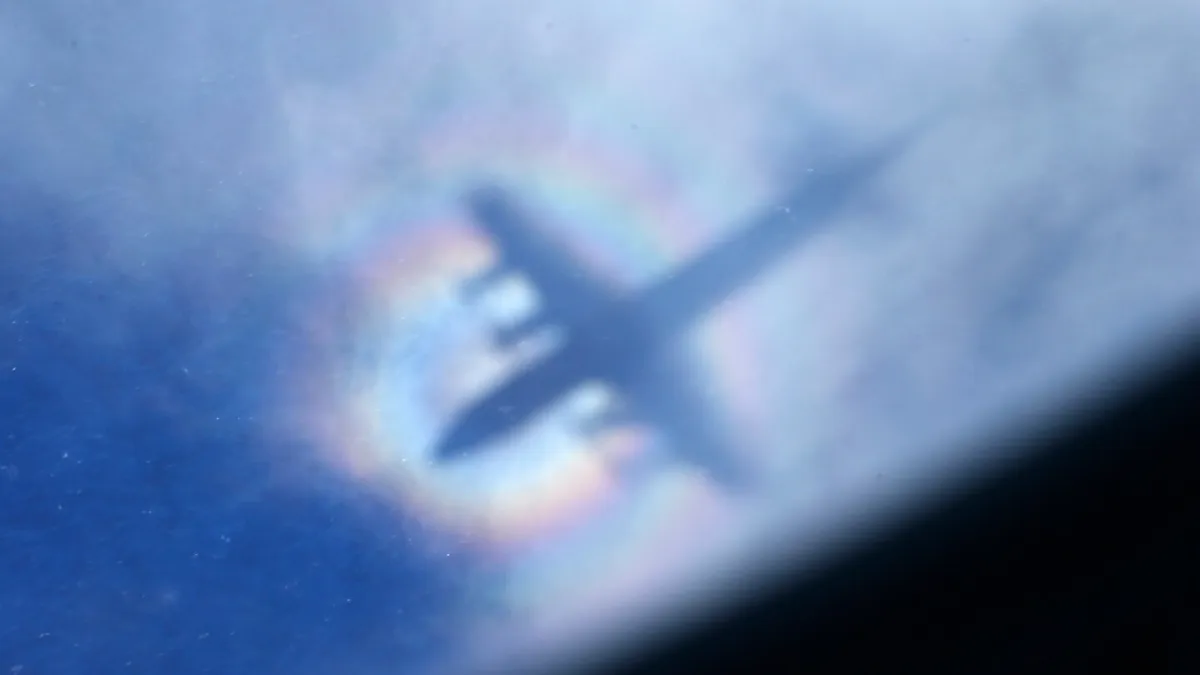
More than a decade ago, Malaysia Airlines Flight 370 vanished without a trace, sparking one of aviation's most perplexing mysteries. Despite years of extensive multinational searches, investigators remain baffled, as the exact fate of the plane and its 239 passengers and crew is still unknown. On Wednesday, the Malaysian government announced the resumption of a search operation for the missing aircraft, reigniting hopes that the jet might finally be discovered.
The previous massive search effort in the southern Indian Ocean, where the jet is believed to have crashed, yielded minimal results. While a few small fragments washed ashore, no bodies or significant wreckage have been recovered. The search operations began shortly after the flight's disappearance on March 8, 2014, when the Boeing 777 disappeared from air traffic radar just 39 minutes after departing Kuala Lumpur for Beijing. The last communication from the pilot was a simple, “Good night, Malaysian Three Seven Zero.” After crossing into Vietnamese airspace, the plane failed to check in with controllers, and moments later, its transponder stopped broadcasting its location.
Military radar tracked the jet as it turned back over the Andaman Sea. Data from satellites suggested that the aircraft continued flying for hours, potentially until it ran out of fuel, before crashing into a remote section of the southern Indian Ocean. Theories surrounding the disappearance range from hijacking to cabin depressurization and power failure. Notably, there were no distress calls, ransom demands, or evidence of technical failure or severe weather conditions. In 2018, Malaysian investigators cleared the passengers and crew but did not rule out the possibility of “unlawful interference.” Authorities suggest that someone may have deliberately severed communications and diverted the aircraft.
Flight MH370 was carrying 12 crew members and 227 passengers, including five young children. The majority of the passengers were Chinese, but there were also individuals from the United States, Indonesia, France, Russia, and other countries. Among the passengers were two young Iranians traveling on stolen passports, a group of Chinese calligraphy artists, and 20 employees of the U.S. tech firm Freescale Semiconductor, along with a stunt double for actor Jet Li. Tragically, many families lost multiple members in the incident.
Initial search operations took place in the South China Sea, between Malaysia and Vietnam, before expanding into the Andaman Sea and ultimately into the southern Indian Ocean. Australia, Malaysia, and China coordinated the largest underwater search in history, covering approximately 120,000 square kilometers (46,000 square miles) of seabed off the western coast of Australia. Various aircraft, vessels equipped with sonar, and robotic submarines scoured the ocean for any signs of the plane. Unfortunately, signals initially believed to be from the plane's black box were later determined to originate from other sources, and no wreckage was located.
The first piece of confirmed debris was a wing fragment, identified as a flaperon, discovered on the remote Réunion Island in July 2015. Additional fragments were found along the east coast of Africa. The search was officially suspended in January 2017. However, in 2018, the U.S. marine robotics company Ocean Infinity resumed the hunt under a “no-find, no-fee” agreement, focusing on areas identified through debris drift studies. This renewed effort also concluded without success.
The extensive search faced numerous challenges, primarily due to the vastness of the Indian Ocean, the world's third largest ocean. The search area presented difficult conditions, including bad weather and average depths of around 4 kilometers (2.5 miles). It is uncommon for planes to disappear in deep sea environments, making it exceptionally challenging to locate remains. Over the past fifty years, dozens of planes have vanished, according to the Aviation Safety Network.
In March, the Malaysian government approved another “no-find, no-fee” contract with Ocean Infinity to renew the seabed search operation, targeting a new site that spans over 15,000 square kilometers (5,800 square miles) of water. Ocean Infinity stands to receive $70 million only if wreckage is discovered. However, the search was temporarily suspended in April due to adverse weather conditions. On Wednesday, the government announced that Ocean Infinity would resume the search intermittently starting December 30, for a duration of 55 days, in specific areas believed to have the highest probability of locating the missing aircraft. It remains unclear whether Ocean Infinity has obtained new evidence regarding the plane’s location, but the company has indicated it will utilize advanced technology and collaborate with experts to analyze data and narrow down the search area.