

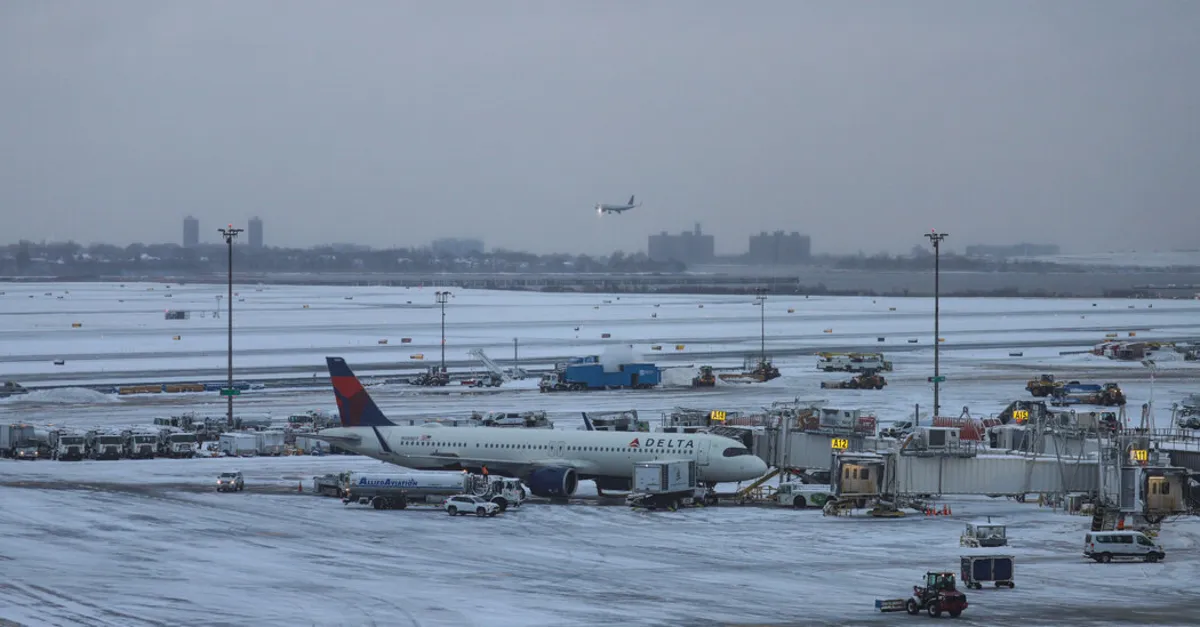
Forecasters had predicted that the New York area would experience up to nine inches of snow from Friday night into Saturday morning. In anticipation of severe weather conditions, major airlines began to proactively cancel flights at the region's primary airports. This preemptive action left thousands of holiday travelers grappling with the challenge of rebooking flights and adjusting their travel plans, even though the worst of the storm ultimately bypassed New York.
The three principal airports serving the New York region—Kennedy International, LaGuardia, and Newark Liberty International—saw significant disruptions. According to FlightAware, a flight tracking service, over 400 inbound and outbound flights were canceled on Saturday alone. The situation was compounded by hundreds of additional flight delays. On Friday, nearly 900 flights were canceled across the three airports, illustrating the extensive impact of the winter storm.
Airline representatives indicated that the preemptive cancellations were intended to prevent a ripple effect from real-time adjustments. Chris Perry, a spokesman for Southwest Airlines, emphasized the importance of canceling flights early, stating, “The worst thing you can do for your whole operation is to cancel flights really close into the time they’re supposed to depart.” This strategy aims to avoid stranding both aircraft and flight crews, which can lead to further complications for customers as well.
This proactive approach is informed by past experiences. For instance, in December 2022, Southwest Airlines faced significant challenges when a severe winter storm resulted in thousands of flight cancellations, leaving many planes and crews stuck at various airports across the country. The airline struggled for days to recover, while other major airlines—who utilize a hub system with readily available crew members and pilots—managed to rebound more swiftly.
As winter weather continues to pose challenges for air travel, the situation in New York serves as a reminder of the complexities involved in airline operations during severe weather. Travelers are encouraged to stay informed about their flight status and to plan ahead during the holiday season, when travel disruptions can significantly impact their plans.