

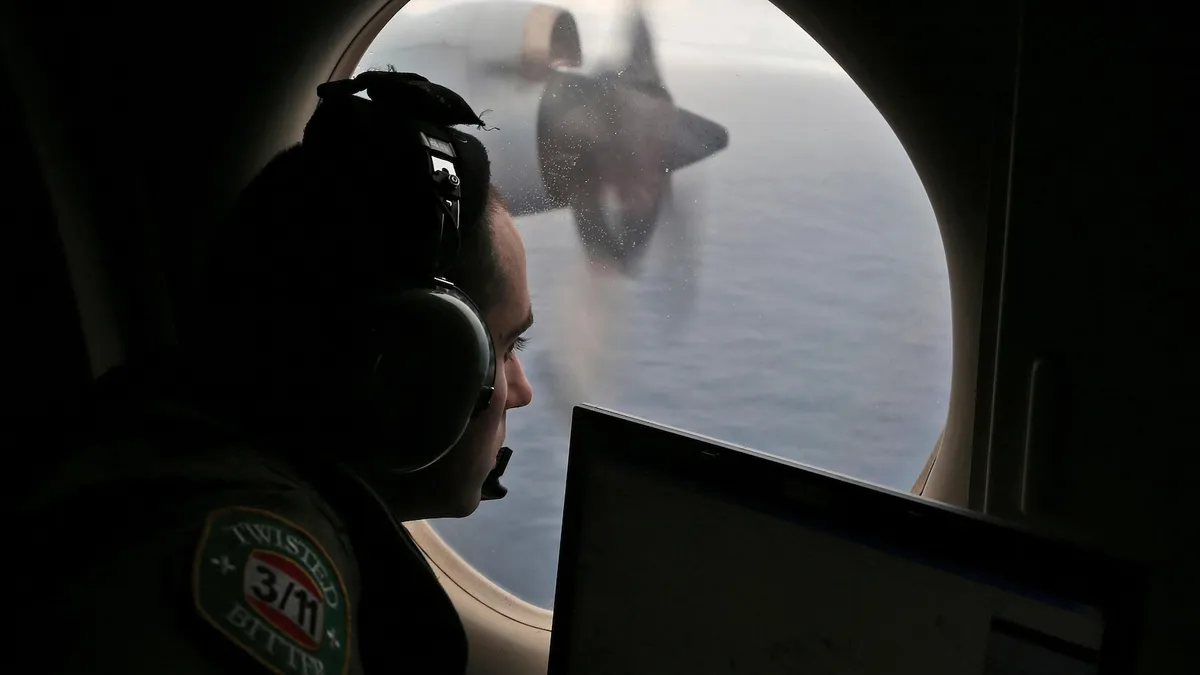
On Wednesday, a significant deep-sea search for the missing Malaysia Airlines Flight 370 commenced in the Indian Ocean, reigniting hopes of solving one of aviation's most perplexing mysteries. Over a decade has passed since the aircraft vanished with 239 people aboard, and the search efforts are once again gaining momentum.
According to Malaysia’s Transport Ministry, the search vessel Armada 86 05 has successfully arrived at a designated search area equipped with two autonomous underwater vehicles. However, the exact location of this search area has not been disclosed in the official statement. The vessel was prepared for its mission while docked at Fremantle Port in Western Australia.
While the Malaysian government did not directly mention Ocean Infinity, the Texas-based marine robotics company previously led search efforts for Flight 370 and has long been expected to spearhead this renewed mission. The vessel, identified by its specific number, is widely recognized by maritime and aviation experts as part of Ocean Infinity's fleet.
Earlier in December, the Malaysian government confirmed that Ocean Infinity would begin exploring targeted areas of the seabed under a renewed "no-find, no-fee" agreement. Although the company has acknowledged its involvement in the ongoing search for MH370, it has refrained from providing additional comments, citing the “important and sensitive nature” of the operation.
In 2018, Ocean Infinity conducted a seabed search under a similar contract but was unable to locate any traces of the missing aircraft. Since then, the company has upgraded its technology and refined its analysis techniques. CEO Oliver Plunkett stated last year that they are collaborating with various experts to narrow down the search zone to areas they believe represent the most probable crash site.
Earlier this year, Ocean Infinity briefly resumed seabed search operations in a newly designated area of approximately 15,000 square kilometers (5,800 square miles) in the southern Indian Ocean. However, this effort was halted in April due to adverse weather conditions.
Malaysia Airlines Flight 370 disappeared from radar shortly after taking off from Kuala Lumpur en route to Beijing on March 8, 2014. Subsequent satellite data indicated that the aircraft deviated from its planned route, veering south toward the remote southern Indian Ocean, where investigators believe it eventually crashed. To this day, no definitive explanation has been provided for this unexpected course change.
A costly and prolonged multinational search effort has yet to uncover the aircraft, although fragments of debris believed to be from the plane have washed up along the East African coast and on various islands in the Indian Ocean. Despite these findings, no main wreckage or human remains have ever been recovered.
As the search for Malaysia Airlines Flight 370 continues, both families of the victims and aviation experts alike remain hopeful that this renewed effort will finally bring closure to one of the most enduring mysteries in aviation history.