

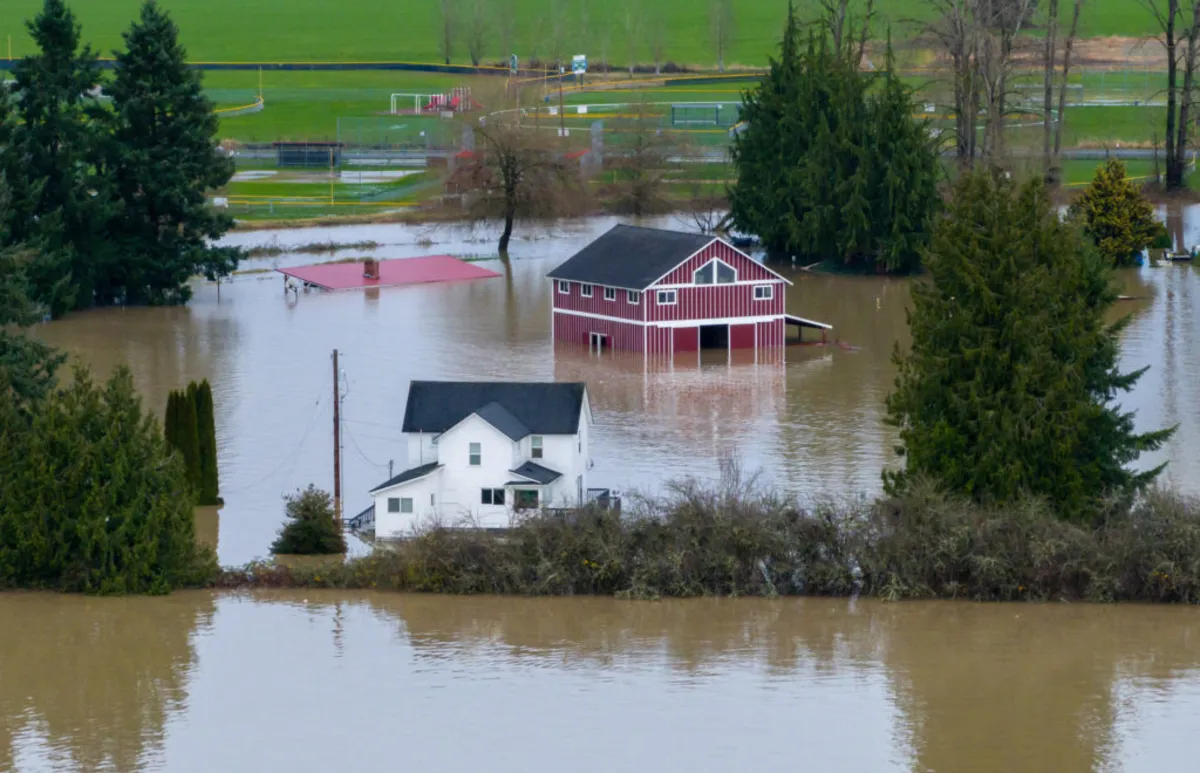
MOUNT VERNON, Wash. (AP) — In recent days, torrential rain in Washington state has led to historic floods that have stranded families on rooftops, inundated bridges, and washed away at least two homes from their foundations. Experts are warning that the situation could worsen, with even more flooding expected on Friday, posing a catastrophic risk to many areas. As a result, Washington has declared a state of emergency, and evacuation orders are in place for tens of thousands of residents.
Governor Bob Ferguson emphasized the seriousness of the situation on Thursday, urging everyone to adhere to evacuation instructions as yet another river approached record levels. “I understand that many in our state have experienced significant floods in the past,” he stated on the social platform X. “However, we’re looking at a historic situation.”
Approximately 78,000 residents from a major agricultural region north of Seattle have been ordered to evacuate the floodplain of the Skagit River, which is expected to crest Friday morning. The flooding has heavily impacted large parts of the state, with numerous bridges submerged and several major roads either inundated or washed out. Some routes, including a significant portion of state Route 410, have no alternate paths and no estimated reopening times.
A landslide has blocked part of Interstate 90 east of Seattle, with images showcasing vehicles trapped by tree trunks, branches, mud, and standing water. In the north, near the U.S.-Canada border, the cities of Sumas, Nooksack, and Everson have been evacuated due to severe flooding. The border crossing at Sumas is closed, and Amtrak has suspended train services between Seattle and Vancouver, B.C.
Sumas Mayor Bruce Bosch reported that much of the city has been “devastated” by the high waters, just four years after a similar flood. The Snohomish River surged nearly a foot (30 centimeters) above its record on Thursday, while the Skagit River also rose above its previous record that same evening in Mount Vernon, according to the National Water Prediction Service. Earlier in the day, the Skagit nearly reached its former record as flooding surged through the mountain town of Concrete.
The floodwaters approached Mariah Brosa’s raised riverfront home in Concrete, narrowly avoiding intrusion but still causing significant damage to her fiancé’s work vehicle. “I didn’t think it would come this high,” she expressed, reflecting the fears of many residents. Mount Vernon, the largest city in Skagit County with approximately 35,000 residents, has a long history of flooding, with a significant event in 2003 displacing hundreds of individuals.
Officials throughout Washington state have been actively responding to the flooding crisis, rescuing people trapped in vehicles and homes after an atmospheric river drenched the region. On Thursday, helicopters rescued two families from the rooftops of homes in Sumas, where the flooding reached approximately 15 feet (4.6 meters). The local fire station in Sumas was also inundated with 3 feet (91 centimeters) of water, according to Frank Cain Jr., battalion chief for Whatcom County Fire District 14.
In the nearby community of Welcome, erosion from the floodwaters caused at least two houses to collapse into the Nooksack River, fortunately with no one inside at the time. In a surprising sight, a herd of elk was seen swimming and wading through neck-high water in a football field in Snoqualmie. East of Seattle, residents along Issaquah Creek struggled with rapidly rising waters, using pumps to mitigate the impact on their properties.
As the state grapples with these extreme weather conditions, discussions around climate change have surfaced. While scientists emphasize that specific studies are required to directly link individual weather events to climate change, they generally agree that it contributes to more intense and frequent extreme weather occurrences, including storms, droughts, floods, and wildfires. Another storm system is anticipated to bring additional rain starting Sunday, further complicating the recovery efforts.
This report highlights the ongoing challenges faced by communities in Washington state as they navigate the aftermath of these devastating floods. With emergency services in full action and additional rainfall on the horizon, the focus remains on safety and recovery for all affected residents.