

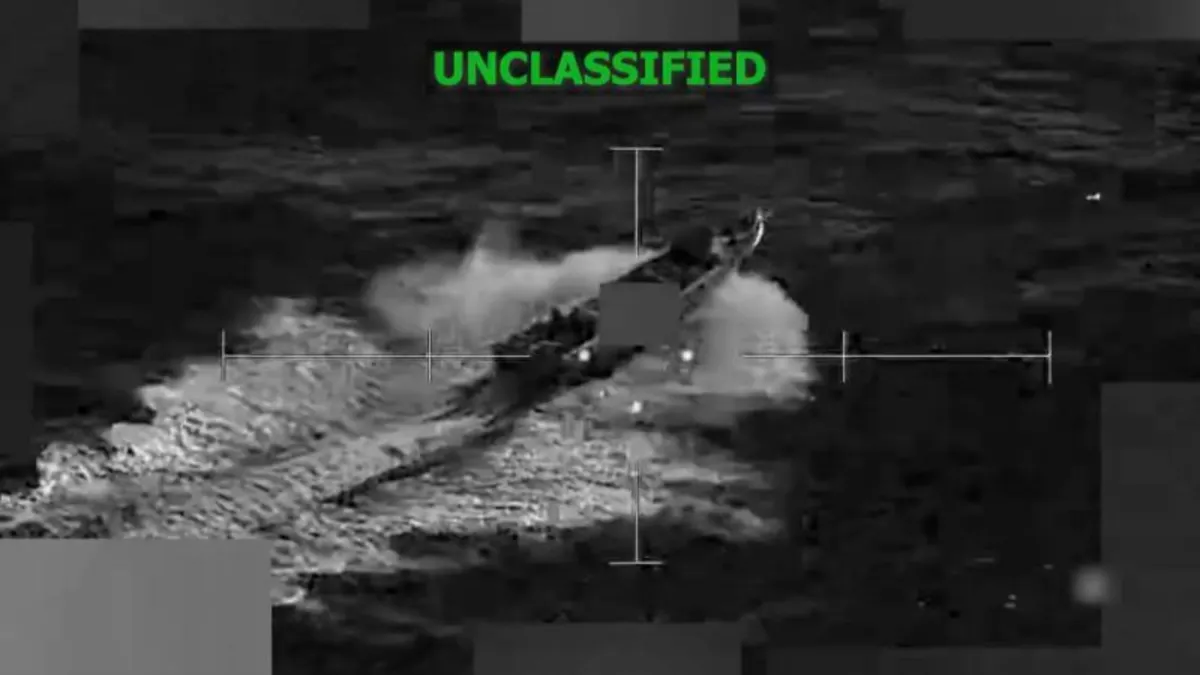
The US military executed a significant strike against an alleged drug-trafficking boat in the eastern Pacific Ocean on Wednesday, resulting in the deaths of four individuals, as confirmed by US Southern Command (SOUTHCOM). This operation, carried out on December 17, was directed by Secretary of War Pete Hegseth as part of the ongoing efforts to combat narcotics trafficking.
SOUTHCOM reported on X that the strike was a "lethal kinetic action" targeting a vessel operated by a Designated Terrorist Organization in international waters. Importantly, the command emphasized that no US service members were harmed during this operation. This incident marks the second strike within the week, following a similar attack on Monday that targeted three alleged drug-trafficking boats, resulting in eight fatalities.
Since the initiation of these operations, at least 99 individuals have lost their lives in strikes aimed at suspected drug boats as part of Operation Southern Spear. This military campaign, which has been emphasized by the Trump administration, is designed to significantly reduce narcotics trafficking in the region, particularly focusing on the activities linked to Venezuela.
The US military's actions in South America have intensified, with a particular focus on Venezuela. President Trump has accused the Venezuelan government of "stealing" US oil, land, and other valuable resources. In response to escalating tensions, the administration has deployed thousands of troops and a carrier strike group to the Caribbean region. Notably, Trump ordered a “total and complete blockade” on oil tankers that are sanctioned, both entering and leaving Venezuela.
In a swift response to the US actions, Venezuelan President Nicolás Maduro accused the US of pursuing regime change and claiming ownership over Venezuelan territory and resources. Speaking in Caracas, Maduro described the US strategy as a "warmongering and colonialist pretense," asserting that the truth about these intentions has become clear to the international community.
Meanwhile, members of Congress are pressing the Trump administration for more information regarding the offensive operations against the alleged drug boats. Lawmakers have raised concerns, particularly regarding a controversial follow-up strike on September 2, which resulted in the deaths of two crew members who had survived an earlier attack. Following a private briefing with Defense Secretary Hegseth, it was revealed that the Pentagon will not make the full video of the attack available to the public, although it will be shared with the House and Senate Armed Services Committees.
Frustrated by the lack of transparency, Senate Democrats left the briefing expressing their dissatisfaction at not being shown the unedited video. In response, Congress has taken steps to enhance its oversight capabilities, passing the annual defense policy bill with a provision that would withhold a quarter of Hegseth’s travel budget until the unedited strike videos are made available to the appropriate committees.
This developing situation highlights the ongoing complexities of US military involvement in international narcotics operations and the implications for US-Venezuela relations.