

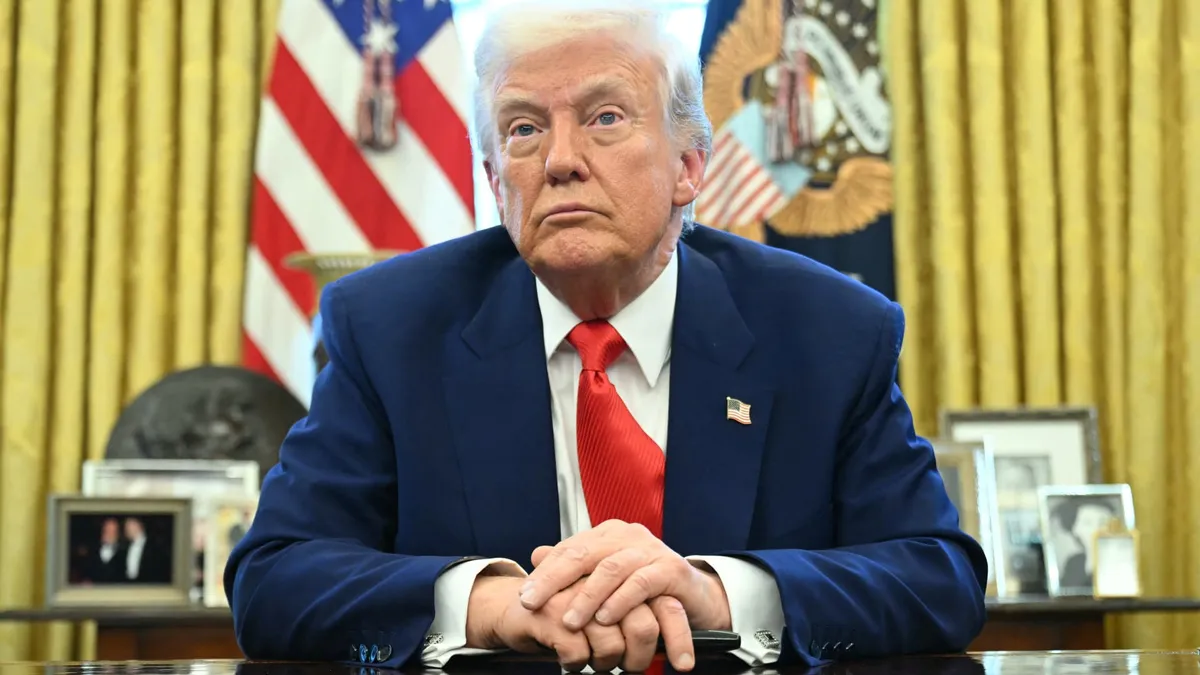
On Tuesday, President Donald Trump exercised his veto power for the first time during his second term, blocking legislation aimed at supporting two significant bipartisan infrastructure projects in Colorado and Florida. His veto of the Colorado bill, known as the Finish the Arkansas Valley Conduit Act, drew sharp criticism from state lawmakers, who had previously achieved unanimous congressional approval for the measure earlier in December.
The Finish the Arkansas Valley Conduit Act is designed to alleviate the financial burden on local communities by reducing the payments they must make to the federal government for the construction of the Arkansas Valley Conduit. This vital pipeline is expected to provide clean drinking water to underserved rural communities in Colorado. In his message to Congress following the veto, Trump asserted that the bill perpetuated the "failed policies of the past" and would unfairly shift the costs of a local water project onto federal taxpayers. "Enough is enough," Trump stated. "My Administration is committed to preventing American taxpayers from funding expensive and unreliable policies."
The response from bipartisan Colorado lawmakers was swift and fierce. They vowed to work together to override Trump's veto, with some suggesting that the veto might be an act of political retribution. Notably, Trump had previously expressed his displeasure when Colorado authorities did not release Tina Peters, a former county clerk convicted of crimes related to the breach of voting machines after the 2020 election. In a post on Truth Social, Trump had warned of "harsh measures" if Peters was not freed. Although he later issued a pardon for her in December, it was largely symbolic since Peters was convicted in a state court.
Senator Michael Bennet, a Democrat from Colorado and a gubernatorial candidate, criticized Trump's actions as "not governing," but rather a "revenge tour." He emphasized his commitment to ensuring that rural Colorado receives the clean water it deserves. Similarly, Senator John Hickenlooper labeled Trump's veto as a partisan maneuver that would harm rural communities in need of clean drinking water.
Amidst the backlash, Republican Representative Lauren Boebert, a close ally of Trump, expressed her intention to continue fighting against the veto. In a statement to Colorado-based NBC affiliate KUSA, Boebert remarked, "This isn't over," and voiced her hope that the veto was not linked to political retaliation for her calls for accountability regarding corruption. Notably, Boebert was among the Republicans who pressed for the release of documents related to the infamous sex offender Jeffrey Epstein.
With Congress having passed the Arkansas Valley Conduit Act unanimously, it is expected that there will be sufficient votes to override Trump's veto, provided that GOP leadership in both chambers allows such a move. To successfully override the veto, a two-thirds majority in both the House and Senate is required. Representative Jeff Hurd, another Republican from Colorado, pledged to work across party lines to reinstate the project and ensure that rural communities are not neglected.
In addition to the Colorado bill, Trump also vetoed the Miccosukee Reserved Area Amendments Act related to Florida. This legislation, which had passed Congress by voice vote, aimed to expand the Miccosukee Reserved Area to include the Osecola Camp, part of the Everglades National Park. Trump justified his veto by stating that it was necessary to prevent American taxpayers from funding projects benefiting special interests, particularly those that do not align with his Administration's policy of removing violent illegal aliens from the country.
During his first term, Trump issued a total of ten vetoes, with his first occurring in 2019 in response to congressional efforts to end a national emergency at the southern border, a move that Congress ultimately failed to override.