

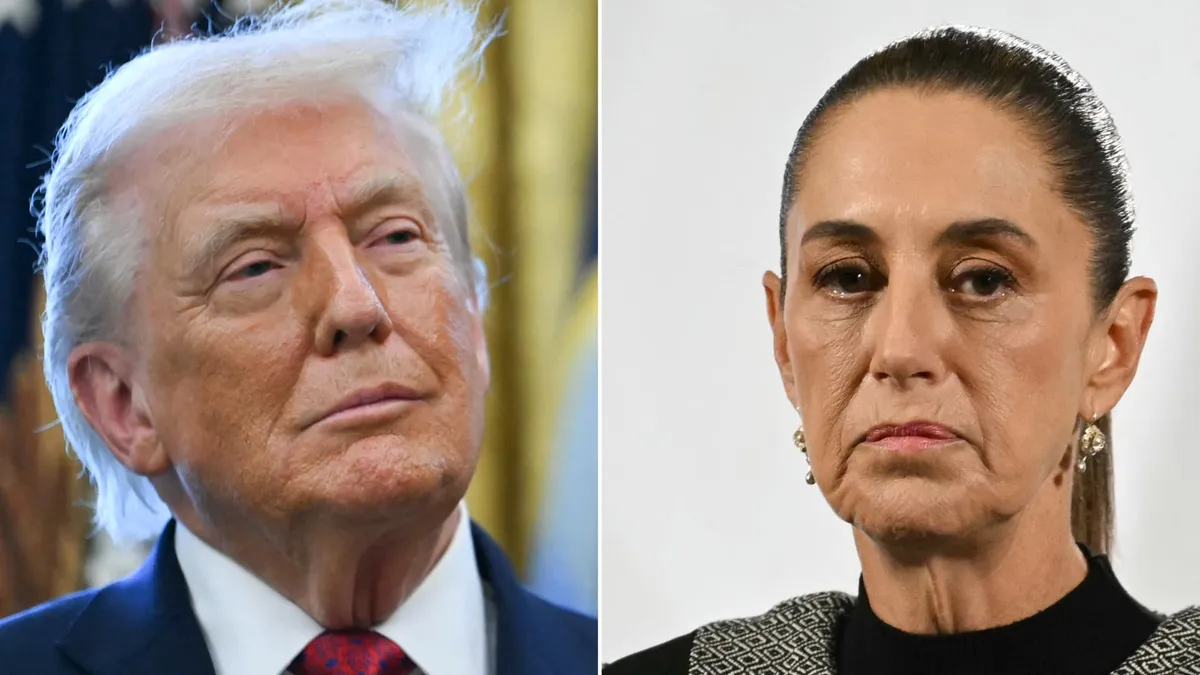
In a recent interview, President Donald Trump suggested that the United States military could initiate land strikes against drug cartels operating in Mexico. During the conversation with Fox News host Sean Hannity, Trump stated, "We've knocked out 97% of the drugs coming in by water. And we are going to start now hitting land, with regard to the cartels." He expressed his concern about the current state of Mexico, remarking, "The cartels are running Mexico; it's very sad to watch and see what's happened to that country."
The White House has not provided a response to CNBC regarding Trump's comments on military action against the Mexican drug cartels. This proposal comes shortly after U.S. forces executed a military operation in Venezuela, capturing its authoritarian leader, Nicolás Maduro, and his wife, Cilia Flores. Following the operation, the Venezuelan government reported that over 100 individuals lost their lives, which was part of a prolonged campaign against Maduro.
According to a report by The New York Times, during his administration, Trump oversaw 35 military strikes targeting alleged drug boats in the Caribbean, which resulted in the deaths of 115 people. In a previous Oval Office discussion, Trump had already hinted at the possibility of military intervention in Mexico, stating, "Would I launch strikes in Mexico to stop drugs? OK with me, whatever we have to do to stop drugs."
Mexican President Claudia Sheinbaum firmly opposed Trump's military suggestions, asserting that no U.S. military action would occur in Mexico without her consent. This week, she also criticized the U.S. operation against Maduro, emphasizing Mexico's sovereignty. "It is necessary to reaffirm that in Mexico the people rule, and that we are a free and sovereign country—cooperation, yes; subordination and intervention, no," Sheinbaum stated, as reported by Reuters.
Trump's administration has recently threatened military action not only in Mexico but also in Cuba, Colombia, and Greenland. These threats have sparked backlash, even from within the Republican party in Congress. On Thursday, the Senate conducted an initial vote aimed at preventing Trump from taking further military action in Venezuela. The measure, known as a War Powers Resolution, received support from five Senate Republicans, indicating significant bipartisan backing for its final approval.
Senator Susan Collins of Maine, one of the Republicans supporting the preliminary measure, acknowledged her backing of Trump's actions against Maduro but stressed that any further military actions would necessitate congressional approval. "I distinguish that from what happens next," Collins clarified. "When the president raises the issue, as he has with not only Venezuela but Greenland, of military force being used, then it does implicate the War Powers Act and Congress's constitutional role."
In conclusion, Trump's recent remarks about potentially launching military strikes against drug cartels in Mexico have raised significant concerns regarding U.S. foreign policy and international relations. As discussions continue, the implications of such actions will likely remain a focal point in both domestic and international dialogues.