

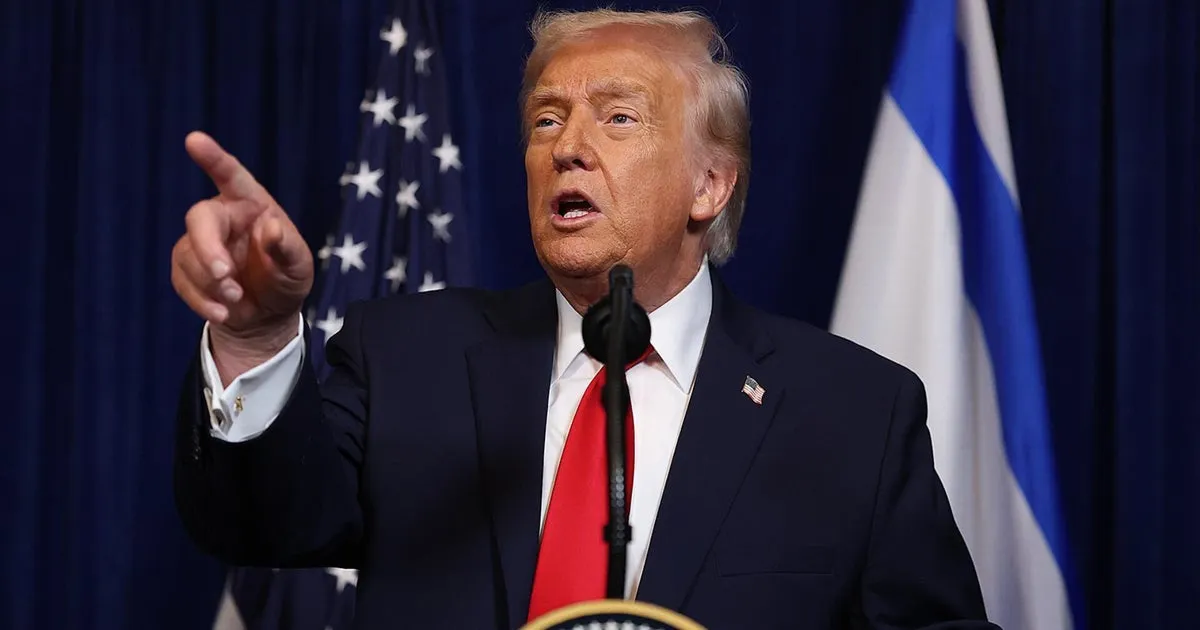
On Saturday, President Trump made headlines with the announcement of the capture of former Venezuelan President Nicolás Maduro and his wife. This military operation was framed by Trump as a necessary action to recover assets that he claims had been unlawfully taken from American companies. "Venezuela unilaterally seized and sold American oil, American assets and American platforms, costing us billions and billions of dollars," Trump stated. He described this as one of the largest thefts of American property in the nation's history, raising critical questions about the future of American energy companies in Venezuela.
The focal point of Trump's claims revolves around Venezuela's oil, igniting discussions about the legality and ethics of American energy companies' operations in the country. According to Venezuela's constitution, the government owns all mineral and hydrocarbon deposits, including oil and natural gas reserves within its territory. Samantha Gross, director of the energy security and climate initiative at the nonpartisan Brookings Institution, emphasized that the oil in Venezuela was never "our oil." She noted that while U.S. oil companies had contractual agreements with Venezuela for oil extraction, processing, and transportation, the vast crude reserves ultimately belong to the Venezuelan government.
Trump's assertions about the theft of oil can be traced back to the nationalization efforts initiated by former Venezuelan leader Hugo Chávez in 2007, which included the confiscation of production assets from companies like Exxon Mobil and ConocoPhillips. These actions led to a series of legal battles, with U.S. companies seeking to recover their losses. Ted Posner, a partner at the law firm Baker Botts, highlighted the ongoing struggles of U.S. companies that have made claims against Venezuela, many of which have remained unresolved for years.
In light of these developments, oil industry executives are scheduled to meet with President Trump, Treasury Secretary Scott Bessent, Interior Secretary Doug Burgum, and Energy Secretary Chris Wright to discuss the future of oil in Venezuela. Confirmed attendees include representatives from Exxon, Chevron, and ConocoPhillips. ConocoPhillips has indicated that CEO Ryan Lance will participate in the discussions, emphasizing the company's commitment to monitoring developments in Venezuela and their implications for global energy supply and stability.
The history of Venezuela's oil sector is marked by nationalization, with the state oil company Petróleos de Venezuela S.A. (PDVSA) taking control in the 1970s. Following contracts signed by foreign oil companies to provide expertise to PDVSA, tensions escalated under Chávez. In 2003, Chávez's administration fired thousands of PDVSA employees after they went on strike, and by 2007, he mandated that foreign companies give majority ownership to PDVSA. This led to asset expropriations for companies that did not comply, contributing to the ongoing legal disputes today.
The strong-arm tactics employed by Chávez prompted Exxon and ConocoPhillips to pursue compensation for their seized assets, with Exxon claiming losses of $16.6 billion. While the World Bank awarded Exxon only a fraction of that amount, it ruled that Venezuela owes ConocoPhillips $8.7 billion for the 2007 asset seizure. These financial liabilities are part of a larger picture, where other industries have also faced nationalization, resulting in at least 60 arbitration claims against Venezuela since the early 2000s, amounting to an estimated $20 to $30 billion.
Venezuela is home to the world's largest oil reserves, estimated at over 303 billion barrels, which constitutes about 17% of the global oil supply. However, its production has dramatically declined, currently averaging between 800,000 to 1 million barrels per day, down from over 3 million barrels in the early 2000s. This decline is attributed to chronic underinvestment, government mismanagement, and the impact of U.S. and international sanctions.
In a recent announcement, Secretary of State Marco Rubio revealed that the U.S. plans to export between 30 million and 50 million barrels of Venezuelan oil at market rates to benefit the Venezuelan people. Although Trump is eager for U.S. oil companies to invest in Venezuela post-Maduro's capture, experts like Gross caution that companies will seek assurances regarding political stability before making substantial investments in the region.
As the situation in Venezuela evolves, the intertwining of U.S. interests with Venezuelan oil creates a complex landscape for both nations, with the potential for significant economic impacts on the global oil market.